

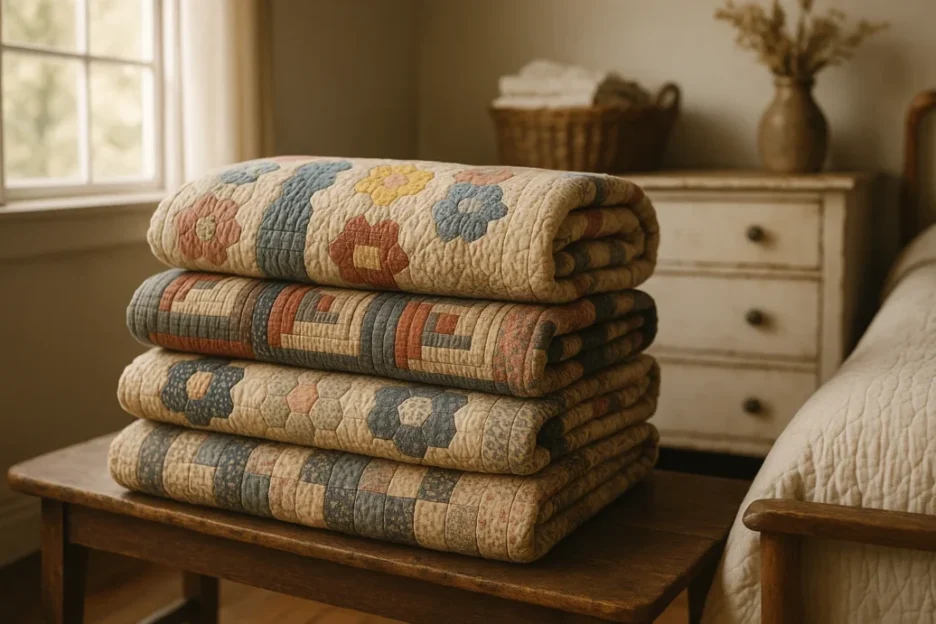
Why Old Fashioned Country Quilts Are Making a Comeback (History, Care & Décor Ideas)`
The Enduring Charm of Old Fashioned Country Quilts
The warmth of an old fashioned country quilt offers more than just comfort; it tells a story woven from history, creativity, and love.
These handcrafted textiles are a vibrant link to our past, connecting us to generations of makers. Whether you are a seasoned collector, a new quilter, or a home decorator looking for that perfect touch of farmhouse charm, this guide will explore the rich world of vintage and antique quilts.
We will cover their history, how to identify them, and how to care for and display these beautiful pieces of art.
A Brief History of Country Quilts
The story of the country quilt is stitched into the fabric of American history. These patchwork quilts began as practical items born of necessity.
But they quickly evolved into cherished heirlooms and powerful forms of creative expression. By understanding their past, we can better appreciate the artistry and legacy held within each one.
Quilting in America — From Utility to Heirloom
In early America, textiles were precious. Scraps of fabric from worn-out clothing, flour sacks, and other materials were too valuable to discard.
Thrifty homemakers saved these pieces, sewing them together to create warm bed coverings. These early utility quilts were essential for survival, providing insulation during harsh winters.
Over time, as fabric became more accessible, quilting transformed. It became a social activity, with quilting bees bringing communities together. Women used quilting to create beautiful objects that showcased their skill, marked special occasions, and passed family stories from one generation to the next.
Key Eras & Influences
Several key periods shaped the evolution of American patchwork quilts. The Colonial Revival of the late 19th and early 20th centuries sparked renewed interest in traditional crafts.
This led to a surge in quilt-making that celebrated Americana. During the Great Depression, the “make do and mend” ethos made quilting a popular and practical pastime, giving rise to iconic feedsack quilts.
In the mid-20th century, quilt kits became available, providing pre-cut fabric and patterns that made the craft accessible to even more people. Each era left its unique mark on fabrics, colors, and styles, creating a rich timeline for collectors to explore.
What Makes a Quilt “Old Fashioned” or “Country”?
The terms “old fashioned” and “country” evoke a specific aesthetic. It’s one characterized by simplicity, resourcefulness, and handmade charm.
This style is not defined by a single element, but by the combination of its materials, construction, and overall feeling of warmth and nostalgia. These are the quilts that feel like home.
Common Fabrics, Colors & Prints
Historically, country quilts were made from readily available cotton fabrics. Calico—with its small, floral all-over print—was a staple.
During the 1930s and ’40s, colorful printed feedsacks became a primary source of fabric. This resulted in quilts with a distinctive, cheerful palette.
Gingham, chambray, and simple solids were also common. Color schemes often included soft, muted tones, earthy reds, blues, and greens, along with classic pairings like blue and white or red and white.
Reproduction prints available today mimic these vintage designs, letting modern quilters achieve an authentic old-fashioned look.
Typical Construction & Stitches
An old fashioned country quilt is defined by its handmade quality. Most were pieced and quilted entirely by hand, and the quilting stitches—the small running stitches that hold the three layers together—are a key indicator.
Hand quilting often has a slightly irregular, gentle rhythm that machine stitching cannot replicate. The binding, or edge finishing, was typically done by hand.
The backing fabric was often folded over to the front and stitched down. The batting inside was usually made of cotton or wool, giving older quilts a soft, heavy feel that drapes beautifully.
Popular Traditional Patterns You’ll See
The heart of any patchwork quilt is its pattern. Over centuries, a beloved vocabulary of quilt blocks has developed. Each design carries its own history and visual appeal.
Many of these traditional patterns remain popular today and are hallmarks of the country style.
Sawtooth, Star, Grandmother’s Flower Garden, Nine-Patch, Log Cabin
- Log Cabin: This design is built around a central square (often red, symbolizing the hearth) with fabric “logs” surrounding it. It represents home and family values.
- Nine-Patch: A simple and versatile block made from nine equal squares. This was often the first pattern a child would learn. Its simplicity allows for endless color and fabric variations.
- Star Patterns: The Sawtooth Star and Lone Star are examples of celestial motifs. They represent hope, guidance, and artistry, often requiring precise piecing for sharp points.
- Grandmother’s Flower Garden: Made from hexagonal fabric pieces stitched together to form rosettes. This pattern became wildly popular in the 1920s and ’30s and evokes the charm of a country garden.
How to Identify Antique vs. Vintage vs. Reproduction Quilts
Distinguishing between a true antique, a mid-century vintage find, and a modern reproduction is a key skill for any collector. The clues lie in the fabric, stitching, and signs of age.
Generally, “antique” refers to items over 100 years old, while “vintage” typically applies to items between 20 and 100 years old.
Fabric & Print Dating Tips
Fabric is one of your best guides. Early 19th-century quilts may feature homespun fabrics and natural dyes. By the mid-1800s, roller-printed cottons became common.
Feedsack prints from the 1930s and ’40s have a distinct look. Polyesters and bold synthetics from the 1970s are easy to spot, too. Look for fabric technology clues: perfectly symmetrical prints might indicate modern digital printing, whereas slight misalignments are common in older roller prints.
Stitching, Batting, and Wear Indicators
Examine the stitches closely. Hand quilting will have slight variations in stitch length, while machine quilting is perfectly uniform.
Batting can also offer clues; early quilts used thin cotton or wool batting that can bunch or beard over time. Modern polyester batting is often fluffier and more stable.
Authentic wear, such as gentle fading, soft fraying along the binding, and small hand repairs, tells a story of a life well-lived. Reproductions may be artificially distressed, but the wear often looks inconsistent or contrived.
Authenticity Checklist:
- Fabric: Are the prints and fabric types consistent with a specific era?
- Stitching: Hand or machine? Look for small, even hand stitches.
- Batting: Thin cotton/wool that has settled, or lofty polyester?
- Binding: Is it straight-grain fabric and hand-applied?
- Wear: Does the fading look natural and consistent with age?
- Provenance: Any history or documentation for the quilt?
Caring for Old Fashioned Country Quilts
Proper care is essential to preserve an antique or vintage quilt for future generations. These textiles are fragile, and incorrect handling, cleaning, or storage can cause damage.
The golden rule is to be gentle.
Cleaning & Storage Best Practices
Never put an old quilt in a washing machine. The agitation can shred delicate fabrics and seams. For general dust, gently vacuum the surface through a nylon screen.
If a quilt must be washed, spot cleaning is safest. For a full cleaning, consult a professional textile conservator.
If you must wash it yourself, use a clean, deep tub with conservation-approved soap, and support its full weight when lifting it from the water. To store, roll the quilt around an acid-free tube or fold it with acid-free tissue paper.
Store it in a dark, climate-controlled space—avoid attics, basements, and plastic bags, which can trap moisture.
Small Repairs vs. Professional Restoration
Deciding whether to repair a quilt yourself or call an expert depends on the damage and the quilt’s value. Small, popped seams can often be mended carefully with matching thread.
However, for large tears, disintegrating fabric, or major stains, it’s best to consult a professional textile conservator. They can stabilize the fabric, perform nearly invisible repairs, and maintain the quilt’s historical integrity.
Improper repair can reduce a quilt’s value and cause more harm over time.
How to Use Old Quilts in Modern Decor
Old fashioned country quilts are not just for beds. Their texture, color, and history can add immense character to almost any room.
Integrating these vintage textiles into modern decor creates a compelling mix of old and new.
Bed, Wall Art, Upholstery, Furniture Throws, Table Decor
The most obvious use is as a bed covering, but try layering a folded quilt at the foot of the bed for a pop of pattern. For a fragile quilt, hang it on a wall as a large-scale graphic art piece.
A special quilt hanger will distribute its weight and prevent stress on seams. You can also drape a sturdy quilt over a sofa, use one as a runner or tablecloth, or have a damaged quilt repurposed into upholstery for a stool or bench.
Styling Tips for Farmhouse, Cottage, and Eclectic Interiors
In farmhouse and cottage decor, quilts feel right at home. Pair them with neutral linens, weathered wood, and natural textures to create a cozy atmosphere.
Let the quilt be the star. For more eclectic or modern rooms, use a quilt for a surprising touch of history. A Log Cabin or Star quilt can stand out against clean lines and contemporary furniture.
The key is balance—let the quilt’s story and handmade quality shine without overwhelming the space.
Where to Buy Vintage and Old Fashioned Country Quilts
Finding an authentic old fashioned country quilt can be a thrilling hunt. Whether searching online or in person, knowing where and what to look for helps you find the perfect piece.
Online Marketplaces, Quilt Shows, Estate Sales
Online platforms like Etsy, Ruby Lane, and specialist dealer sites are great resources. Look for sellers with detailed descriptions and clear photos.
In-person shopping lets you see and feel the quilt. Quilt shows often feature knowledgeable vendors with high-quality stock.
Estate sales, flea markets, and antique stores can hold treasures, but you’ll need a keen eye to spot authentic quilts. Sales by historical societies or museums occasionally offer unique finds.
Price Ranges & What Affects Value
The price of a vintage or antique quilt can range from under $100 to several thousand. Several factors determine value:
Condition is critical—quilts with minimal stains, fading, or damage are most valuable. Rarity of the pattern, workmanship detail, and the fineness of quilting stitches matter. Quilts with provenance—known history of maker, time, and place—command higher prices.
Graphic appeal or visual impact can also significantly affect a quilt’s value.
DIY: Make a Country-Style Quilt with an Old-Fashioned Look
You don’t need to find an antique to enjoy the country quilt aesthetic. Making your own quilt is rewarding and lets you customize patterns and colors.
You can create a future heirloom with your own two hands.
Pattern Suggestion for Beginners
A simple Nine-Patch or basic Log Cabin block is great for beginners. These use straight lines and simple shapes, making them easy to cut and piece.
Many free patterns are available online. For a small throw quilt (about 50″ x 60″), you’ll typically need 4-5 yards of assorted cotton fabric for the top, 3 yards for the back, and half a yard for binding.
This project can take 20 to 40 hours, depending on your skill and whether you machine piece or hand quilt.
Reproducing the “Old Look” with Modern Fabrics
Getting an authentic old-fashioned look is easy with today’s fabrics. Many manufacturers offer reproduction lines copying prints from the 18th, 19th, and early 20th centuries.
Look for small calico prints, muted colors, and soft cotton texture. Pre-wash your fabrics to soften them. Some quilters tea or coffee dye new fabric for an aged patina—take care with this method.
Hand quilting adds the unmistakable charm of a true country quilt.
Repurposing & Upcycling Damaged Quilts
A quilt too damaged for its original use doesn’t have to be discarded. With some creativity, you can give its fabrics and patterns a new life, preserving a piece of its story.
Wall Hangings, Cushions, Patchwork Projects
Even a heavily damaged quilt often has salvageable sections. Cut out favorite blocks or a visually interesting area and frame it for art.
Salvaged pieces make cushion covers, adding history to a sofa or chair. Smaller scraps can be used for new patchwork projects like tote bags or placemats. Even patches for clothing are possible.
This honors the “waste not, want not” spirit of original quilters.
Ethical Considerations and Preserving Provenance
When upcycling, always consider the quilt’s history. If a quilt is rare or significant, it may be better preserved professionally.
If you do repurpose, try to save signatures, dates, or unique features. Take pictures of the original and keep notes on its history.
Passing this info along with the new item ensures the quilt’s story continues.
Pros & Cons of Collecting Old Fashioned Country Quilts
Collecting antique and vintage quilts is rewarding, but it helps to know both the joys and responsibilities.
- Pros:
- Connection to History: Each quilt links us to past generations.
- Artistic Beauty: Stunning folk art, full of warmth and character.
- Investment Potential: Rare, high-quality quilts can rise in value.
- Sustainable Decor: Vintage quilts are eco-friendly decor choices.
- Cons:
- Fragility & Care: These quilts require careful handling, cleaning, and storage.
- Cost: Top-quality antique quilts can be expensive.
- Limited Use: Many antique quilts are too fragile for everyday use.
- Authentication Challenges: Distinguishing antiques from reproductions takes experience.
Frequently Asked Questions
What are old-fashioned country quilts?
Old-fashioned country quilts are handmade patchwork bed covers, often using practical materials like cotton, calico, and feedsacks. They feature geometric patterns such as Log Cabin or Nine-Patch.
Quilts in this style are defined by their handmade charm and a nostalgic, welcoming feel connected to home and history.
How can I tell if a quilt is antique or vintage?
An antique quilt is typically over 100 years old; vintage quilts are 20-100 years old. Check for period-specific prints (like 1930s feedsacks), hand-quilting stitches, and thin, natural batting.
Natural aging, fading, and gentle wear on bindings are also clues.
What materials were used in old country quilts?
Old country quilts most often used 100% cotton—homespun fabric, calico, gingham, and depression-era feedsack prints. Batting was usually cotton or wool. Quilting and piecing thread was also cotton.
Polyester fabrics didn’t appear until the mid-20th century.
How do I care for or wash an old quilt safely?
Never use a washing machine. Spot treat stains with a gentle, pH-neutral soap. Gently vacuum to remove dust, using a protective screen.
If a full wash is absolutely needed, do it by hand in a tub. Support the entire quilt. Consulting a textile conservator is always the best option for valuable pieces.
Where can I buy authentic old-fashioned country quilts?
Authentic quilts are found through specialty antique dealers, online marketplaces like Etsy and Ruby Lane, or in person at antique shops, estate sales, and quilt festivals.
Quilt shows often gather knowledgeable vendors with high-quality selections.
What are common old quilt patterns?
Classic patterns include Log Cabin, Nine-Patch, Sawtooth Star, Ohio Star, Grandmother’s Flower Garden, and Drunkard’s Path.
These patterns used scraps and could be arranged in many creative ways.
Can I repurpose a damaged vintage quilt?
Yes! Repurpose by framing sections as art, turning pieces into pillows, or making tote bags or table runners.
Just make sure the quilt isn’t rare or historically significant—such quilts may be better conserved or restored.
Conclusion: A Legacy of Stitches
Old fashioned country quilts are more than blankets. They’re living history, creative art, and symbols of comfort.
Each time you admire, collect, or sew one, you join a community that values craft and tradition. By caring for and sharing their stories, we help these textiles inspire future generations.
Explore the resources below to grow your knowledge, find a quilt to cherish, or start your own quilting adventure.
Appendix: Resources & Further Reading
Museums & Quilt Indexes:
- International Quilt Museum
- The National Quilt Museum
- The Quilt Index
Reputable Dealers & Marketplaces:
- Etsy (search for “antique quilts” or “vintage quilts”)
- Ruby Lane
Patterns & Tutorials:
- Generations Quilt Patterns (info on traditional blocks)
- The Missouri Star Quilt Company (classic pattern tutorials)

Leave feedback about this