

Ancient Japanese Clothing: How Garments Revealed Social Rank, Season & Spirituality
Ancient Japanese clothing is one of the most visually striking and symbolically rich dress traditions in human history. From hand-woven hemp robes in prehistoric settlements to the silk-layered splendor of the Heian court, Japanese garments have always communicated far more than modesty — they encoded rank, spirituality, seasonal awareness, and aesthetic philosophy. Whether you’re researching ancient traditional Japanese clothing for history, cosplay, cultural study, or pure curiosity, this guide covers everything: names, types, male and female styles, origins, and the deep cultural meaning woven into every fold.
What Is Ancient Japanese Clothing?
The term “ancient Japanese clothing” covers everything worn in Japan from the Jomon period (roughly 14,000 BCE) through the end of the Edo period in 1868. That’s nearly 16,000 years of textile history — shaped by geography, rice culture, Chinese influence, Buddhist aesthetics, and a uniquely Japanese sensitivity to nature and impermanence.
At its core, ancient Japanese dress was built around one central concept: the wrapped, tied garment. Unlike Western clothing that is cut and sewn to fit the body, traditional Japanese clothes were generally rectangular pieces of cloth that draped, wrapped, and tied around the wearer. This produced a silhouette that was dignified, fluid, and instantly recognizable.
The garments varied enormously by social class, gender, season, and occasion — but they shared a common visual language: layering, natural fiber, restrained color palettes (for commoners), and meticulous attention to how cloth fell and folded.
Names & Terminology
Understanding ancient traditional Japanese clothing starts with the vocabulary. Many terms get used interchangeably in casual conversation, but they each have distinct meanings.
The general word for a Japanese garment. Today it refers specifically to the formal T-shaped silk robe, but historically it just meant “clothing.”
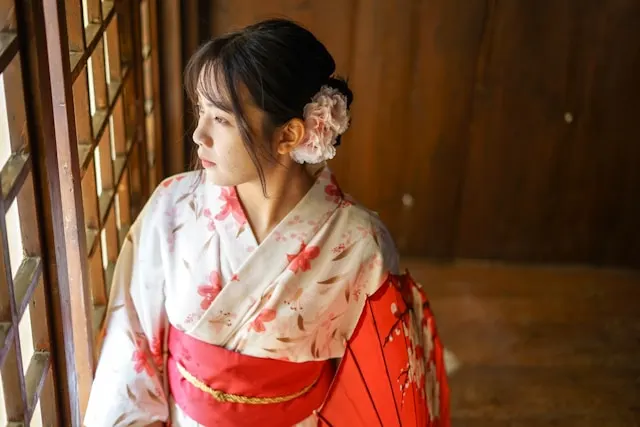
The direct ancestor of the modern kimono. A fitted inner robe with small sleeve openings, worn by all classes from the Heian period onward.
Wide-sleeved formal robes worn by aristocracy. The dangling, open sleeves signaled leisure — only someone who didn’t work could wear them.
Wide, pleated lower garments resembling divided skirts. Worn over kimonos by warriors, scholars, and priests — and still used in martial arts today.
The wide sash wrapped around the waist to secure a kimono. Its width, material, and knot style all communicate social status and occasion.
White cotton socks with a split between the big toe and others, worn with traditional sandals (geta or zori).
Types & Categories of Ancient Japanese Garments
Japanese traditional clothing was never a single look. It branched into dozens of distinct garment types based on formality, function, gender, and era. Here’s a working overview:
| Garment | Japanese Term | Formality | Worn By | Occasion |
|---|---|---|---|---|
| Kimono (furisode) | 振袖 | Very High | Unmarried women | Coming-of-age, weddings |
| Kimono (tomesode) | 留袖 | High | Married women | Formal ceremonies |
| Kimono (yukata) | 浴衣 | Casual | All | Summer festivals, bathing |
| Hakama | 袴 | Formal–Martial | Men / some women | Ceremonies, martial arts |
| Junihitoe | 十二単 | Imperial | Noble women | Court appearances only |
| Sokutai | 束帯 | Imperial | Noble men | Court ceremonies |
| Kariginu | 狩衣 | Semi-formal | Men (nobles/priests) | Hunting, informal court |
| Kosode | 小袖 | Everyday | All | Daily wear (all periods) |
The Most Iconic Item: The Kimono
No garment is more central to Japanese culture clothing than the kimono. Its shape is deceptively simple — two long panels sewn together, with a collar and sleeves — but within that simplicity lies extraordinary complexity of meaning, craft, and social code.
The kimono as we know it evolved from the kosode during the Muromachi period (1336–1573). Before then, the kosode was underwear. As it moved outward — worn as a visible outer robe — its decoration became increasingly elaborate. Dyeing techniques like yuzen (hand-painted silk) and shibori (resist-dyeing) turned kimonos into wearable art.
The left side always crosses over the right when wearing a kimono — right over left is reserved for dressing the dead. This single detail shows how deeply clothing was integrated into life’s spiritual architecture in ancient Japan.
Color mattered enormously. In the Heian court, color combinations called kasane no irome — layered color pairings — followed strict seasonal and social rules. Wearing the wrong color sequence at court was a social disaster comparable to wearing jeans to a state dinner today.
Ancient Traditional Japanese Clothing — Female
Women’s clothing in ancient Japan was often more elaborate, more layered, and more symbolically loaded than men’s. Social rank was visible at a glance through the number of layers, the type of fabric, and the complexity of the color combinations.
Junihitoe — The Twelve-Layer Court Robe
The junihitoe (十二単, “twelve unlined robes”) was the pinnacle of Heian aristocratic dress. Noble women wore up to twelve layered robes, each carefully chosen to produce a visible cascade of color at the sleeves and collar. The total outfit could weigh up to 20 kilograms. Movement was intentionally restricted — stillness and slow, deliberate motion signaled the highest refinement.
Furisode — Long-Sleeved Kimono for Young Women
The furisode features sleeves that hang anywhere from 95 to 114 cm long. In ancient Japan, a woman’s long, swinging sleeves expressed emotional openness and romantic availability. Young unmarried women wore furisode to signal their status. When a woman married, the sleeves were shortened — the transition called tomesode, meaning “tied sleeves.”
Uchikake — The Ceremonial Overrobe
Worn as an unbelted outer robe trailing along the floor, the uchikake was bridal and ceremonial wear. Its elaborate embroidery — cranes, pines, waves, and phoenixes — was worked in gold and silver thread. This is the garment that influenced later Western ideas of “Japanese fashion.”
Kouchigi — The Noble Woman’s Semiformal Robe
A shorter, less layered alternative to the junihitoe, the kouchigi was worn for less formal court appearances. Its relative simplicity (only three to five layers) still placed it far beyond commoner dress.
Kosode for Common Women
Working women wore the kosode in plain or modestly decorated cotton and hemp. Indigo blue (from the ai plant) was the dominant color of commoner dress — not because it was cheap, but because indigo was believed to repel insects and neutralize snake venom, making it practical for outdoor labor.
Ancient Traditional Japanese Clothing — Male
Men’s ancient Japanese clothing was generally less layered than women’s but no less governed by strict hierarchical codes. The combination of upper and lower garments was carefully prescribed by rank.
Sokutai — Imperial Court Dress
The sokutai was the most formal garment in Japan for over a millennium. Worn by male courtiers and the Emperor himself at state ceremonies, it consisted of wide layered robes in rank-designated colors, a stiff formal cap, and trailing trousers called oguchi hakama. The entire ensemble was designed to make the wearer appear immovable — a physical expression of imperial permanence.
Kariginu — The Hunting Robe Turned Fashion Staple
Originally designed for hunting (as the name implies), the kariginu became the preferred informal dress of Heian aristocratic men. Its looser fit and lighter fabric gave wearers more freedom of movement — ironic for a garment that eventually became associated with scholarly ease rather than outdoor pursuits. It directly influenced the design of Shinto priests’ formal robes still worn today.
Hakama Over Kimono — The Warrior Combination
Samurai and military men wore hakama over their kimonos as standard dress from the Kamakura period onward. The wide pleats of the hakama had a practical purpose: they disguised the wearer’s leg movements, making sword-fighting footwork harder to read. The combination of dark kimono and crisp hakama remains the aesthetic template for formal Japanese male dress even in the 21st century.
Fundoshi and Working Men’s Dress
Common men wore simple wrapped loincloths (fundoshi) during physical labor, over which they pulled short hemmed kimonos. Understanding Japanese work culture means recognizing that everyday dress was designed for function first — rice farming, fishing, and construction all demanded garments that could be tied up and out of the way quickly.
History & Ancient Origins of Japanese Clothing
The history of ancient Japanese clothes tracks Japan’s broader history — periods of internal development, waves of continental influence, and deliberate aesthetic refinement over centuries.
300 BCE
Jomon Period — Hemp & Bark Cloth
Japan’s earliest clothing was woven from plant fibers: hemp, wisteria bark, and nettle. Archaeological evidence shows basic wrapping garments held by vines or braided cords. No tailoring — just draped fabric.
300 CE
Yayoi Period — Silk Arrives from China
Rice agriculture and new technology arrived from the Korean Peninsula and China. Silk weaving techniques appear for the first time. Clothing begins differentiating by social role — spiritual leaders dressed distinctly from farmers.
Kofun & Asuka Periods — Chinese Court Influence
Japan’s ruling class consciously modeled court dress on Tang Dynasty China. A formal color-rank system was introduced in 603 CE — each rank wore a specific cap color, creating Japan’s first official dress code.
Nara & Heian Periods — The Peak of Aristocratic Dress
This is the golden age of ancient Japanese fashion. The junihitoe and sokutai reached their most elaborate forms. Color-layering systems (kasane no irome) became a high art. The kosode emerged as the universal inner garment.
Kamakura to Sengoku — Warrior Aesthetics Rise
Military culture shifted fashion toward practicality. Hakama and layered armor-undergarments became dominant for men. The kosode moved from underwear to outerwear for all classes. Decoration became bolder and more graphic.
Edo Period — The Kimono Reaches Its Classic Form
Urban merchant culture (chōnin) drove explosive creativity in kimono design. Dyeing techniques like yuzen were perfected. Strict sumptuary laws banned commoners from wearing silk — so they responded by creating incredibly elaborate cotton and linen designs instead.
“In Japan, a garment was never just protection from the weather — it was a statement of who you were, what season it was, and where you stood in the universe.”— Textile historian’s summary of Heian court dress philosophy
Culture & Symbolism in Japanese Clothing
No discussion of Japanese culture clothing is complete without its symbolism. Japanese garments are almost never purely decorative — every motif, color, and material choice carries layered meaning.
Seasonal Dressing
Japanese dress was governed by the seasons with near-religious precision. Wearing a cherry blossom pattern after the blossoms had fallen was considered tasteless. A pine motif was appropriate in winter; a peony belonged to late spring. This sensitivity — called kisoku — is one of the most distinctive aspects of Japanese clothing culture and has no direct equivalent in Western fashion tradition.
Auspicious Motifs
Certain patterns carried protective or congratulatory meaning: cranes (longevity and fidelity), pine trees (resilience), waves (the eternal cycle), and the tortoise (ten thousand years of life). These weren’t decorative choices — they were prayers woven into fabric. Learn more about Japanese cultural symbolism to understand how deeply these meanings permeate traditional art and dress.
Color as Language
In the Heian court, specific colors were legally restricted to specific ranks. Deep purple (murasaki) was the highest rank color. Yellow-green was reserved for the Emperor. Commoners were largely limited to earthy browns, indigo blues, and undyed cream. Breaking the color code wasn’t a fashion faux pas — it was potentially a criminal offense.
The Obi as Social Signal
How an obi was tied — and by whom — communicated relationship status, profession, and social standing. Geisha tied their obi at the back in the taiko musubi knot. Young women tied elaborate butterfly knots. Married women used simpler, more modest styles. A trained eye could read someone’s entire social biography from their sash alone. Explore traditional Japanese fashion accessories to dive deeper into obi styles and other adornments.
Frequently Asked Questions

Leave feedback about this