


Spring Clothes for Guys: What to Wear This Season
According to the NPD Group, men’s apparel spending in the US increases by an average of 18% between February and April each year — the clearest sign that spring clothes for guys are one of the highest-intent fashion categories of any season. That spending surge isn’t random. Men genuinely want to refresh their wardrobes when the weather shifts, and the spring window — roughly March through May — gives you a lot of room to dress well without overthinking it.
This article covers the specific pieces that make up a functional, well-dressed spring wardrobe for men, how to build outfits around them, which fabrics actually hold up in transitional weather, and where the common mistakes happen. You’ll come away knowing exactly what to buy and what to skip.
Most men’s spring clothing guides either treat the season like a color palette exercise or recycle the same generic advice about “light layers.” This one focuses on what actually works in everyday wear — for casual weekends, office environments, and everything in between — with concrete picks and honest trade-offs instead of vague runway references.
The Core Pieces Every Men’s Spring Wardrobe Needs
Spring clothing for men doesn’t need to be a complete overhaul. A handful of well-chosen pieces will carry you through the season without the closet ending up cluttered. The goal is versatility — items that layer when it’s still cool in the morning and work solo by the afternoon.
Lightweight chinos in neutral tones (stone, sand, olive, navy) are the single most useful trouser for spring. They work smarter casual settings, weekend wear, and even relaxed office environments. Slim or tapered cuts work best for most body types because they don’t fight the lighter fabrics the way straight-leg can. Chinos made from a cotton-linen blend are especially worth the investment — the linen content reduces that sticky feeling on warmer days while keeping the structure that pure linen loses.
Alongside those, you want two or three quality short-sleeve or camp-collar shirts in breathable fabrics, a few well-fitting crewneck or V-neck tees, and at least one unlined blazer or overshirt that functions as a light outer layer. That combination covers the vast majority of spring situations most men actually face. If you need a broader foundation for the season, the capsule wardrobe essentials for 2026 breaks down exactly which pieces justify the spend.
Fabrics That Make or Break Spring Men’s Apparel
Fabric is where men’s spring outfits succeed or fail, and most buying guides skip past it entirely. The wrong fabric makes a good silhouette feel uncomfortable by 11am. The right one keeps you looking put-together even when the temperature swings ten degrees between morning and early evening.
Cotton is the reliable baseline — breathable, widely available, and easy to care for. A mid-weight cotton shirt in a poplin or Oxford weave handles both cool mornings and warmer afternoons well. Linen is the other strong choice for spring wear, especially for shirts and trousers. The trade-off is honest: linen wrinkles noticeably, and if that bothers you, a cotton-linen blend gives you most of the breathability with far less creasing.
Avoid synthetic fabrics — polyester blends, nylon, performance fabrics marketed as “stretch” — for any spring clothing you plan to wear socially. They trap heat and don’t breathe the way natural fibers do. The exception is activewear or outdoor technical gear where moisture-wicking is the actual point.
Quick Note: Spring mornings can be significantly cooler than spring afternoons, especially in the US Midwest and across the UK. Building around layers — a light shirt plus an overshirt or unlined jacket — is more practical than relying on a single mid-weight piece that’s neither warm enough early nor cool enough later.
Merino wool is underused for spring. A lightweight merino tee or crewneck is temperature-regulating, odor-resistant, and looks far more polished than a standard cotton tee. Brands like Uniqlo (US) and John Smedley (UK) both offer merino basics that hit a reasonable price point for the quality. If you’re building spring men’s attire that needs to work in both countries, merino basics travel and pack better than almost anything else.
How to Build Spring Outfits for Men That Actually Work
The gap between owning spring clothing and actually wearing it well comes down to outfit construction. Most men think about individual pieces rather than how those pieces interact. A few reliable outfit formulas solve this completely.
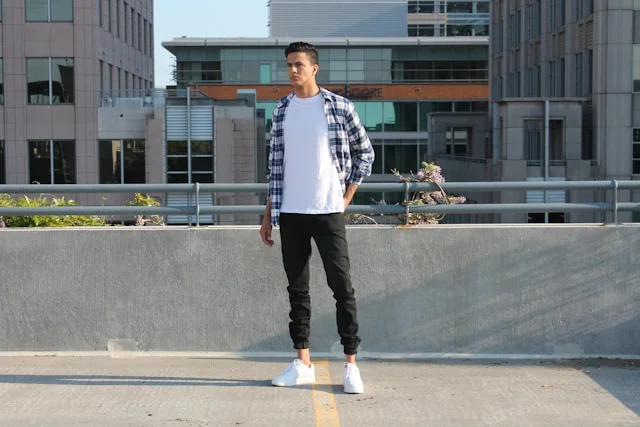
The most versatile men’s spring outfit formula is: tapered chinos + breathable shirt + white or off-white leather sneakers. It reads smart-casual in most settings, dresses up slightly with a linen blazer thrown on top, and works barefoot or with no-show socks when it’s warm. This combination works in the US and UK without adjustment — the color temperature and formality level translate across both audiences.
For a more casual spring look, a well-fitted crew tee in a muted tone — sage green, washed blue, off-white — paired with slim-cut shorts or relaxed trousers and low-profile canvas sneakers covers most weekend situations. The key detail here is fit. A cheap tee that fits well looks far better than an expensive one that’s boxy or too long. According to GQ’s style coverage, fit is consistently ranked as the single most important factor in how a casual outfit reads — ahead of brand, price point, or color choice.
For men navigating spring work attire, an unlined navy blazer over a light-colored shirt with chinos or tailored trousers covers business-casual environments without the stuffiness of heavier suiting. If your office runs warmer or leans more relaxed, a camp-collar shirt tucked into tailored trousers reads pulled-together without the blazer at all. For more outfit-building options that work beyond spring, the men’s spring fashion style guide covers current trends worth folding in.
Spring Layering for Men: Jackets and Overshirts That Earn Their Keep
Layering is the part of spring dressing that trips most men up. Too heavy and you’re sweating by noon. Too light and you’re uncomfortable for the first two hours of the day. The answer is a specific category of outerwear that most men overlook: the unlined or half-lined light jacket.
A Harrington jacket — the snap-collar, lightly structured silhouette made famous by brands like Baracuta (UK) and available widely from US retailers like Todd Snyder — is the most useful spring jacket a man can own. It sits between a shirt and a full jacket in weight, layers neatly over a tee or light shirt, and doesn’t bulk up under the arms. The fit should be close enough to avoid looking shapeless but relaxed enough to layer a light knit underneath on cooler days.
Overshirts in denim, chambray, or lightweight cotton flannel serve a similar function at a lower price point. They double as shirts on warmer days and outer layers when the temperature drops. The versatility is real — this is one case where buying something specifically for layering pays off across most spring situations. For anyone unsure how to approach jacket selection beyond spring outerwear, the breakdown of how to style men’s jackets for modern looks covers the broader picture well.
Our take: Most men buy a rain jacket or a heavier coat for spring and then wonder why they’re either overdressed or still cold. The better call is a Harrington or quality overshirt at $80–$150. At that price and utility level, it’s one of the best investments in spring male outfits you can make — it gets worn constantly because it genuinely solves the layering problem rather than adding another piece that only works in specific conditions.
Spring Clothes for Guys: Color, Pattern, and What to Avoid
Spring is the season where men feel most pressure to branch out from neutrals — and where the biggest style missteps happen. The reality is that you don’t need to overhaul your color palette to dress well for spring. You need to update the tone and lightness of the colors you already wear.
Move away from the dark navy, charcoal, and black that dominate winter wardrobes. Replace them with lighter versions of the same hues: sky blue instead of navy, stone or sand instead of charcoal, off-white or cream instead of black. Earthy tones — terracotta, sage green, warm tan — have remained strong for men’s spring clothing across both US and UK markets through 2025 and into 2026, with no sign of fading.
Patterns work in spring, but scale matters. A small-scale check, a thin stripe on a shirt collar, or a subtle texture in a fabric reads well. Large, bold patterns on the same piece — a loud floral shirt, oversized plaid trousers — are harder to style and easier to wear wrong. If you want to include pattern in your spring men’s fashion rotation, keep it to one item per outfit and build the rest of the look in solid neutrals.
This is also where the limitation of this advice is worth naming: color and pattern guidelines work for most general spring settings — work, casual, social. If your specific lifestyle involves a lot of outdoor activities, creative industries, or festival attendance, more expressive choices are completely appropriate. The framework above is a starting point, not a ceiling.
Footwear is the finishing detail most spring outfit guides underserve. White leather sneakers, loafers in tan or cream suede, and canvas low-tops in navy or off-white are the three categories that cover practically every spring occasion. For a full breakdown of what works across contexts, the guide to styling men’s shoes for every occasion gives specific pairing advice that applies directly to spring wear.
Frequently Asked Questions
What should men wear in spring when the weather is unpredictable?
Layering is the most practical answer, but the specific layer matters. A lightweight overshirt or unlined Harrington jacket over a breathable cotton or linen shirt gives you a range of about 15–20 degrees Fahrenheit to work with comfortably. Avoid heavy knitwear — it’s too warm once the sun comes out — and avoid relying solely on a single mid-weight piece that won’t adapt. The goal is pieces you can add or remove without the outfit falling apart either way.
What colors work best for men’s spring clothes?
Light and earthy tones consistently work across both the US and UK markets: sky blue, sage green, stone, sand, terracotta, and off-white are all reliable choices. You don’t need to wear bright colors to dress well for spring. What matters more is lightening the tones you already wear — swapping dark winter hues for their spring equivalents — rather than introducing entirely new color families you’re not comfortable with. Stick to one neutral as the anchor of each outfit and build from there.
Is linen worth buying for spring men’s clothing?
For shirts and trousers, yes — with one caveat. Pure linen wrinkles significantly, and if that bothers you in practice, a cotton-linen blend (usually 55% cotton, 45% linen) gives you 80–90% of the breathability at a fraction of the creasing. For a casual weekend shirt that you’re wearing untucked, pure linen is fine and often looks better. For anything you need to look sharp in for longer periods, go for the blend. Both Uniqlo and ASOS offer affordable linen and linen-blend pieces that hold up reasonably well for the price.
What’s the difference between spring casual outfits and spring smart-casual for men?
The distinction comes down to structure and footwear more than any single item. Casual spring outfits — tee, shorts or chinos, canvas sneakers — read as off-duty. Smart-casual spring outfits use the same building blocks but add structure: a fitted chino instead of a relaxed cut, a collared shirt instead of a tee, leather sneakers or loafers instead of canvas. You don’t need a blazer or formal trousers to hit smart-casual. The upgrade is mostly about fit and fabric quality rather than changing the entire outfit category.
How many pieces do you actually need for a complete men’s spring wardrobe?
Fewer than most people think. Seven to ten pieces can cover the full range of spring situations for most men: two or three pairs of chinos or lightweight trousers, three to four shirts in different fabrics, two to three tees, one light jacket or overshirt, and two pairs of footwear. That’s enough to mix and match without running out of options or owning things you never wear. The trap is buying trend-specific pieces that only work in one combination — stick to versatile neutrals and your cost-per-wear drops significantly.
What spring clothing mistakes do most guys make?
The three most common are: buying pieces that are too heavy for spring and feeling overdressed by midday; sticking to winter-tone colors (dark navy, black, charcoal) because they feel safe; and skipping fit when buying lighter fabrics because the fabric itself seems casual. Lightweight linen and cotton are less forgiving of poor fit than heavier winter fabrics — a boxy linen shirt looks sloppy in a way a heavier cotton Oxford might not. Get the fit right first, then worry about color and fabric choices. Fit is doing more work in spring men’s apparel than at any other time of year.
Final Thoughts
The biggest shift in building a strong spring wardrobe for men is thinking in systems rather than individual pieces. One versatile chino, one Harrington or quality overshirt, a few breathable shirts, and the right footwear will outperform a closet full of trend items that only half-work. Spring clothes for guys don’t need to be complicated — they need to solve the specific problem of dressing well across a season where the temperature, occasion, and setting can change three times in a single day.
If you’re starting fresh or refreshing what you already own, the most useful next step is auditing your current wardrobe against what you actually wear in March through May and identifying the one or two genuine gaps. Most men find they need fewer new pieces than they assumed — and that the ones they need are simpler than anything a trend guide suggests. For a closer look at how current fashion trends for men slot into the broader picture, the men’s streetwear trends for 2026 is worth reading alongside this framework.




Leave feedback about this