
5 Things to Know Before Buying Gold Hair Clips for Weddings
According to the National Retail Federation, hair accessories have ranked among the fastest-growing categories in the US fashion accessories market over the past several years, and bridal shoppers make up a meaningful share of that growth. Brides and their parties are buying fewer veils and more clips, combs, and pins that can do double duty for the ceremony and the reception. Gold hair clips for weddings sit right at the center of that shift, partly because they photograph well under both daylight and string lights, and partly because they work on hairstyles a veil simply can’t.
This guide walks through how to pick gold clips for a bride, a full bridal party, or a wedding guest who wants something polished without looking like she raided a costume shop. It covers crystal and diamond-style embellishments, what to actually gift bridesmaids, the real difference between solid gold and gold-plated pieces, and how to place clips so they hold through a six-hour event and still look intentional in photos.
Most bridal accessory guides either push a single product line or repeat the same five stock photos without addressing how many clips a specific hairstyle needs or what happens when gold-plated pieces meet hairspray and humidity. This one covers both, along with the price-versus-durability trade-off that most gift guides skip entirely.
Crystal and Diamond-Embellished Clips for Wedding Hair
A gold crystal hair clip reads differently depending on the cut of the stone and how it catches light. Round-cut crystal clusters scatter light in every direction, which works well for evening receptions with dim, warm lighting. Baguette-cut or marquise-shaped settings throw a single clean line of sparkle, which tends to photograph better in daylight ceremony shots because it doesn’t blow out the camera sensor the way dense round-cut clusters can.
Gold diamond hair clips, meaning clips set with genuine diamonds rather than crystal or cubic zirconia, are a different category entirely. These are usually small accent pieces — a single stone or a thin diamond-lined edge — rather than full statement pieces, since diamond-set hair jewelry gets expensive fast once you’re covering more surface area. If a bride wants real diamonds in her hair, a better approach is usually one small diamond-accented clip near the face rather than a full set, both for cost reasons and because too much hard sparkle near the hairline can compete with the dress.
For brides choosing between crystal and diamante options, the practical difference comes down to weight and how the stones are set. Diamante (rhinestone) clips use glass or acrylic stones glued or prong-set into a base metal, which keeps them light enough to wear for ten hours straight. Genuine crystal clips, particularly anything using Swarovski-cut crystal, use a denser glass that holds its shine longer but adds noticeably more weight if a bride is wearing several clips at once. For brides with fine hair, weight matters more than sparkle quality — a heavy clip will visibly tug at the hairline by the end of the night.
Bridesmaid Gift Sets That Feel Personal, Not Generic
Gold bridesmaid hair clips work as gifts because they solve a real problem: bridesmaids need something to wear that coordinates with the wedding without forcing everyone into matching jewelry that nobody will wear again. A clip is small enough to feel like a thoughtful extra rather than an obligation, and unlike earrings, it doesn’t require checking whether everyone’s ears are pierced.
Our take: matching gold clip sets bought in bulk from a single seller often look more expensive in photos than they cost, which is genuinely the point for a bridesmaid gift — but engraved or monogrammed versions tend to get worn again afterward, while plain matching sets usually get put in a drawer once the wedding is over. If the budget allows for it, spending slightly more on a personalized detail (an initial, a wedding date stamped on the inside, a birthstone accent) does more for the “this was a real gift” feeling than upgrading to a heavier or more elaborate clip design.
A trade-off worth knowing before ordering bridesmaid sets: bulk gold-tone clips from mass retailers are reliably budget-friendly, but quality control varies between batches even from the same seller, so it’s worth ordering one test piece before committing to a set of six or eight identical clips. A mismatched batch is a common complaint in bridal accessory reviews, and it’s avoidable with a small test order placed two to three weeks ahead of the bulk purchase.
For bridesmaids with different hair textures and lengths, a single clip style rarely works for everyone. Brides managing a mixed bridal party — some with thick hair, some with fine or thin hair that needs a different clip approach — generally get better results buying two clip sizes rather than forcing one design across the whole party.
Real Gold vs. Gold-Plated: What Actually Holds Up on the Day
Solid gold hair clips, including 22 carat gold hair clips for weddings, are uncommon outside of South Asian bridal traditions, where gold jewelry carries cultural and financial significance beyond decoration. For most Western weddings, “gold” hair clips almost always mean gold-plated or gold-tone base metal, and that’s not a downgrade so much as a practical choice — solid gold is heavy, expensive, and not necessary for something worn for one day.
The real question isn’t gold versus gold-plated, it’s plating quality. A thin gold wash over brass or zinc alloy will show wear at the edges within a few uses, especially anywhere the clip rubs against hairspray-coated strands. A heavier plating, sometimes labeled as gold vermeil (gold over sterling silver) or simply listed with a micron thickness, holds its color longer and resists the slight tarnish that cheap plating develops when it meets humidity, sweat, or hairspray residue.
| Type | Typical Use Case | Wear Resistance |
|---|---|---|
| Solid gold (22k or similar) | South Asian bridal traditions, heirloom pieces | Permanent, no plating to wear off |
| Gold vermeil | One-time wear, higher-budget Western weddings | Holds color through multiple wears with care |
| Standard gold-plated | Bridesmaid gifts, budget bridal sets | Fine for a single event, shows wear over months |
| Gold-tone (no real plating) | Bulk party favors, trial pieces | May dull or discolor with humidity exposure |
Brides comparing rose gold and yellow gold finishes for the bridal party often assume it’s purely an aesthetic choice, but skin tone and dress metal accents matter more than personal color preference here. A detailed breakdown of which finish suits which skin undertone and dress style is covered in this comparison of rose gold and yellow gold hair clips, which is worth reading before ordering a full set in one finish.
Quick Note: If buying gold-plated clips for a humid or beach wedding, look specifically for “tarnish-resistant” or “rhodium-base” plating in the listing. Standard plating over base brass discolors faster in salt air and high humidity than it does in a dry indoor venue.
Styling Ideas for Updos and Half-Up Wedding Hair
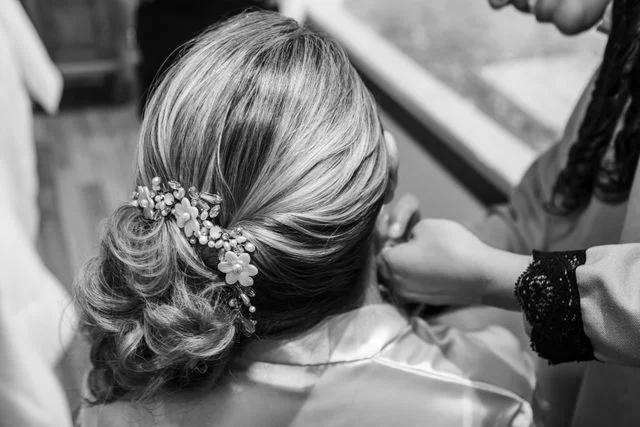
Wedding hair clips gold in tone work differently depending on where they sit. For a full updo — a chignon, low bun, or twisted knot — clips function as both structural support and decoration, usually placed in a cluster or a single diagonal line across the style rather than scattered randomly. A hair clip gold wedding look built around a bun typically uses two to three matching clips: one anchoring the base of the bun and one or two smaller accent pieces near the crown.
Half-up styles are more forgiving and tend to look better with asymmetry. A single statement clip pinned slightly off-center, just above one ear, reads as deliberate in a way that two symmetrical clips sometimes doesn’t. For brides with thicker hair, French braid styles paired with small gold clips along the braid line have become a popular alternative to a full updo, and this guide to gold clips for braided styles covers placement spacing in more detail.
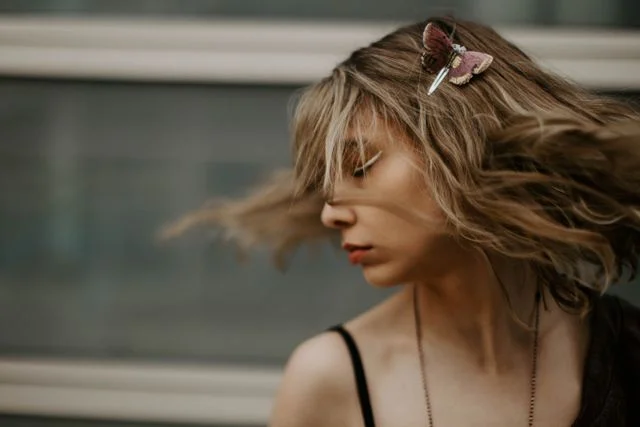
Butterfly-shaped clips deserve a separate mention because they’ve become one of the most requested wedding hair accessory shapes in the past two years, driven largely by the cottagecore and romantic-wedding aesthetic trends. They work especially well scattered through loose, undone curls rather than a tight updo, since the shape reads as more casual and whimsical than a structured comb or barrette. For brides considering this look, this breakdown of butterfly clip placement by hair length is a useful reference, since the spacing that works for long hair looks cluttered on a shoulder-length cut.
One mistake that shows up repeatedly in wedding photos: clips placed too close to the hairline at the front, which can pull hair forward and create an uneven part line by the end of the night. Placing the first clip at least two inches back from the hairline gives enough room for natural hair movement without the clip becoming the visual focal point of every front-facing photo.
How Many Clips You Actually Need
This is the question most guides skip, and it depends entirely on hair density and the style chosen. For a bride with fine to medium hair wearing a half-up style, one to two clips is typically enough — overloading thin hair with multiple heavy clips creates visible gaps and uneven sections. For thick hair in a full updo, three to five smaller clips spaced around the style usually holds better than one large clip trying to do all the work.
- Half-up style, fine hair: 1 to 2 clips
- Half-up style, thick hair: 2 to 3 clips
- Full updo, fine to medium hair: 2 to 3 clips
- Full updo, thick hair: 3 to 5 clips
For bridesmaid gifting, this matters for budgeting. A bride buying matching gold bridal hair clip sets for six bridesmaids with varying hair types should plan for at least two clip sizes in the order, rather than assuming one clip per person will work uniformly. Brands like Lulus and Mariell both offer bridal hair accessory sets specifically broken into multiple piece counts for this reason, recognizing that a single clip style rarely fits every member of a bridal party equally well.
Frequently Asked Questions
Do gold hair clips work for outdoor or beach weddings?
Yes, but plating quality matters more outdoors than indoors. Salt air and humidity speed up tarnish on lower-quality gold-plated clips, so for beach or outdoor ceremonies, rhodium-base or vermeil pieces hold their color noticeably longer than standard gold-tone clips bought purely for budget reasons.
Should bridesmaids’ clips match the bride’s clip exactly?
Not necessarily, and most stylists recommend against an exact match. A common approach is giving the bride a slightly more elaborate or larger version of the same design the bridesmaids wear, so the party looks coordinated in photos without every accessory being identical.
Can gold hair clips hold a veil in place, or do I need bobby pins too?
A single clip rarely secures a veil on its own for a full day. Most stylists still use a few hidden bobby pins underneath a decorative clip for actual hold, with the clip serving the visual function while the pins do the structural work.
Is it worth paying more for real crystal over rhinestone clips?
For most wedding budgets, no — diamante and rhinestone clips photograph nearly identically to genuine crystal under normal event lighting, and the price difference is significant. Real crystal is worth the upgrade mainly for close-up bridal portraits where a photographer is shooting macro detail shots of the hair accessory itself.
What’s the biggest mistake people make buying gold clips for a wedding?
Ordering based on photos alone without checking the actual clip mechanism. Some decorative clips use a weak slide-lock or a single small tooth that wasn’t designed to hold thick or styled hair, and they slip out within an hour of wear despite looking secure in product photos. Checking reviews specifically for hold and grip, not just appearance, avoids this.
Final Thoughts
Gold hair clips for weddings work best when the decision starts with the hairstyle and hair type, not the clip design itself. A clip that looks stunning in a product photo can still be the wrong choice if it’s too heavy for fine hair or too small to anchor a thick updo. Matching clip count and plating quality to the actual wear conditions — humidity, hair density, how long the event runs — matters more than chasing the most photographed style of the season.
Before ordering for a full bridal party, request one sample clip first, test it in the actual hairstyle planned for the day, and confirm the plating holds up after a normal amount of hairspray and humidity exposure. That one extra step prevents the most common bridal accessory complaint: clips that looked perfect online and didn’t survive contact with an actual wedding day.

Leave feedback about this