

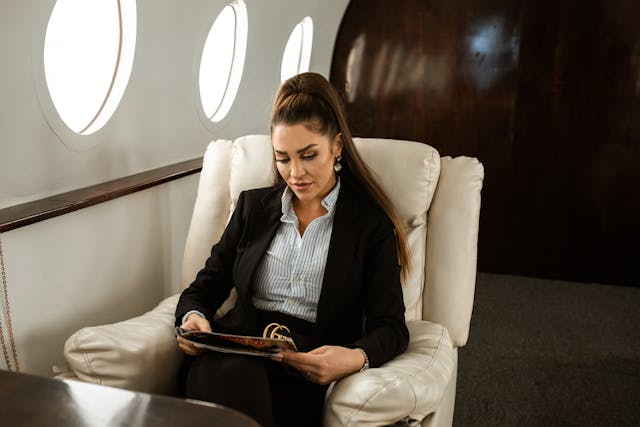
5 Things Luxury Lifestyle Magazines Do Better Than Social
The global luxury goods market reached USD 382 billion in 2025, according to Fortune Business Insights — a figure that tells only part of the story. Behind those numbers is a massive shift in how people consume luxury lifestyle content, how brands communicate prestige, and how aspirational readers decide what they want, wear, and aspire to own. A luxury lifestyle magazine sits squarely at the center of that shift, functioning as both a cultural arbiter and a commercial force.
This article covers what separates a genuine luxury lifestyle magazine from a glossy imitation, how luxury lifestyle fashion and branding are evolving in 2025 and beyond, what role influencers play in shaping luxury consumption, and how marketers can work effectively within this space. Whether you read luxury publications for inspiration or you’re building a brand that wants to be featured in them, the mechanics matter.
Most articles on this topic either describe luxury media in abstract terms or offer shallow brand name-drops without context. This one takes a different approach — examining the actual function of luxury lifestyle content, the trade-offs involved for brands and readers alike, and where the space is heading as digital and print continue to collide.
What a Luxury Lifestyle Magazine Actually Does
The word “luxury” gets attached to so many publications that it has nearly lost its signal value. A genuine luxury lifestyle magazine performs a specific cultural function: it sets standards. It tells affluent readers what is worth their attention — not just in fashion and beauty, but in hotels, food, design, travel, and the broader texture of an elevated life.
Condé Nast publications — including Vogue (US and UK), Architectural Digest, and GQ — have operated as benchmarks in this space for decades. Their editorial authority comes from access: exclusive cover shoots, interviews with designers before collections drop, features on private homes most readers will never enter. That access is the product. Readers aren’t just buying content; they are buying proximity to a world that is otherwise closed to them.
Luxurious Magazine (UK) and Upscale Living Magazine (US) represent the mid-tier of this ecosystem — publications that combine online-first strategies with luxury editorial standards. They serve readers who are aspirational but not necessarily ultra-high-net-worth, and they give brands a route to reach audiences who are actively considering premium purchases rather than just admiring them from a distance.
The honest limitation here is this: not all luxury magazines maintain consistent editorial independence. Some blur the line between advertorial and editorial in ways that erode trust over time. If you’re a reader, it’s worth knowing that a five-page feature on a resort or car is often a paid placement rather than an unsolicited endorsement. If you’re a brand, know that the most credible placements come from editorial teams that maintain a clear separation between their ad and content operations.
Luxury Lifestyle Fashion: Where Editorial Meets Commerce
According to Fortune Business Insights, the global luxury fashion market alone was valued at USD 120.1 billion in 2025, making it the largest single segment within the broader luxury goods landscape. That scale explains why fashion has always been the spine of luxury lifestyle publishing — it generates the advertising revenue that funds everything else.
The relationship between luxury fashion and lifestyle media has evolved considerably. In print’s peak years, a Vogue or Harper’s Bazaar cover placement could shift a designer’s sales trajectory within a single season. That direct correlation has weakened — not because magazines matter less to luxury fashion, but because the path from editorial exposure to purchase now runs through multiple channels simultaneously.
A reader might see a coat in a luxury lifestyle magazine editorial, follow the brand’s Instagram account, watch three YouTube reviews, read a forum thread about quality and sizing, and then buy — or not — six months later. The magazine remains influential at the awareness and aspiration stage, but it no longer controls the full customer journey. Brands that understand this use luxury editorial as the top of a deliberate funnel rather than as a standalone awareness play.
Our take: The brands that get the most value from luxury lifestyle fashion coverage are the ones that treat magazine placements as credibility anchors, not sales drivers. A full-page editorial in a respected publication gives a brand a reference point it can use across every other channel — social, email, events, and sales conversations. That secondary value is often worth more than the direct traffic the placement generates.
Luxury Lifestyle Branding: How Prestige Is Built and Maintained
Prestige is not the same as quality, though the two frequently overlap. Luxury lifestyle branding is the deliberate construction of perceived value that exceeds the functional value of a product or service. It is built through consistency of aesthetic, selectivity of distribution, control of narrative, and association with the right cultural contexts — which is where luxury media becomes indispensable.
Hermès (France) and Brunello Cucinelli (Italy) represent two instructive models of luxury branding done at the highest level. Hermès maintains extreme scarcity — its Birkin bags have waiting lists measured in years, and the brand rarely participates in promotional discounts or mass-market advertising. Brunello Cucinelli takes a different route, building its brand around a philosophy of “humanistic capitalism” that appears in editorial interviews and brand communications as often as product photography does. Both strategies use luxury media as a platform, but for different purposes — one to reinforce mystique, the other to build a values-based connection with the reader.
For emerging brands, the challenge is more acute. Luxury lifestyle branding requires sustained presence in the right publications over time, not a single placement. A feature in a respected magazine establishes a reference point, but it takes repeated appearances — in editorial, in advertising, in event sponsorships — before a brand is genuinely perceived as belonging to the luxury tier. Brands that try to shortcut this process often end up looking aspirational rather than established.
If you want to understand how luxury brands connect their identity to experiential events — a growing part of luxury lifestyle marketing — the guide to exclusive lifestyle events on Internals USA covers how these gatherings function as brand-building platforms in practice.
Luxury Lifestyle Influencers: Authority, Authenticity, and the Credibility Gap
The rise of luxury lifestyle influencers has fundamentally changed how prestige is communicated, but it has also created a credibility problem that the industry is still working through. When a magazine editor recommends a hotel or a watch, readers understand that the recommendation comes from a specific institutional voice with an established editorial standard. When an influencer recommends the same product, the relationship between recommendation and compensation is often unclear — and audiences have become sophisticated enough to sense that ambiguity.
That said, the best luxury influencers have built genuine authority in specific niches. Accounts focused on horological depth (watch collecting and history), serious wine culture, or architectural travel attract followers who are themselves knowledgeable and discerning. These audiences are more valuable to luxury brands than the mass-reach followers of general lifestyle accounts, because they convert at higher rates and carry more influence within their peer networks.
The Federal Trade Commission (FTC) in the US and the Advertising Standards Authority (ASA) in the UK both require influencers to disclose paid partnerships — a regulation that is widely violated and inconsistently enforced. For brands, this creates legal exposure. For readers, it means you should default to skepticism when an influencer’s content aligns suspiciously well with a brand’s current campaign cycle.
For those interested in how influencer culture intersects with fashion in the luxury space, the lifestyle section of Internals USA covers celebrity and influencer style with regular updates on how trends move from editorial to consumer culture.
Quick Note: The most effective luxury lifestyle influencer partnerships in 2025 are long-term brand ambassador arrangements — typically 12 to 24 months — rather than one-off sponsored posts. Sustained presence builds the kind of association that changes perception; a single post moves products but rarely moves brand positioning.
Luxury Lifestyle Marketing: What Works and What Looks Like It Should Work
Luxury lifestyle marketing operates by a different logic than mass-market advertising. The goal is not reach — it is the right reach. A luxury car brand spending heavily on a Super Bowl spot is making a statement about cultural presence, not optimizing for conversion. The same brand placing a three-page spread in a respected print publication is speaking to a reader who is actively in the market for premium goods and who trusts that publication’s editorial judgment.
The most common mistake in luxury lifestyle marketing is confusing aesthetics with strategy. A beautifully photographed campaign with a vague aspirational message is not luxury marketing — it is luxury-adjacent aesthetics. Real luxury marketing is specific: it names a product, a heritage, a differentiating detail, and an exclusive distribution point. It trusts the reader’s intelligence. It does not overexplain, and it does not discount.
Digital luxury lifestyle marketing has introduced new tools but has also introduced new risks. Programmatic advertising — placing ads automatically across a wide network of sites — is fundamentally incompatible with luxury positioning. If a brand’s ad appears next to low-quality content or on a site that undercuts the brand’s aesthetic, the placement does real damage. Premium direct buys with specific publication partners remain the appropriate channel for luxury lifestyle marketing, even at significantly higher CPMs.
Quick Note: According to Mordor Intelligence, online luxury sales accounted for approximately 32.5% of market share in 2025 and are growing at a faster rate than offline channels. Luxury brands that have historically resisted e-commerce are now building direct digital retail experiences — but they are doing so within tightly controlled brand environments, not through third-party marketplaces.
Frequently Asked Questions
What is the best luxury lifestyle magazine in the US and UK?
In the US, Architectural Digest, Vogue, and Town & Country consistently maintain the highest editorial standards for luxury lifestyle coverage. Each has a distinct focus: Architectural Digest covers design and interiors at the highest level, Vogue owns fashion and culture, and Town & Country speaks to the intersection of wealth, philanthropy, and social life. In the UK, Tatler, Harper’s Bazaar UK, and Luxurious Magazine anchor the luxury end of the market. For digital-first luxury content, Pursuitist (US) and Luxurious Magazine (UK) both produce editorial-quality content without the print overhead. The “best” publication depends on which luxury category — fashion, travel, design, or broad lifestyle — you want to engage with most deeply.
How do luxury lifestyle brands get featured in top magazines?
Editorial features in top luxury publications are earned through a combination of PR relationships, genuine newsworthiness, and advertising presence. Most major luxury lifestyle magazines maintain a clear — if imperfect — separation between editorial and advertising, but advertising investment typically opens doors to editorial conversations. Brand PR teams build relationships with editors and contributing writers over time, pitching story angles that serve the publication’s editorial needs rather than the brand’s sales cycle. Exclusively launching a product, opening a notable flagship store, or connecting a product to a broader cultural trend are the angles most likely to generate genuine editorial interest. Cold pitching without an existing relationship or a genuinely compelling story rarely produces results at the top tier.
Are luxury lifestyle influencers worth the investment for brands?
It depends entirely on the influencer’s audience quality and the brand’s specific goals. Micro-influencers with 20,000 to 100,000 highly engaged followers in a specific luxury niche — fine watches, rare wines, architectural travel — often deliver better ROI than mega-influencers with millions of broadly interested followers. The key metric is not reach but audience composition: what percentage of followers are genuinely in the market for the product being promoted? For brand-awareness goals rather than direct conversion, macro luxury influencers with aspirational audiences can be effective, but expect to pay for association rather than clicks. Any influencer arrangement over $5,000 (US) or £3,000 (UK) should include a disclosure clause and a usage rights agreement covering how the brand can repurpose the content.
What is the difference between a luxury lifestyle magazine and a lifestyle magazine?
The distinction is more than price point — it is about editorial authority, advertiser profile, and reader intent. A lifestyle magazine covers wellness, home, fashion, and culture for a broad readership. A luxury lifestyle magazine does the same but for an affluent readership that is actively spending at premium price points, and it maintains access to brands, designers, and experiences that a general lifestyle publication cannot secure. The advertising is different too: luxury lifestyle magazines carry campaigns from Louis Vuitton, Rolex, and Four Seasons rather than from mid-market brands. That advertiser quality both signals and sustains the editorial positioning. A publication calling itself a luxury lifestyle magazine without the advertiser base and editorial access to match is aspirational branding, not genuine luxury publishing.
How has luxury lifestyle content changed in the digital era?
The core editorial mission — curating the best for an affluent, discerning audience — has not changed. The delivery mechanism, timeline, and interactivity have changed dramatically. Print luxury magazines once set trends months in advance and had no competition for editorial authority in their category. Digital luxury lifestyle content now operates in real time, competes with social media for attention, and must justify itself against free content that is often aesthetically comparable. The publications that have navigated this most successfully — Architectural Digest, Condé Nast Traveller — have used digital to reach younger affluent readers without cannibalizing the print product’s premium positioning. Video content, specifically long-form editorial video rather than social-first short-form, has emerged as the most effective format for luxury lifestyle storytelling beyond print.
Is print still relevant for luxury lifestyle magazines in 2025?
Yes — specifically because scarcity and physicality are luxury values. According to the Magazine Publishing Market Report 2026, nearly 70% of print magazine readers in the luxury and niche segment still prefer the physical reading experience over digital equivalents. A beautifully produced print issue of a luxury lifestyle magazine functions as an object, not just a content delivery mechanism. It sits on a coffee table, gets passed between friends, and holds its visual impact across multiple viewings in a way digital content does not. Luxury brands understand this — premium print ad rates remain high precisely because the medium itself carries a quality signal that programmatic digital cannot replicate. Print luxury magazines will continue to decline in total circulation but will not disappear, because their physical form is part of the product.
Final Thoughts
A luxury lifestyle magazine is not just a publication — it is a calibration tool for an affluent audience deciding how to allocate attention, aspiration, and spending. For readers, understanding the editorial model helps you consume the content more critically and more usefully. For brands, understanding how luxury lifestyle marketing actually works — not how it looks like it works — is the difference between building genuine prestige and performing it without substance.
If you are a brand looking to enter the luxury lifestyle space, start with editorial relationships rather than advertising placements, and commit to a sustained presence over at least 18 months before evaluating results. If you are a reader or content creator exploring this world, the exclusive lifestyle events guide on Internals USA is a practical next step — it shows how luxury lifestyle values translate into real-world experiences and what it takes to participate in them meaningfully.



Leave feedback about this