

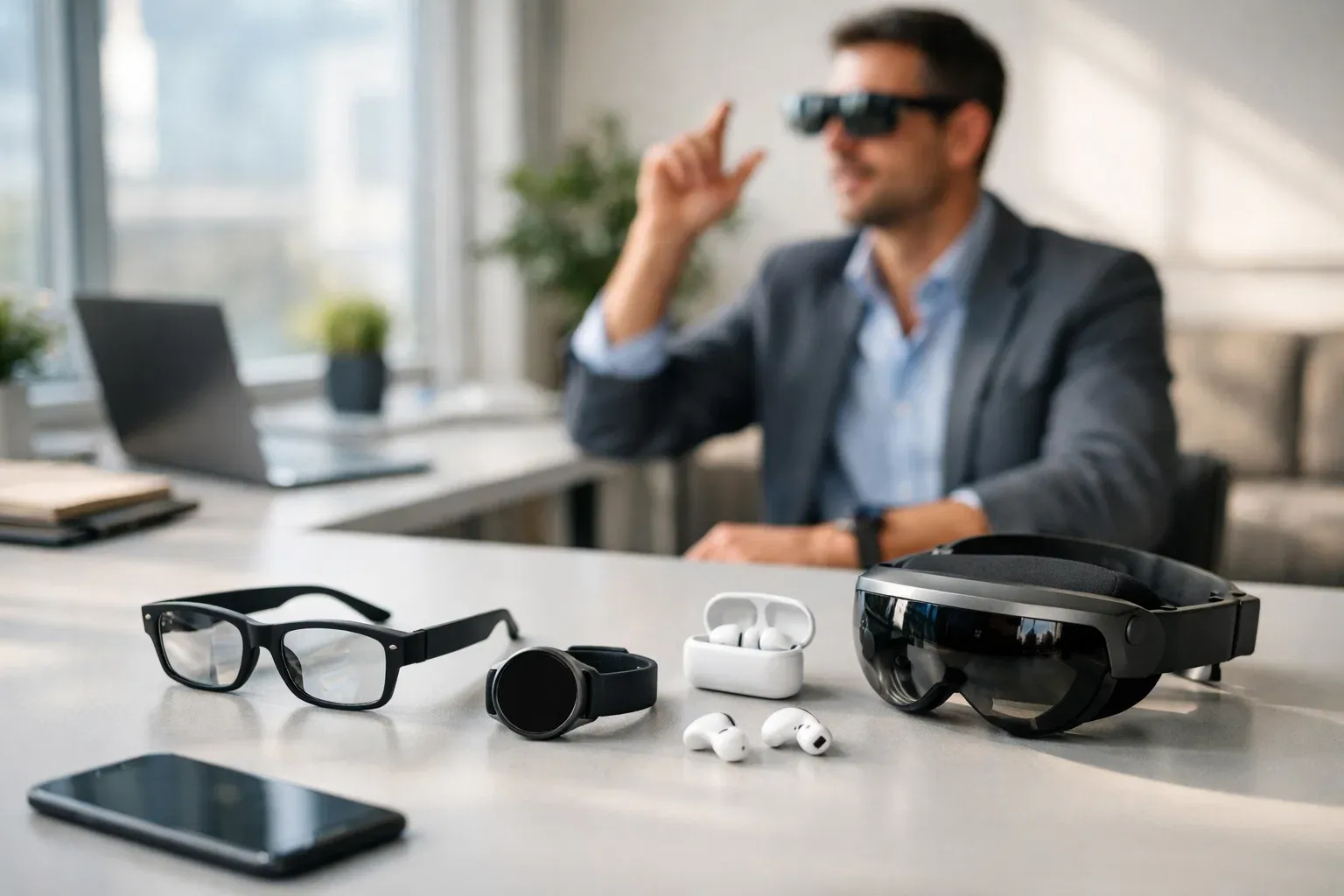
tech giants envision future beyond smartphones
Tech Giants Envision a Future Beyond Smartphones: How Human Behavior Will Change Next
Introduction
For nearly two decades, smartphones have been the center of modern digital life. From communication and entertainment to work, navigation, and health tracking, a single rectangular screen has controlled how people interact with technology. However, despite yearly launches and marketing hype, true smartphone innovation has slowed. Most new models feel familiar—better cameras, faster chips, slightly refined designs—but nothing fundamentally changes how people live.
This slowdown is exactly why tech giants envision a future beyond smartphones. The goal is not to eliminate phones overnight, but to reduce human dependence on them. Companies like Apple, Google, Meta, and Amazon are quietly redesigning the next primary computing platform—one that fits naturally into daily life rather than demanding constant attention.
Instead of pulling phones out of pockets dozens of times a day, future technology aims to work around users, in the background, and even before people realize they need it. This shift represents more than a hardware change; it marks a transformation in human behavior. The future beyond smartphones focuses on less screen time, fewer taps, and more intuitive interactions driven by artificial intelligence, wearables, and ambient computing.
Understanding this transition is essential, not just for tech enthusiasts, but for anyone curious about how work, communication, and daily routines will evolve over the next decade.
Why Tech Giants Envision a Future Beyond Smartphones
The smartphone market has reached a point of saturation. Nearly everyone who wants a smartphone already owns one, and upgrade cycles are getting longer. Consumers no longer feel compelled to replace devices every year, and small improvements fail to justify high prices. This reality forces technology companies to search for the next major growth opportunity.
User fatigue is another critical factor. Endless notifications, social media scrolling, and screen addiction have created mental overload. People increasingly seek digital balance, even as they rely on technology more than ever. Tech giants see this tension as both a problem and an opportunity.
Apple’s long-term investments in spatial computing, Google’s AI-first ecosystem strategy, and Meta’s shift toward immersive interfaces all point in the same direction. These companies want to own the next “default interface”—the primary way humans interact with digital systems.
A key insight driving this vision is that smartphones are slowly becoming support devices rather than central interfaces. They still matter, but they no longer represent the most natural way to access information. The future lies in interfaces that adapt to humans, not the other way around.
Reader takeaway: Smartphones aren’t failing; they’re being outgrown.
The Post-Smartphone Vision Explained in Simple Terms
When people hear about a future beyond smartphones, they often imagine a single revolutionary gadget replacing phones entirely. In reality, the post-smartphone era is not about one device. It’s about an ecosystem shift where multiple technologies work together seamlessly.
Instead of opening apps, users receive information automatically based on context. Instead of staring at screens, they interact through voice, gestures, and intelligent automation. The smartphone still exists, but it fades into the background.
From Screen-Based Interaction to Environment-Based Interaction
Technology is moving away from being confined to screens. Information will appear within physical environments—through glasses, speakers, and smart surfaces—without requiring deliberate attention.
From Taps to Voice, Gestures, and AI Prediction
The future reduces manual input. Voice commands, subtle gestures, and AI predictions replace endless tapping. Technology begins to anticipate needs rather than wait for instructions.
Reader takeaway: The post-smartphone future prioritizes presence over screens.
Augmented Reality (AR) and Smart Glasses as the Next Interface
Augmented reality represents one of the strongest candidates to replace smartphones as the primary interface. Unlike virtual reality, AR enhances the real world rather than replacing it, making it far more practical for daily use.
Smart glasses allow digital information to appear directly in a user’s field of vision. Navigation arrows on streets, real-time translations, and notifications become visible without pulling out a phone.
Meta’s Ray-Ban smart glasses demonstrate how subtle this shift can be, while Apple Vision Pro shows the long-term potential of spatial computing. Although current models are expensive or limited, the direction is clear.
Consumer Use Cases
AR glasses can handle navigation, reminders, fitness data, and contextual information seamlessly. This reduces cognitive load and keeps users engaged with their surroundings.
Phones struggle to deliver true AR because they require handheld screens. Glasses free users’ hands and attention.
Reader takeaway: AR works best when technology becomes invisible.
Artificial Intelligence Replacing Touchscreens
Artificial intelligence is emerging as the most important interface layer in the post-smartphone era. Instead of navigating apps, users communicate intentions, and AI handles execution.
Modern AI systems understand context, preferences, and habits. This allows technology to act proactively rather than reactively.
AI Assistants Beyond Siri and Google Assistant
Next-generation assistants go beyond answering questions. They manage schedules, summarize information, book services, and complete tasks without step-by-step commands.
An AI that prepares information before it’s requested fundamentally changes how people interact with devices.
Reader takeaway: AI reduces friction, not control.
Wearables Becoming the New Personal Tech Hub
Wearables are evolving from accessories into primary computing devices. Smartwatches, rings, earbuds, and glasses collect data continuously and respond instantly.
Unlike smartphones, wearables are always on. They track health, deliver notifications, and respond to voice commands without disrupting daily activity.
Health and Productivity Dominance
Wearables excel at passive monitoring. Heart rate, sleep, movement, and stress levels are tracked effortlessly, offering insights smartphones cannot.
Phone vs Wearable Ecosystem Comparison:
Phones require attention; wearables offer assistance.
Reader takeaway: Always-on beats always-checking.
Ambient Computing and Life Without Constant Screens
Ambient computing refers to technology that operates quietly in the background. Devices communicate with each other and respond automatically to users’ needs.
Smart homes adjust lighting, temperature, and reminders without manual input. Information flows naturally rather than interrupting attention.
Smart Homes and Smart Environments
From offices to vehicles, environments become intelligent. Users interact less but benefit more.
Unique insight: The best technology is barely noticed.
Brain-Computer Interfaces and Extreme Future Possibilities
Brain-computer interfaces represent a more distant frontier. Current BCIs focus primarily on medical applications, helping patients regain communication or movement.
Medical vs Consumer Applications
Consumer BCIs face ethical, technical, and privacy challenges. Adoption remains long-term rather than immediate.
Balanced view: Revolutionary, but not imminent.
Challenges Tech Giants Must Solve Before Replacing Smartphones
Several obstacles stand between current technology and a true post-smartphone world. Battery life remains a major limitation, especially for wearables and AR devices.
Privacy concerns also loom large. Always-on devices raise questions about data ownership and surveillance.
Why Smartphones Will Not Disappear Overnight
Phones offer reliability, power, and familiarity. A hybrid future is far more realistic.
Reader takeaway: Transition beats replacement.
Timeline: When Will Smartphones Actually Lose Dominance?
Between 2025 and 2027, smartphones shift into supporting roles as AI and wearables handle more tasks. From 2028 to 2032, ecosystem-driven interaction becomes the default.
This is not the death of smartphones, but the end of their dominance.
What This Shift Means for Everyday Users
Daily life becomes smoother. Notifications arrive contextually, navigation happens passively, and routines adapt automatically.
Workflows improve as technology fades into the background. Entertainment becomes immersive without demanding attention.
Reader takeaway: Less effort, more flow.
Are We Ready for a World Beyond Smartphones?
Technology readiness is advancing faster than psychological readiness. Many users struggle to trust AI and automated systems.
Social norms will need to evolve, balancing convenience with control.
The transition will be gradual, giving society time to adapt.
Conclusion
Tech giants envision a future beyond smartphones that is grounded in reality, not science fiction. Smartphones will remain important, but their role will shrink as ecosystems driven by AI, wearables, and ambient computing take center stage.
The future is not about more screens or faster devices. It’s about technology that understands context, respects attention, and integrates seamlessly into life.
As smartphones fade from the spotlight, something more powerful emerges—not a device, but an experience.
The biggest change won’t be the technology we use, but how little we notice it.





Leave feedback about this