

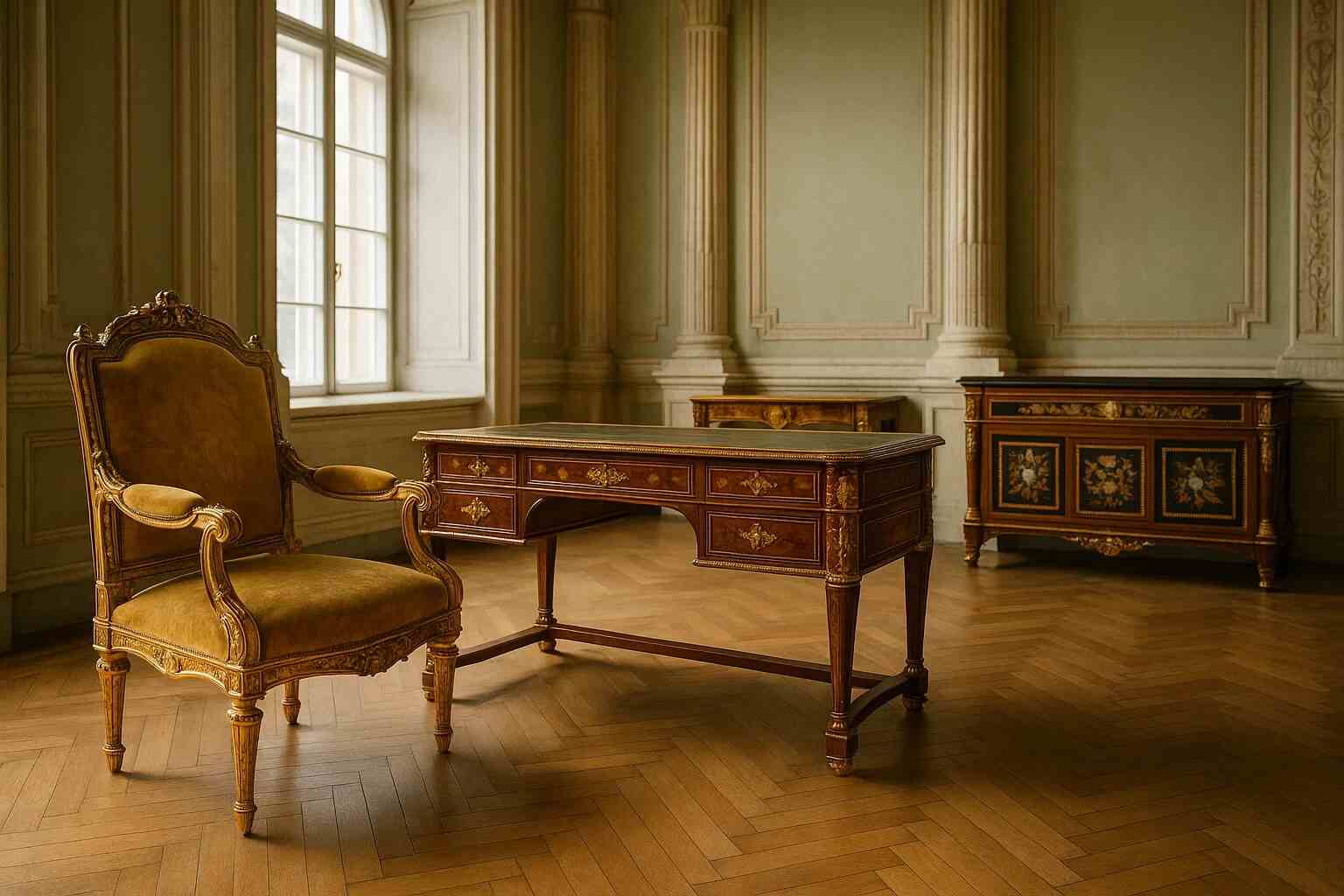
Catherine the Great Furniture: How Imperial Neoclassical Style Changed Russian Design
Introduction
When we talk about Catherine the Great furniture, we are referring not just to luxurious chairs, tables, and cabinets, but to an entire era of Russian design that symbolized imperial power, cultural sophistication, and Enlightenment ideals. Catherine II, Empress of Russia from 1762 to 1796, commissioned furniture that reflected her vision of a modern and enlightened empire.
Her collection is celebrated for its Neoclassical elegance, meticulous craftsmanship, and the blending of European and Russian styles. From gilded ormolu mounts to intricate marquetry, these pieces demonstrate not only aesthetic brilliance but also political and cultural symbolism. This article explores the history, style, materials, and legacy of her furniture, and provides guidance on how enthusiasts can identify and appreciate these masterpieces today.
Historical Context: Catherine’s Reign and Her Vision
Catherine the Great ruled Russia during a transformative period, aiming to modernize her empire and align it with contemporary European culture. Her ambitious reforms extended beyond politics to arts and interior design, and furniture commissioning became an essential tool for displaying her authority and sophistication.
Catherine established workshops that produced hundreds of pieces for palaces across Russia. These designs blended European techniques with Russian craftsmanship, demonstrating the empire’s refinement and cultural confidence. Furniture was strategically placed in prominent rooms to impress foreign dignitaries, serving as a subtle yet powerful expression of imperial identity.
Style Evolution: From Rococo to Neoclassicism
During her reign, Catherine’s furniture evolved from the ornate Rococo style to the more structured and symbolic Neoclassical style. Early pieces featured curved forms, pastel colors, and elaborate carvings, emphasizing leisure and aristocratic elegance. Later, the Neoclassical style dominated, showcasing symmetry, geometric motifs, and Greco-Roman influences such as columns, laurel wreaths, and classical figures. This shift reflected Catherine’s intellectual ideals, emphasizing order, reason, and the grandeur of the Russian Empire.
Key Materials and Craftsmanship
Catherine the Great furniture is distinguished by luxurious materials and exceptional craftsmanship. Common woods included mahogany, Karelian birch, walnut, and satinwood, while gilded bronze (ormolu) was widely used for decorative mounts. Stone inlays like pietra dura, featuring jasper, lapis lazuli, and marble, added to the elegance of her interiors.
Artisans employed advanced techniques such as marquetry for intricate veneer patterns, precise veneering, and the inclusion of secret compartments and mechanical features in desks and cabinets. Each piece was designed to combine functionality with visual splendor, highlighting the skill of both Russian and imported European craftsmen.
Symbolism & Political Messaging in Furniture
Catherine’s furniture carried strong symbolic meaning. Motifs such as Greek keys, columns, and laurel wreaths reflected Enlightenment ideals of reason and virtue. Beyond aesthetics, furniture served as a tool for asserting imperial authority and sophistication. Catherine often influenced design choices personally, approving motifs, colors, and details to communicate specific cultural and political messages.
Master Craftsmen & Influential Designers
The Empress collaborated with both Russian and European masters to achieve her vision. Renowned European figures like David Roentgen, who created mechanical desks, Charles Cameron for palace interiors, and Jean-Baptiste Vallin de la Mothe influenced architectural and decorative aspects. Russian artisans such as Andrey Voronikhin, Matvey Veretennikov, and the Gambs Brothers played key roles in translating these designs into reality. The collaboration between European masters and local craftsmen created a unique Russian interpretation of Neoclassical style.
Iconic Pieces & Palaces
Some of Catherine’s most celebrated furniture pieces include the mechanical desks by David Roentgen, elegantly gilded armchairs, and elaborately decorated commodes. These were placed in the palaces that define her legacy: Winter Palace, Catherine Palace at Tsarskoye Selo, Pavlovsk, and Peterhof. Notable rooms like the Amber Room, Green Drawing Room, and Golden Cabinet housed furniture that reflected both craftsmanship and imperial prestige.
Authenticity & How to Identify Original Catherine-Era Furniture
Collectors and historians identify original pieces through careful observation of wood quality, precise joinery, ormolu mount details, and provenance marks. Authentic craftsmanship often features dovetailing, consistent veneer patterns, and subtle yet sophisticated inlay work. Common reproductions, by contrast, may overuse glue, feature generic motifs, or have mismatched veneers.
Preservation, Restoration & Legacy
Today, Catherine-era furniture survives mainly in museums and private collections. Restoration efforts focus on maintaining original finishes, preserving structural integrity, and conserving historical accuracy. Her furniture influenced later Russian styles and continues to inspire modern designers seeking Neoclassical elegance. Many palaces provide guided tours, allowing visitors to study the artistry, materials, and historical context firsthand.
Bringing Catherine the Great Style into Modern Interiors
Modern interiors can incorporate Catherine’s style without replicating the grandeur entirely. Homeowners can use replica armchairs, desks, or commodes with gilded accents, and incorporate classical motifs such as columns, laurel wreaths, and Greek key patterns. Combining rich wood tones with contemporary fabrics allows for a balance of historical elegance and modern functionality, making the style accessible and visually striking in today’s homes.
Pros & Cons of Catherine the Great–Style Furniture
Pros:
Timeless elegance and historical prestige
High-quality materials and expert craftsmanship
Rich cultural and artistic value
Cons:
High cost for originals or quality replicas
Requires careful maintenance
Large pieces may need ample space in homes
FAQ
What style of furniture did Catherine the Great prefer?
Catherine favored Neoclassical designs, though early pieces were Rococo. Symmetry, classical motifs, and gilded accents were characteristic.
Who made her furniture?
Both Russian artisans like Voronikhin and Veretennikov, and European masters including David Roentgen and Charles Cameron.
Where can I see Catherine the Great’s furniture today?
In Russian palaces and museums such as the Hermitage, Winter Palace, and Catherine Palace (Tsarskoye Selo).
What materials were used?
Mahogany, birch, walnut, satinwood, gilded bronze (ormolu), marble, and pietra dura stone inlays.
Why is Catherine the Great’s furniture important in design history?
It fuses European and Russian styles, exemplifies expert craftsmanship, and reflects cultural and political symbolism.
Are there modern reproductions of Catherine-era furniture?
Yes, high-quality replicas are available for collectors and designers, often inspired by original designs and materials.
Conclusion
Catherine the Great furniture remains a benchmark of Russian craftsmanship and cultural sophistication. Her vision transformed palatial interiors into displays of power, elegance, and Enlightenment ideals. From Neoclassical symmetry to gilded ornamentation, each piece communicates a story of imperial prestige and artistic excellence.
For modern enthusiasts, incorporating elements of her style allows interiors to embody historical richness while maintaining contemporary functionality. Whether through museum visits, replicas, or inspired decor, the elegance of Catherine’s furniture continues to captivate and inspire globally.





Leave feedback about this