

20 Traditional Dishes USA: Discover America’s Iconic Foods & Their Origins
Introduction
Traditional dishes in the USA are more than just food; they are a lens into the country’s history, culture, and regional diversity. From the rich Southern gumbo to the iconic apple pie, these dishes tell stories of immigration, adaptation, and local innovation. American cuisine blends Indigenous, European, African, and immigrant influences, resulting in flavors that are both comforting and distinctive.
In this article, we will explore 20 traditional dishes in the USA, highlighting their history, regional variations, and cultural significance. You’ll also discover modern twists and practical tips for trying or cooking these iconic foods at home. Whether you are a food enthusiast, traveler, or someone curious about American culture, this guide will help you understand what makes American cuisine uniquely “traditional.”
What Makes a Dish “Traditionally American”
A dish is considered traditionally American when it has a historical presence, cultural adoption, or regional significance. Many classic dishes evolved from Indigenous ingredients, immigrant cooking traditions, and local innovations.
- Indigenous Influence: Corn, beans, squash, and succotash were staples for Native Americans, forming the foundation of early American cuisine.
- European Influence: Settlers brought recipes for bread, pies, and stews, which adapted to local ingredients.
- African Influence: Enslaved Africans contributed techniques like frying, seasoning, and the creation of soul food staples.
- Fusion & Adaptation: Over centuries, traditional dishes have fused regional tastes, like Cajun and Creole cuisine, or reinvented classic desserts with modern twists.
Iconic Classics of American Comfort Food
Hamburger The Symbol of Modern Americana
The hamburger represents convenience, nostalgia, and indulgence. Though the concept originated in Germany, the hamburger as we know it was popularized in the U.S. in the early 20th century. From roadside diners to gourmet burger joints, it has become an emblem of American fast food culture.
Hot Dog Ballparks, Street Food, and More
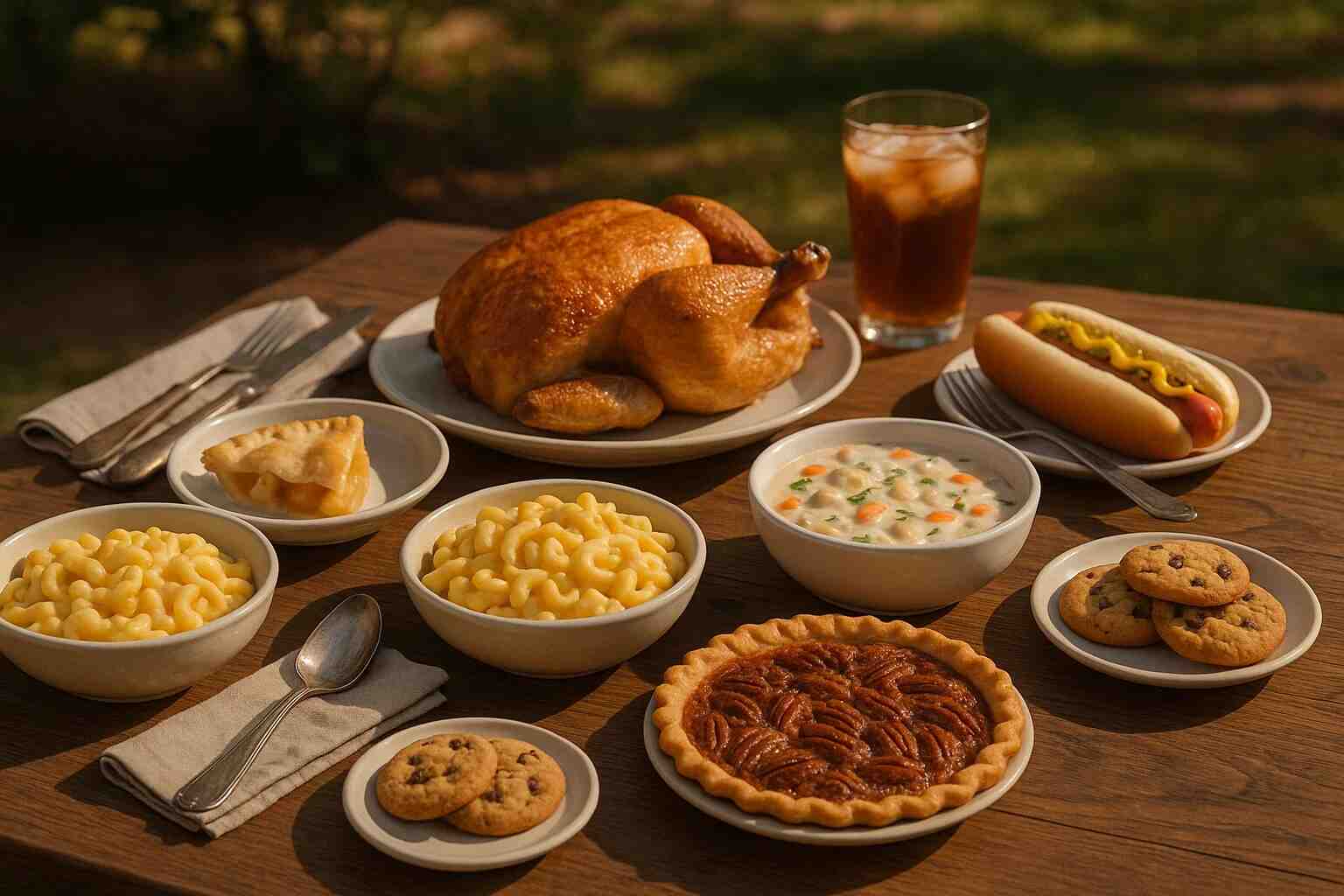
Originating from German sausages brought by immigrants, the hot dog became a street food staple. Today, it is synonymous with baseball games, summer cookouts, and regional variations like Chicago-style and New York-style hot dogs.
Macaroni & Cheese A Creamy Nostalgic Staple
Mac & cheese dates back to colonial America, where pasta and cheese casseroles became comfort food for families. Its rich, cheesy flavor continues to make it a favorite for children and adults alike.
Sweet Traditions American Desserts
Apple Pie History, Symbolism, and Why “As American as Apple Pie”
Apple pie became a symbol of American prosperity and ingenuity. Introduced by European settlers, it evolved into a patriotic dessert, celebrated on holidays and in popular culture.
Pecan Pie Southern Roots and Holiday Tradition
Originating in the Southern U.S., pecan pie combines Indigenous pecans with European-style custards. It is a staple for Thanksgiving and festive gatherings.
Chocolate Chip Cookies Invention and Cultural Impact
Invented in Massachusetts in the 1930s, chocolate chip cookies are now a ubiquitous dessert. Their chewy, sweet flavor has made them a comfort food icon across the U.S.
Hearty Southern & Soul Food Staples
Fried Chicken Origin and Evolution
Fried chicken has roots in both Southern European frying techniques and African-American cooking traditions. Today, it is a beloved dish nationwide, often served with biscuits and gravy.
Grits Native American Corn Legacy
Grits were originally a staple for Native Americans and early settlers in the South. Made from ground corn, grits can be served savory or sweet and remain a breakfast favorite.
Hoppin’ John Black-Eyed Peas + Rice, Meaning for New Year’s
This dish combines West African ingredients with Southern traditions. Eating Hoppin’ John on New Year’s is believed to bring prosperity and good luck.
Regional American Cuisine
Clam Chowder New England vs Manhattan Style
New England clam chowder is creamy and comforting, while Manhattan clam chowder is tomato-based. Both reflect the coastal influence and immigrant history of their regions.
Jambalaya & Gumbo Creole / Cajun Roots
From Louisiana, these dishes are a fusion of French, Spanish, African, and Indigenous influences. They are rich, flavorful, and showcase the diversity of Southern cuisine.
Charleston Red Rice Gullah Heritage
Originating from the Gullah people of South Carolina, this dish combines rice, tomatoes, and spices, preserving African culinary traditions in America.
New England Boiled Dinner Immigrant & Irish Adaptations
Boiled dinner features corned beef, cabbage, and root vegetables, reflecting Irish and European immigrant influence on American cuisine.
One-Pot & Comfort Dishes from American History
- Pot Roast / Yankee Pot Roast: Slow-cooked meat and vegetables, a staple in Northeastern homes.
- Succotash: Corn and beans dish with Indigenous roots, nutritious and versatile.
- Natchitoches Meat Pie: A regional Louisiana specialty blending French and Spanish flavors in a savory pastry.
Foods Invented in America (But Now Beloved Traditional)
Chimichanga Americanized Southwestern Dish
A fried burrito that gained popularity in Arizona, combining Mexican roots with American innovation.
German Chocolate Cake Origin Story in Texas
Created by a Texan baker in the 19th century, this dessert became a national favorite with its unique coconut-pecan frosting.
Lobster Roll East Coast Invention
Originating in New England, the lobster roll combines fresh seafood with buttered bread, showcasing American coastal cuisine.
Indigenous & Native American Influences
Fry Bread History, Controversy, and Cultural Meaning
Fry bread was created from government-issued rations but became a symbol of resilience and culinary identity among Native Americans.
Cornbread’s Native Roots Maize Importance and Legacy
Cornbread, made from cornmeal, highlights the central role of maize in Indigenous diets and early American cooking.
Traditions Today How These Dishes Live On in 2025
Traditional dishes continue to evolve with healthier adaptations, vegan versions, and global fusion interpretations. They remain central to family holidays, regional pride, and America’s culinary identity. Restaurants, food bloggers, and chefs are actively preserving classic recipes while creatively reinventing them for modern palates.
Pros & Cons of Traditional American Dishes
Pros:
- Rich cultural heritage
- Comforting flavors
- Regional diversity and creativity
Cons:
- Often high in fat, sugar, or sodium
- Some traditional dishes overlook minority culinary contributions
- Can be calorie-dense if consumed frequently
How to Try & Cook These Dishes
- Home Cooking Tips: Use authentic ingredients and regional spices for traditional flavors.
- Travel & Food Tours: Explore Southern soul food, New England seafood, or Midwestern comfort classics.
- Recommended Resources: Food blogs, cookbooks, culinary museums, or guided food tours can enhance the experience.
Conclusion
Exploring traditional dishes in the USA is a journey through history, culture, and regional flavors. From comforting classics like fried chicken and mac & cheese to regional specialties like gumbo and red rice, each dish tells a story of heritage and innovation. Today, these foods continue to inspire chefs, families, and food enthusiasts alike, demonstrating that “traditional” is both timeless and evolving. Celebrate American cuisine by cooking, tasting, and sharing these iconic dishes.
FAQ
What are some traditional American foods?
amburgers, apple pie, fried chicken, hot dogs, mac & cheese, and pecan pie are classic examples.
Which dishes are considered iconic American cuisine?
Apple pie, hamburgers, fried chicken, and chocolate chip cookies are widely recognized as iconic American foods.
What is a traditional American regional dish from the South?
Gumbo, jambalaya, fried chicken, and Hoppin’ John are traditional Southern dishes.
What Native American foods are still eaten in the U.S. today?
Cornbread, succotash, fry bread, and wild rice dishes maintain Indigenous culinary traditions.
How did apple pie become an American symbol?
Introduced by European settlers, apple pie evolved into a patriotic dessert representing prosperity, home, and tradition.
What are traditional American holiday foods?
Turkey, cranberry sauce, pecan pie, pumpkin pie, and mashed potatoes are commonly served during Thanksgiving and Christmas.
How have traditional American dishes evolved in modern cuisine?
Many dishes have been reinterpreted with healthier ingredients, plant-based alternatives, or global fusion influences while preserving traditional flavors.





Leave feedback about this