

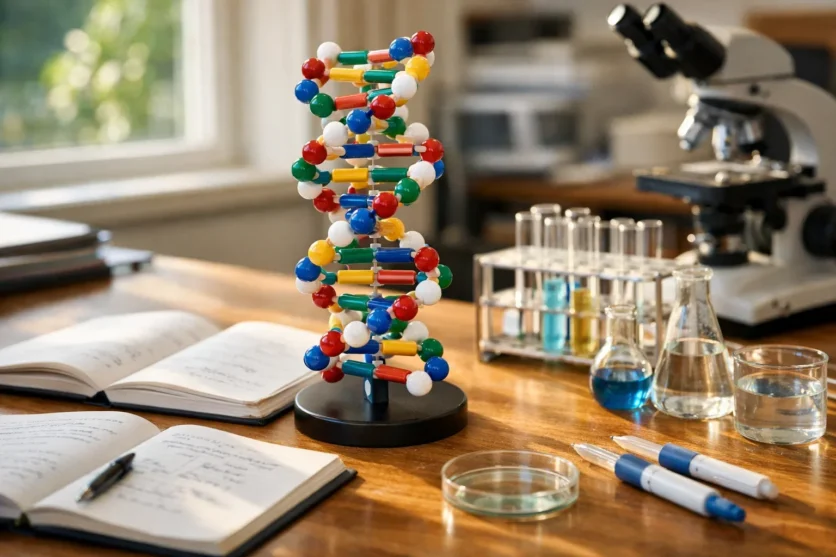
Nukleotidy: Functions, Types, and Uses in 2026
Introduction
Nucleotides are the microscopic architects of life, yet they often remain a mystery to many. When I first dove into biology, I was fascinated by how these tiny molecules could hold the blueprint for every living thing. They are far more than just abstract concepts in a textbook; nucleotides are the active, essential components that build our very existence, from storing our genetic data to powering our cells. Understanding them is fundamental to understanding life itself.
In a world where topics like mRNA vaccines and genetic engineering are part of daily conversation, knowing about nucleotides is more relevant than ever. My goal with this guide is to break down this complex subject into simple, understandable parts. I want to share the clarity I’ve gained over the years, helping you connect the dots between these molecules and their incredible real-world impact.
We will explore everything you need to know about nucleotides, including:
- Their basic definition and structure.
- The crucial differences between the nucleotides in DNA and RNA.
- Their vital role in storing and transferring cellular energy.
- Practical applications in modern science and medicine.
- Common myths and misconceptions, demystified.
By the end, you’ll have a solid grasp of what nucleotides are, how they work, and why they are so incredibly important.
Quick Overview
Nucleotides are the fundamental building blocks of nucleic acids, such as DNA and RNA. Each nucleotide consists of three parts: a sugar molecule, a phosphate group, and a nitrogenous base. They are essential for storing genetic information, transferring cellular energy (as ATP), and signaling within cells.
Introduction to Nucleotides
At the very foundation of biology, we find nucleotides. Think of them as the alphabet of life. Just as letters form words and sentences to carry information, these molecules link together to write the genetic instructions for every living organism. Without them, there would be no DNA, no RNA, and no way to pass traits from one generation to the next.
The discovery of nucleotides dates back to the late 19th century, but their full significance wasn’t truly appreciated until the structure of DNA was unraveled in the 1950s. Since then, our understanding has exploded. We now know that the role of nucleotides extends far beyond just storing genetic code. They are central players in the day-to-day operations of our cells.
Here’s a quick look at their importance:
- Building Blocks: Nucleotides are the monomers that polymerize to form nucleic acids, the long chains of DNA and RNA.
- Genetic Information: The sequence of nucleotides in DNA stores the complete instruction manual for building and maintaining an organism.
- Energy Currency: Specific nucleotides, like adenosine triphosphate (ATP), act as the primary energy carriers for countless cellular processes.
- Cellular Signaling: They also function as signaling molecules, helping cells respond to hormones and other external stimuli.
Understanding these multifaceted molecules is the first step toward appreciating the elegant complexity of life.
The Chemical Structure of Nucleotides
To really understand what nucleotides do, it helps to know what they are made of. When I first learned this, picturing it like a simple three-part kit was very helpful. Every single nucleotide, whether it’s destined for DNA or RNA, has the same basic architecture.
The structure is composed of three distinct components chemically bonded together:
- A Phosphate Group: This is the “acid” part of “nucleic acid.” A nucleotide can have one, two, or three phosphate groups. The bonds between these phosphates store a significant amount of energy, which is why molecules like ATP are so important.
- A Five-Carbon Sugar: This sugar molecule sits at the center, acting as the backbone. There are two types, and this difference is critical:
- Deoxyribose is found in DNA (Deoxyribonucleic Acid).
- Ribose is found in RNA (Ribonucleic Acid). The only difference is that ribose has one more oxygen atom than deoxyribose.
- A Nitrogenous Base: This is the component that carries the genetic information. The bases come in two chemical forms:
- Purines: These are larger, double-ring structures. The two purines are Adenine (A) and Guanine (G).
- Pyrimidines: These are smaller, single-ring structures. The pyrimidines are Cytosine (C), Thymine (T), and Uracil (U).
The key distinction in bases is that Thymine (T) is found almost exclusively in DNA, while Uracil (U) is found in RNA. The combination of the sugar and the base determines the identity and function of the different nucleotides.
Types of Nucleotides
While all nucleotides share a common structure, the variations in their sugar and nitrogenous base components lead to different types, each with a specific role. Broadly, we can categorize them based on the nucleic acid they form (DNA or RNA) and their other biological functions.
The most well-known types are the nucleotides in DNA and RNA. These are the building blocks for our genetic material.
- DNA Nucleotides: These contain the sugar deoxyribose and are abbreviated as dATP, dGTP, dCTP, and dTTP (representing adenine, guanine, cytosine, and thymine). Their primary job is the long-term, stable storage of genetic information.
- RNA Nucleotides: These contain the sugar ribose and are known as ATP, GTP, CTP, and UTP. Note the presence of uracil (U) instead of thymine. These nucleotides are more versatile, involved in transferring genetic information and synthesizing proteins.
Beyond their role in genetics, nucleotides are crucial in other areas:
- Energy Carriers: As triphosphates (like ATP and GTP), they are the main energy currency of the cell, powering everything from muscle movement to metabolic reactions.
- Signaling Molecules: Cyclic versions, such as cyclic AMP (cAMP) and cyclic GMP (cGMP), act as secondary messengers in cellular signaling pathways, transmitting signals from hormones and neurotransmitters into the cell.
- Modified Nucleotides: In certain types of RNA, like transfer RNA (tRNA), some bases are chemically modified after synthesis. These modifications are essential for the RNA’s specific function, such as ensuring the correct amino acid is added during protein creation.
Nucleotides in DNA – Functions and Significance
The nucleotides in DNA are the heart of heredity. Their primary function is to store the genetic blueprint of an organism in a stable, long-term format. The magic lies in their sequence—the specific order of adenine (A), guanine (G), cytosine (C), and thymine (T) along the DNA strand. This sequence is what makes you, you.
One of the most elegant features of DNA is the rule of base pairing. Due to their chemical structure, adenine always pairs with thymine (A-T), and guanine always pairs with cytosine (G-C). I’ve always found it amazing how this simple rule allows for perfect replication. When a cell divides, it “unzips” the DNA, and each strand serves as a template to build a new complementary strand, ensuring the genetic information is passed on accurately.
The functions of nucleotides in DNA include:
- DNA Replication: The base pairing rule ensures that when DNA is copied, the new molecule is an exact replica of the original.
- Transcription: The DNA sequence serves as a template for creating RNA molecules, the first step in expressing a gene.
- Heredity: This stable storage system allows genetic information to be passed from parent to offspring through generations.
- Evolution: While replication is highly accurate, small errors or mutations can occur. These changes in the nucleotide sequence are the raw material for evolution, creating genetic diversity.
A single change in a nucleotide, a mutation, can have a range of effects, from no noticeable change to causing a genetic disease. This highlights just how critical the precise sequence of nucleotides is for life.
RNA Nucleotides – Functions and Significance
If DNA is the master blueprint, then the nucleotides in RNA are the skilled workers that carry out the instructions. RNA is a much more dynamic and versatile molecule than DNA, and its nucleotides are at the center of its many functions, primarily related to gene expression and protein synthesis.
The process starts with transcription, where a segment of DNA is used as a template to build a messenger RNA (mRNA) molecule. The sequence of RNA nucleotides in the mRNA is a direct copy of the DNA’s code, with one key difference: uracil (U) replaces thymine (T). This mRNA molecule then travels from the cell’s nucleus to the cytoplasm.
In the cytoplasm, the process of translation begins. The sequence of RNA nucleotides is read in groups of three, called codons. Each codon specifies a particular amino acid, the building block of proteins. Transfer RNA (tRNA) molecules, each carrying a specific amino acid, recognize the codons on the mRNA and add their amino acid to a growing protein chain. This intricate dance is orchestrated by ribosomes, which are themselves made of ribosomal RNA (rRNA).
Key roles of RNA nucleotides include:
- mRNA (Messenger RNA): Carries the genetic code from DNA to the ribosome.
- tRNA (Transfer RNA): Deciphers the mRNA code and brings the correct amino acids.
- rRNA (Ribosomal RNA): Forms the core of ribosomes, the cell’s protein-making machinery.
- miRNA (MicroRNA): Small RNA molecules that regulate which genes are turned on or off.
The differences from DNA—the sugar being ribose and the use of uracil—make RNA less stable. This is actually a feature, not a bug, as it allows the cell to quickly adjust protein production by degrading mRNA molecules when they are no longer needed.
The Role of Nucleotides in Cellular Energy
Beyond their role in genetics, nucleotides are the undisputed champions of cellular energy management. They act as rechargeable batteries, storing and transporting energy to power a vast array of biological processes. The most famous of these energy-carrying nucleotides is adenosine triphosphate, or ATP.
ATP is often called the “energy currency” of the cell, and for good reason. Its structure contains three phosphate groups linked by high-energy bonds. When the cell needs energy—for example, to contract a muscle, transport molecules across a membrane, or synthesize a new protein—it breaks one of these bonds. This releases a burst of energy and converts ATP into adenosine diphosphate (ADP).
This process is reversible. Energy from food is used to reattach a phosphate group to ADP, regenerating ATP. It’s a constant cycle of spending and recharging. In my experience explaining this, the analogy of a rechargeable battery really clicks with people.
While ATP is the main player, other nucleotides also participate in energy metabolism:
- GTP (Guanosine Triphosphate): It is crucial in protein synthesis and cell signaling pathways.
- CTP (Cytidine Triphosphate): It is involved in the synthesis of lipids.
- UTP (Uridine Triphosphate): It is used in the synthesis of carbohydrates.
These nucleotide triphosphates provide the necessary energy for specific enzymatic reactions, ensuring that the complex machinery of the cell runs smoothly. Without these energy-carrying nucleotides, life as we know it would grind to a halt.
Nucleotides in Cell Signaling
Nucleotides also play a vital role as messengers, helping cells communicate and respond to their environment. In this context, they don’t act as building blocks or energy packets but as signals that trigger a cascade of events inside the cell. The most well-known signaling nucleotides are cyclic AMP (cAMP) and cyclic GMP (cGMP).
Imagine a hormone like adrenaline arrives at the surface of a cell. The hormone itself can’t enter, so it binds to a receptor on the cell’s membrane. This binding activates an enzyme inside the cell that converts ATP into cAMP. The cAMP then acts as a “second messenger,” spreading throughout the cell and activating various proteins and enzymes. This is how the “fight or flight” response is triggered so quickly.
This process, known as signal transduction, is fundamental to how our bodies function. Nucleotides are at the heart of it.
- cAMP and cGMP are synthesized in response to external signals like hormones and neurotransmitters.
- They regulate critical processes, including metabolism (like breaking down glycogen for energy), cell growth, and differentiation.
- An excellent real-life example is the effect of caffeine. Caffeine works by blocking the enzyme that breaks down cAMP. This keeps cAMP levels high, leading to the stimulant effects we feel.
These signaling pathways are incredibly complex but also highly specific. The precise control exerted by signaling nucleotides allows cells to respond appropriately to a huge variety of external stimuli, coordinating the actions of the entire organism.
Synthetic and Supplemental Nucleotides
The importance of nucleotides has not been lost on science and industry. They are now widely used in research, medicine, and even as health supplements. Understanding these applications helps bridge the gap between abstract biology and tangible, real-world benefits.
In research labs, synthetic nucleotides are indispensable tools. The polymerase chain reaction (PCR), a technique used to amplify tiny amounts of DNA, relies on a ready supply of these building blocks. DNA sequencing, which allows us to read the genetic code, also depends on them. These techniques have revolutionized everything from forensics to diagnostics.
In medicine, nucleotides have found various uses:
- Antiviral and Anticancer Agents: Some drugs are nucleotide analogs—molecules that mimic natural nucleotides. They can get incorporated into the DNA or RNA of a virus or cancer cell, disrupting its replication and stopping its spread.
- Vaccines: The recent development of mRNA vaccines is a prime example of harnessing nucleotides. These vaccines use a synthetic mRNA sequence to instruct our cells to produce a viral protein, triggering an immune response.
There is also a growing market for nucleotide supplements. Proponents claim they can boost the immune system, improve gut health, and enhance recovery. While our bodies can synthesize all the nucleotides we need, there is some evidence that supplementation can be beneficial during periods of rapid growth, illness, or injury. However, it’s important to approach these claims with a critical eye, as the research is still evolving.
Comparison of DNA and RNA Nucleotides
At first glance, the nucleotides in DNA and RNA might seem very similar, but their small structural differences lead to vastly different functions. Understanding these distinctions is key to appreciating why DNA is suited for long-term storage and RNA is the versatile workhorse of the cell.
I’ve always found that a simple comparison makes these differences crystal clear. Here’s a breakdown:
- The Sugar:
- DNA: Contains deoxyribose. The “deoxy-” prefix means it’s missing an oxygen atom on the 2′ carbon of the sugar ring.
- RNA: Contains ribose, which has a hydroxyl (-OH) group on that 2′ carbon. This small change makes RNA more reactive and less stable than DNA.
- The Nitrogenous Base:
- DNA: Uses Adenine (A), Guanine (G), Cytosine (C), and Thymine (T).
- RNA: Uses Adenine (A), Guanine (G), Cytosine (C), and Uracil (U). Uracil takes the place of thymine and pairs with adenine.
- Structure and Stability:
- DNA: Typically exists as a stable double helix. The lack of the -OH group on the sugar makes it resistant to breakdown. This stability is perfect for its role as a permanent genetic archive.
- RNA: Is usually single-stranded and is much less stable. The extra -OH group makes it susceptible to hydrolysis. This transient nature is ideal for a messenger molecule that should be degraded after its job is done.
- Primary Function:
- DNA Nucleotides: Their main job is the long-term, high-fidelity storage of genetic information.
- RNA Nucleotides: They are involved in the active transfer of genetic information and the regulation of gene expression.
These distinctions between DNA nucleotides and RNA nucleotides are a perfect example of how small changes in molecular structure can lead to massive differences in biological function.
Common Mistakes and Myths About Nucleotides
Given their complexity, it’s no surprise that there are several common misconceptions about nucleotides. Clearing these up is essential for a truly accurate understanding. From my experience teaching this topic, these are the points that most often trip people up.
Here are some of the most frequent mistakes and myths:
- Confusing Nucleotides and Nucleosides: This is a classic. A nucleoside is just the sugar and the base, without the phosphate group. A nucleotide is the complete three-part structure (sugar + base + phosphate). The phosphate is what makes it a building block for nucleic acids and an energy carrier.
- Thinking ATP is a DNA Component: Because ATP (adenosine triphosphate) is a nucleotide, many assume it’s part of DNA. However, ATP contains the sugar ribose, making it an RNA nucleotide. The DNA equivalent is dATP (deoxyadenosine triphosphate). While ATP provides the energy for DNA synthesis, it is not incorporated into the DNA strand itself.
- Overstating the Effects of Supplements: The marketing around nucleotide supplements can sometimes be exaggerated. While they may offer benefits in specific situations (e.g., for infants or those with compromised gut health), a healthy adult typically synthesizes all the nucleotides they need. They are not a magic pill for general wellness.
- Mixing Up the “Energy” vs. “Information” Roles: It’s crucial to distinguish between the two primary functions of nucleotides. As monophosphates within a DNA or RNA chain, their role is informational (the sequence). As triphosphates (like ATP), their primary role is energetic (the high-energy bonds).
Clarifying these points helps build a more robust and accurate mental model of how these vital molecules work.
Practical Applications of Nucleotides in Science and Technology
The study of nucleotides has moved far beyond the theoretical realm and into a wide array of practical technologies that impact our daily lives. The ability to synthesize and manipulate these molecules has unlocked incredible advancements in medicine, forensics, and biotechnology.
One of the most transformative applications is the Polymerase Chain Reaction (PCR). This technique uses a supply of synthetic nucleotides to make billions of copies of a specific DNA segment. It’s the technology behind many modern medical diagnostic tests, including those for infectious diseases.
Other key applications include:
- DNA Sequencing: Technologies like Sanger sequencing and next-generation sequencing allow us to read the precise order of nucleotides in a strand of DNA. This is fundamental to genomics, personalized medicine, and understanding genetic diseases.
- Genetic Engineering and CRISPR: Tools like CRISPR-Cas9 allow scientists to make precise edits to the nucleotide sequence of an organism’s DNA. This has enormous potential for correcting genetic defects and developing new therapies.
- mRNA Technology: The development of RNA nucleotide-based vaccines has been a game-changer. These vaccines deliver a synthetic mRNA molecule that instructs the body’s cells to produce a specific protein, triggering a targeted immune response without using the actual virus.
- Molecular Biology Research: In labs around the world, scientists use modified and labeled nucleotides to study cellular processes, track molecules, and understand the intricate mechanisms of life.
From diagnosing diseases to developing life-saving vaccines, our ability to work with nucleotides is one of the cornerstones of modern biotechnology.
Pros and Cons of Nucleotides in Organisms
Like many things in biology, nucleotides present a double-edged sword. Their properties are perfectly tuned for their roles, but these same properties also create vulnerabilities. Understanding this balance provides a deeper appreciation for the trade-offs involved in life’s design.
The Pros:
- Essential for Life: This is the biggest pro. Without nucleotides, there would be no genetic information, no protein synthesis, and no energy transfer. Life as we know it simply could not exist.
- High-Fidelity Information Storage: The DNA base-pairing rules allow for incredibly accurate replication, ensuring that genetic information is passed down through generations with minimal errors.
- Efficient Energy Transfer: ATP is a highly efficient and universally used molecule for capturing and transferring energy, powering all cellular activities.
The Cons:
- Susceptibility to Mutation: Despite the high fidelity of replication, errors can and do occur. A change in a single nucleotide can lead to a non-functional protein or a genetic disease. They are also vulnerable to damage from environmental factors like UV radiation and chemicals.
- Replication Errors: The process of copying billions of nucleotides every time a cell divides is not perfect. These errors are a source of genetic variation, which drives evolution, but they can also be the cause of diseases like cancer.
- The Stability-Flexibility Trade-off: DNA’s stability makes it a great archive but poorly suited for short-term tasks. RNA’s flexibility makes it a great messenger, but its instability means it must be constantly re-synthesized. The system requires two types of nucleotides to balance these needs.
This balance between the pros and cons—stability versus flexibility, fidelity versus the potential for adaptation—is a recurring theme in biology and is perfectly illustrated by the nature of nucleotides.
FAQ – Frequently Asked Questions About Nucleotides
What are nucleotides and what are they made of?
Nucleotides are the fundamental building blocks of life’s genetic material, DNA and RNA. Each nucleotide is composed of three parts: a phosphate group, a five-carbon sugar (either deoxyribose in DNA or ribose in RNA), and a nitrogenous base (A, G, C, T, or U).
What are the differences between DNA and RNA nucleotides?
There are two main differences:
- Sugar: DNA nucleotides contain the sugar deoxyribose, while RNA nucleotides contain ribose.
- Base: DNA uses the base thymine (T), while RNA uses uracil (U) in its place. These differences make DNA more stable for long-term storage and RNA more versatile for its various roles.
What role do nucleotides play in cellular energy?
Nucleotides, specifically adenosine triphosphate (ATP), are the primary energy currency of the cell. The high-energy bonds between the phosphate groups in ATP store energy from food. When the cell needs to power a process, it breaks these bonds, releasing the stored energy.
Are nucleotide supplements safe?
For most healthy adults, nucleotide supplements are considered safe, as they are natural components of food. Our bodies can also synthesize them. However, their effectiveness for the general population is still being researched. They may offer benefits for specific groups, like infants or individuals recovering from illness. It’s always best to consult a healthcare professional before starting any new supplement.
What are modified nucleotides and where are they found?
Modified nucleotides are standard nucleotides that have been chemically altered after being synthesized. They are most commonly found in transfer RNA (tRNA) and ribosomal RNA (rRNA), where their unique structures are critical for the proper function of these molecules in protein synthesis.
How do nucleotides influence genetic mutations?
Mutations are changes in the sequence of nucleotides in DNA. This can happen due to errors during DNA replication or damage from environmental factors. A change in even a single nucleotide (a point mutation) can alter the genetic code, potentially leading to a different protein being made, which can cause effects ranging from harmless to a serious genetic disease.
How are nucleotides used in mRNA technology?
In mRNA technology, like that used for certain vaccines, scientists create a synthetic messenger RNA (mRNA) molecule. This molecule is a specific sequence of RNA nucleotides that provides instructions for our cells to produce a target protein (e.g., a viral spike protein). This triggers an immune response and creates immunity without exposure to the actual virus.





Leave feedback about this