

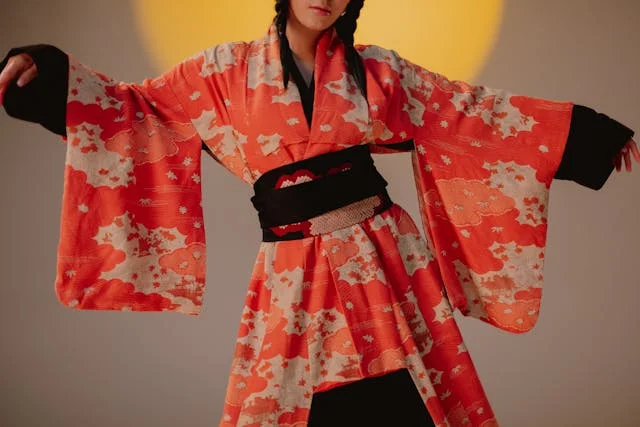
Traditional Japanese Clothing for Women: Types, Names & How to Wear Them
Traditional Japanese clothing for women is among the most visually striking and culturally rich dress in the world. From the sweeping sleeves of a furisode to the understated elegance of a komon, Japanese female traditional clothing tells a story — of season, status, occasion, and identity. Whether you’re researching for a trip to Japan, a ceremony, or pure curiosity, this guide covers everything you need to know.
What Is Traditional Japanese Clothing?
The umbrella term for traditional Japanese clothing is wafuku (和服) — literally “Japanese clothes” — as opposed to yōfuku (洋服), or Western-style clothing. Wafuku encompasses a wide family of garments worn across centuries of Japanese history, from the royal courts of Kyoto to the fishing villages of Hokkaido. For a broader overview of the full tradition — including men’s wear and regional styles — see our complete guide to traditional Japanese clothing.
At the heart of wafuku sits the kimono. But that word covers a lot of ground — there are casual kimonos for summer festivals, highly formal kimonos for weddings, and everything in between. Japanese traditional female clothing is especially nuanced: a woman’s age, marital status, and the formality of an occasion all influence which garment she wears, what color she chooses, and even how the sash (obi) is tied.
Names & Key Terminology
Walking into a conversation about traditional Japanese clothes for women without knowing a few key terms is like reading a map with no legend. Here are the most important words:
| Japanese Term | Kanji | Literal Meaning | What It Refers To |
|---|---|---|---|
| Kimono | 着物 | “thing to wear” | The foundational T-shaped robe worn by all genders |
| Furisode | 振袖 | “swinging sleeves” | Long-sleeved formal kimono for unmarried women |
| Yukata | 浴衣 | “bath clothes” | Casual summer kimono, unlined cotton |
| Obi | 帯 | “sash / belt” | The wide decorative sash that wraps the waist |
| Hakama | 袴 | — | Pleated wide-leg trousers worn over a kimono |
| Tomesode | 留袖 | “fastened sleeves” | Formal kimono for married women |
| Komon | 小紋 | “small pattern” | Casual kimono with repeating all-over pattern |
| Tabi | 足袋 | — | Split-toe socks worn with traditional footwear |
Types of Traditional Japanese Clothing: At a Glance
Not all traditional Japanese clothes for women are created equal. The formality scale runs from festival yukata to the most elaborate wedding shiromuku. Here’s how the major types stack up:
| Garment | Formality | Occasion | Who Wears It |
|---|---|---|---|
| Furisode | ⬛⬛⬛⬛⬛ Very formal | Coming-of-age, weddings, parties | Unmarried women |
| Kurotomesode | ⬛⬛⬛⬛⬛ Most formal | Formal family ceremonies, weddings | Married women |
| Irotomesode | ⬛⬛⬛⬛ Formal | Weddings, formal ceremonies | Married women |
| Homongi | ⬛⬛⬛ Semi-formal | Tea ceremony, theatre, parties | All women |
| Komon | ⬛⬛ Casual | Shopping, outings, daily wear | All women |
| Yukata | ⬛ Very casual | Festivals, summer events, onsen | All genders, all ages |
| Shiromuku | ⬛⬛⬛⬛⬛ Ceremonial | Traditional Shinto wedding | Brides |
The Kimono: Japan’s Most Iconic Garment
Ask anyone to picture traditional Japanese female clothing and the kimono appears immediately. It’s a T-shaped, straight-seamed robe that wraps left-over-right (right-over-left is reserved for the deceased), secured with an obi tied at the back. The silhouette looks deceptively simple — but the construction, fabric, and styling involve extraordinary craft.
A single bolt of silk fabric called a tan (反) — roughly 37 cm wide and 12 metres long — yields exactly one kimono. Nothing is wasted. The entire bolt is cut into eight panels and sewn together, meaning the garment can be taken apart, washed flat, and reassembled. This construction philosophy reflects the Japanese value of mottainai: nothing should go to waste.
The obi is equally important — it’s not just a belt. Obi come in multiple widths and styles, and the way it’s tied creates entirely different looks. The formal fukuro obi is doubled-sided brocade. The casual hanhaba obi is half-width, perfect for a yukata. Tying styles like the taiko (drum knot) or bunko are almost art forms in themselves.
Women’s Traditional Japanese Clothing: The Main Types
Traditional Japanese female clothing for women operates on a clear hierarchy. Here are the five types you’re most likely to encounter — and most need to understand.
1. Furisode — The Unmistakable Long Sleeves
The furisode is arguably the most visually dramatic of all women’s Japanese traditional clothing. Its defining feature: sleeves that hang anywhere from 95 to 114 centimetres long. Unmarried women wear furisode at Coming-of-Age ceremonies (Seijin-shiki), New Year celebrations, graduation parties, and as wedding guests. The long sleeves historically signified a woman’s availability for marriage — swinging the sleeves was a way to express emotion or attract attention.
Furisode fabrics are bold: vivid reds, deep purples, patterned with chrysanthemums, cranes, and flowing water. Today, they’re typically rented for a single occasion, but owning one is considered a treasure.
2. Tomesode — The Formal Choice for Married Women
Once a woman marries, the furisode gives way to the tomesode — the kimono with shorter, “fastened” sleeves. The most prestigious version is the kurotomesode: solid black with five family crests (kamon) and gorgeous embroidered or dyed scenes only along the lower hem. Mothers of the bride and groom typically wear this at weddings. The colored version, irotomesode, is slightly less formal but equally elegant. If you’re navigating formal dress codes beyond traditional wear, our guide to stylish professional attire for women covers modern equivalents for every occasion.
3. Homongi — The Versatile Semi-Formal
The homongi (訪問着), or “visiting wear,” is the most practically useful kimono in a modern woman’s wardrobe. Its pattern flows continuously across the seams — front, back, and sleeves — like a painted landscape that ignores boundaries. It’s appropriate for tea ceremonies, theatre, gallery openings, and upscale parties. Both married and unmarried women wear it, making it one of the most flexible traditional garments available.
4. Yukata — Japan’s Beloved Summer Kimono
The yukata is where tradition meets accessibility. Made of unlined cotton or linen, it’s lighter, cheaper, and far simpler to wear than a formal kimono. You’ll see women in yukata at summer festivals (matsuri), fireworks displays, and traditional inns. Patterns tend toward bold indigo-and-white or bright florals. The yukata is the gateway garment — many people experience Japanese traditional clothing through a yukata first. If you’re thinking about building a wardrobe that mixes pieces like this with everyday staples, our capsule wardrobe essentials guide is a great next read.
5. Shiromuku — The White Wedding Kimono
For a traditional Shinto wedding, the bride wears a shiromuku (白無垢): an all-white kimono symbolizing purity and the readiness to take on the colors of her new family. The all-white look extends to the accessories — headdress, sash, and even the sandals. It’s one of the most ceremonially significant garments in Japanese culture, with roots stretching back to the Heian period.
The most formal kimono for unmarried women. Bold colors, long sleeves (95–114 cm), worn at Coming-of-Age ceremonies and celebrations.
Lightweight, casual, and perfect for summer festivals. The easiest entry point into Japanese traditional clothing for women and men alike.
Seamless flowing patterns, semi-formal status, and universal wearability make this the most versatile kimono in a modern wardrobe.
The top-tier formal kimono for married women. Black (kurotomesode) or colored (irotomesode), with crests and hem embroidery.
Men’s Traditional Japanese Garments
Men’s wafuku is generally more subdued in color — navy, charcoal, earthy browns — but no less significant in structure.
Montsuki Haori Hakama
The male equivalent of a formal kimono ensemble. A plain-colored kimono is worn under a haori (hip-length jacket) bearing the family crest, paired with hakama trousers. This combination is standard dress for formal ceremonies: weddings, graduation ceremonies, and New Year visits to shrines.
Jinbei
The men’s answer to the yukata — a two-piece set of a short jacket and shorts, ideal for hot summers. Light, breathable, and deeply casual, jinbei are worn at home and at festivals.
Kimono (Men’s Cut)
Men’s kimono follow the same T-shape construction as women’s, but the sleeves are closed at the bottom (no swinging), the sleeve length is shorter, and they’re worn with a narrower obi tied simply at the front or back. The overall aesthetic favors restraint and texture over pattern.
History of Traditional Japanese Clothing: Period by Period
Early Japanese garments were simple two-piece sets: a kinumo (upper wrap) and mo (lower skirt). Both men and women wore similar styles. Color and fabric quality signaled rank even at this early stage.
China’s Tang Dynasty had enormous influence. Japanese court women began wearing layered, Chinese-inspired robes. The court mandated specific colors for each rank — a system that would define Japanese dress for centuries.
The golden age of Japanese court fashion. Aristocratic women wore jūni-hitoe (十二単) — twelve layered robes in graduated colors called kasane no irome. The visible layers at the hem and sleeve edges were the defining aesthetic statement. The modern kimono’s silhouette began taking shape here.
Samurai culture replaced court aesthetics. Clothing became more functional. Women’s layered court robes simplified into fewer pieces. The kosode — a small-sleeved inner garment — emerged as the primary item worn by all classes, eventually evolving into what we now call the kimono.
The most creatively explosive era for Japanese fashion. The merchant class (chōnin) grew wealthy and, barred from obvious displays of luxury, channeled ambition into elaborate textile art. Dyeing techniques like yuzen (hand-painted silk) and weaving methods like Nishijin-ori reached their apex. The furisode, obi tying styles, and seasonal pattern conventions all crystallized in this era.
Western clothing flooded Japan after the Meiji Restoration. Male government officials quickly adopted Western suits. Women retained wafuku longer, but the hybrid meisen kimono — machine-woven, affordable, patterned with bold Art Deco motifs — bridged tradition and modernity.
Wafuku shifted from everyday wear to ceremonial dress after World War II. Today, the kimono industry supports a vast ecosystem of rental services, dressing schools, and heritage artisans. A growing global community of kimono enthusiasts — in Japan and internationally — is working to keep the tradition alive and evolving.
Culture & Symbolism in Japanese Women’s Dress
Traditional Japanese clothes for women are never arbitrary. Every element — color, pattern, fabric weight, and season — carries meaning.
Seasonal Awareness
Perhaps the most defining rule: you dress for the season, not just the weather. Cherry blossoms (sakura) appear on spring garments — but wearing them after the blossoms have fallen is considered a faux pas. Pine and plum are winter motifs. Wisteria and iris signal early summer. This sensitivity to nature’s calendar is called kisetsukan and it runs through every aspect of Japanese aesthetic life.
Color & Marital Status
Vibrant reds and furisode-length sleeves communicate youth and unmarried status. After marriage, a woman’s wardrobe traditionally shifted to shorter sleeves, more muted tones, and the tomesode. Today these conventions are followed loosely — but they still carry cultural weight at formal events.
Family Crests (Kamon)
The most formal kimonos bear the family crest — a symbol used like a heraldic coat of arms. The kurotomesode bears five crests: one on each sleeve, one on each front lapel, and one on the back. The crest elevates a garment’s formality and publicly signals family lineage.
Auspicious Patterns
Cranes (tsuru) symbolize longevity and fidelity — ideal for weddings. The pine-bamboo-plum trio (shō-chiku-bai) represents resilience. Flowing water suggests purification. Understanding these motifs reveals the conversation a garment is silently having with everyone who sees it.
Frequently Asked Questions
The kimono is the most iconic and widely recognized garment. Within kimono styles, the furisode is most associated with young women at formal occasions, while the yukata is most commonly seen in everyday life at summer festivals and traditional inns. The homongi is arguably the most practical for modern women who want a versatile semi-formal option.
It varied dramatically by era and class. Heian court ladies wore the extraordinary jūni-hitoe — twelve layered robes in carefully calibrated color gradients. Commoners in the Edo period wore simple cotton kosode. Wealthy merchant women wore elaborately dyed silk kosode. By the Meiji era, everyday women began adopting Western-influenced styles, while formal and ceremonial occasions retained wafuku.
The key difference is sleeve length. A furisode has long, hanging sleeves — between 95 and 114 cm — that are open at the bottom. A standard adult kimono (like a homongi or komon) has shorter sleeves sewn closed at the bottom. The furisode is also exclusively worn by unmarried women and is among the most formal options available. Once a woman marries, she transitions to kimono styles with shorter sleeves.
Absolutely — and it’s encouraged. Kimono and yukata rental services are widespread in Kyoto, Tokyo, Nara, and other tourist cities. Wearing a yukata to a summer festival or renting a kimono for a walk through Gion is considered a respectful and joyful engagement with the culture, not appropriation. Many shops offer dressing assistance and will explain the garment’s significance. Approach it with genuine curiosity and you’ll be welcomed warmly.
There isn’t one single answer — it depends on the garment. The broad term is kimono (着物) or wafuku (和服). For formal occasions, young unmarried women wear a furisode; married women wear a tomesode. For casual summer events, a yukata is the standard choice. The word “kimono” covers many sub-types, each with its own name, occasion, and rules.
The bride in a traditional Shinto wedding wears a shiromuku — an all-white kimono — or may change into a colorful iro-uchikake (a heavily embroidered over-kimono) during the reception. Mothers of the bride and groom typically wear the kurotomesode, the most formal kimono for married women. Unmarried female guests often attend in a furisode, while other guests may wear either wafuku or Western formal dress.
Yes, though its role has shifted. Very few Japanese people wear kimono daily — it’s largely reserved for ceremonies, festivals, and special occasions. However, there’s a genuine cultural revival underway: younger Japanese women are embracing kimono styling as personal expression, sometimes mixing traditional pieces with modern fashion. The global kimono community is also growing, with enthusiasts worldwide actively learning dressing techniques and textile history.
Traditional Japanese clothing for women is a living archive — every garment a record of the era, artisan, season, and occasion it was made for. From the bold drama of a furisode to the quiet refinement of a homongi, these clothes reward attention.
If you’re new to Japanese female traditional clothing, start with a yukata at a summer festival. If you’re going deeper, learn the formality tiers — they unlock the logic of the whole system. And if you ever have the chance to see a kurotomesode or a shiromuku in person, take a moment. You’re looking at centuries of craft and meaning, worn on a single afternoon.




Leave feedback about this