

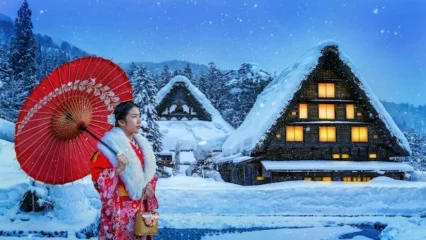
Traditional Japanese Winter Clothing: The Art of Layering That Beats Modern Coats
What Is Traditional Japanese Winter Clothing?
Traditional Japanese winter clothing — known collectively as fuyu no wafuku (冬の和服, “winter Japanese clothes”) — refers to the layered garment system developed over more than a thousand years to protect the body from cold while maintaining the precise aesthetic codes that governed all Japanese dress. Unlike Western winter fashion, which relies primarily on bulky outer layers, the Japanese approach to cold-weather dressing was built on kasane (重ね) — the art of strategic layering.
Japan’s climate varies dramatically. Tokyo winters bring biting winds and temperatures near freezing. Kyoto sees occasional snow. The mountainous Tohoku and Hokkaido regions endure deep, sustained cold. The garments that developed to meet these conditions were not arbitrary — they were engineering solutions wrapped in cultural meaning.
The key philosophical concept behind japanese winter clothes traditional design is ma no bi — the beauty of appropriate space. Winter garments created warmth through air trapped between layers, not through thick single pieces. The result was a system that was warm, mobile, and visually refined simultaneously. Understanding this philosophy is essential before studying the individual garments.
Core Traditional Japanese Winter Garments Explained
The foundation of japanese traditional clothing in winter rests on a set of specific garments that evolved precisely for cold-weather use. Each has a distinct name, function, and place in the layering hierarchy.
The lined winter version of the kimono. Unlike the unlined hitoe worn in warmer months, the awase has a silk lining sewn in from collar to hem — adding warmth without bulk and giving the garment a weighted, fluid drape.
A hip-length open jacket worn over the kimono. In winter, haori were made from heavier silk or wool, sometimes lined with quilted cotton batting. The haori is the closest traditional equivalent to a modern jacket and remains highly wearable today.
A heavily padded cotton-filled outer kimono worn exclusively in winter. The dotera (or tanzen in the Kansai dialect) was the warmest traditional Japanese garment — the winter equivalent of a duvet worn as clothing. Still used today in ryokan inns.
A sleeved quilted robe worn indoors during winter nights. Essentially a wearable futon, the kaimaki bridged the gap between bedding and clothing — a distinctly Japanese solution to unheated traditional homes.
A formal square-necked coat worn over the kimono for travel and outdoor wear. Unlike the haori which opens at the front, the michiyuki buttons closed — providing real wind and cold protection. Considered the most elegant traditional winter outerwear.
Thick cotton split-toe socks worn with wooden geta sandals or straw sandals (waraji). In cold regions, tabi were padded and sometimes wool-lined. The geta’s raised wooden platform kept the kimono hem above snow and mud.
The under-kimono worn directly against the skin. In winter, the juban was made from heavier silk or flannel. Its visible collar was always white — a symbol of purity — and it formed the crucial first layer of the winter kimono system.
Wide pleated trousers worn over the kimono. In winter, hakama were woven from heavier wool or thick silk. The wide pleats trapped warm air around the legs — providing insulation while maintaining the dignified silhouette associated with formal Japanese male dress.
The Japanese Layering System for Winter
The most important thing to understand about japanese winter clothing traditional practice is that warmth was achieved through a structured layering sequence — not a single heavy garment. This sequence had specific names for each layer and strict rules about what was visible.
Women’s Traditional Japanese Winter Clothing
Women’s traditional japanese winter clothing was more elaborate, more layered, and more color-governed than men’s. The rules around what a woman wore in winter communicated her age, marital status, and the specific occasion — all without a single word.
Furisode in Winter
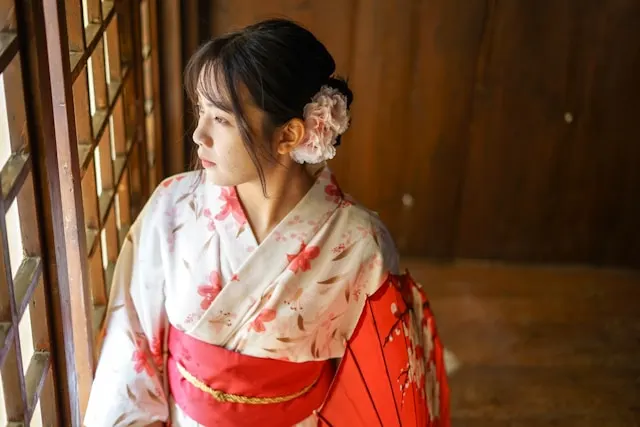
Unmarried young women wore the furisode — the long-sleeved formal kimono — even in winter, layered over a warm juban and paired with a michiyuki coat outdoors. Winter furisode typically featured auspicious cold-weather motifs: snow-laden pine branches, plum blossoms (which bloom in snow), red-crowned cranes, and geometric patterns inspired by ice crystal formations. The colors were deeper than summer furisode — deep crimson, indigo, forest green, and gold. To learn more about this garment, visit our guide on traditional Japanese clothing for women.
Tomesode for Married Women
Married women wore the tomesode — a formal kimono with shorter sleeves and decoration only below the waist. In winter, a black tomesode (kuro tomesode) lined in silk was the pinnacle of formal female dress. Worn to winter weddings and New Year ceremonies, it was paired with a white juban, formal obi in gold brocade, and a michiyuki coat in dark, subdued tones.
The Winter Kosode for Everyday Women
Working and merchant-class women wore the everyday winter kosode — a lined cotton or hemp robe in indigo, brown, or undyed grey. These were practical garments, sometimes reinforced at the elbows and hem. A padded dotera robe might be pulled over the kosode on the coldest days. Beauty was found in small details: a carefully dyed collar, a neatly tied simple sash, a freshly laundered white tabi.
Winter Accessories for Women
Traditional winter accessories included the binzasara collar warmer (a padded silk neck wrap), te-bukuro gloves in knitted silk, and the kasa — a wide-brimmed oiled paper umbrella that doubled as rain and snow protection. Kanzashi (hair ornaments) in winter featured motifs of snow crystals, berries, and pine — seasonal awareness expressed even in a hairpin.
Men’s Traditional Japanese Winter Clothing
Men’s japanese winter clothes traditional was characterised by restraint and practicality — deeper colors, simpler patterns, and a focus on quality fabric over decorative display. The rules were no less strict, however; every detail of a man’s winter dress communicated his rank and occasion.
The Winter Kimono for Men
Men’s winter kimono were awase (lined) silk or wool robes in dark solid colors — charcoal grey, dark navy, black, and deep brown. Subtle woven textures like ōshima tsumugi (Amami silk pongee) or yūki tsumugi were prized for their warmth and quiet elegance. Formal men’s winter kimono featured family crests (mon) — five crests for the highest formality, three or one for semi-formal occasions. Read more about these garments in our guide on traditional Japanese clothing for men.
Hakama and Haori in Winter
The combination of kimono, hakama (wide pleated trousers), and haori jacket was the standard formal winter ensemble for Japanese men from the Edo period onward. The hakama added an insulating layer of air around the lower body; the haori closed at the chest with a braided cord (haori-himo). This three-piece combination remains the formal male dress code for New Year shrine visits, graduation ceremonies, and weddings in Japan today.
The Samurai Winter Wardrobe
In the feudal era, samurai had additional winter garments specific to their warrior status. The jinbaori — a sleeveless surcoat worn over armor — was often made from heavy wool or animal skins for winter campaigns. The padded hitatare robe was layered under armor in extreme cold. Off the battlefield, samurai wore the same kimono-hakama-haori combination as other men of rank, but in clan colors with distinctive crest placement.
Fabrics & Materials Used in Traditional Japanese Winter Clothing
The warmth of traditional japanese winter clothing depended entirely on fabric choice and construction technique. Japanese textile artisans developed highly specialized materials specifically for cold-weather use over centuries of refinement.
| Fabric / Material | Japanese Name | Winter Use | Social Class |
|---|---|---|---|
| Lined Silk (Habutae) | 羽二重 | Primary kimono fabric — lining adds warmth, silk retains body heat | Aristocracy, Samurai, Wealthy Merchants |
| Chirimen Crepe | 縮緬 | Textured silk weave with natural insulating air pockets; ideal for winter kimono | Upper and Merchant Class |
| Tsumugi Pongee | 紬 | Heavier hand-spun silk — warmer than woven silk, naturally textured | Merchant Class, Artisans |
| Quilted Cotton (Wataire) | 綿入れ | Cotton batting sewn between fabric layers — used in dotera robes and futon garments | All Classes (commoners especially) |
| Hemp / Ramie (Asa) | 麻 | Heavier winter-weight hemp weaves for working-class outer garments | Farming and Working Class |
| Wool (Rasha) | 羅紗 | Imported from Portuguese traders in the 16th century — adopted for winter haori and coats | Samurai, Wealthy Classes |
| Flannel (Neру) | ネル | Soft napped cotton — used in winter juban and linings after Western trade opened | Merchant and Lower Classes |
Traditional vs Modern Japanese Winter Wear: Side-by-Side
| Feature | Traditional Japanese Winter Clothing | Modern Japanese Winter Fashion |
|---|---|---|
| Key Pieces | Awase kimono, Dotera, Haori, Michiyuki, Hakama | Wool coats, Down jackets, Layered knitwear, UNIQLO Heattech base layers |
| Warmth Method | Layered air-trapping between multiple garments | High-tech insulation in single garments (down, synthetic fill) |
| Fabrics | Lined silk, quilted cotton, wool, heavy hemp | Technical fleece, merino wool, recycled synthetics, Heattech |
| Winter Colors | Deep navy, charcoal, crimson, forest green — strictly seasonal | Neutral blacks and greys (urban), occasional bold pops (streetwear) |
| Winter Motifs | Snow-laden pine, plum blossom, crane, ice crystal patterns | Generally no seasonal motif requirement in contemporary fashion |
| Occasions | New Year (Oshogatsu), winter ceremonies, tea, weddings | Daily commute, casual wear, winter festivals, skiing |
| Where to Buy | Kyoto kimono shops, Nishiki Market, wafuku specialist stores | UNIQLO, Beams, United Arrows, department stores nationwide |
How to Incorporate Japanese Winter Style Into Your Wardrobe Today
The principles behind japanese traditional clothing in winter — layering, fabric quality, seasonal color awareness, and restrained silhouette — translate beautifully into modern dressing. You don’t need to wear a full kimono ensemble to dress with Japanese winter sensibility.
Principle 1 — Layer Intentionally, Not Randomly
Japanese winter layering was never random. Each layer had a purpose and a position. Apply this to modern dressing: a thermal base layer (your hadajuban), a textured mid-layer shirt or knit (your juban), a structured outer garment (your kimono), and a coat (your michiyuki). Every layer should be visible at the collar or cuff — deliberate, not accidental.
Principle 2 — Choose a Winter Palette
Traditional Japanese winter dress used a specific seasonal palette: deep indigo, charcoal, pine green, plum crimson, aged gold, and snow white as an accent. These are not arbitrary — they reflect what the natural world looks like in a Japanese winter. Building a wardrobe around these tones instantly creates a cohesive, deeply Japanese aesthetic. For seasonal wardrobe building ideas, see our guide on capsule wardrobe essentials for 2026.
Principle 3 — Invest in One Quality Traditional Piece
A wool or heavy silk haori jacket is the single most accessible entry point into japanese winter clothes traditional style. Worn open over a plain dark turtleneck and well-cut trousers, a haori elevates any winter outfit without requiring knowledge of kimono dressing rules. Look for vintage haori from specialist Japanese sellers on platforms like Etsy or Rakuten Global — many are available at reasonable prices and are genuine antique garments.
Principle 4 — Mind the Motif
If you choose a patterned garment with a Japanese winter motif — snow pine, plum blossom, crane — wear it in its season. This is the essence of the Japanese kisoku (seasonal sensitivity) principle. A pine-and-snow kimono worn in August would have been deeply uncomfortable for any Japanese observer. Wearing it from December through February, however, shows genuine cultural understanding and intention.
Frequently Asked Questions About Traditional Japanese Winter Clothing
Conclusion: Why Traditional Japanese Winter Clothing Still Matters
Traditional Japanese winter clothing is not a relic of a cold past — it is one of the most sophisticated cold-weather dressing systems ever developed by any culture. The awase kimono, the padded dotera, the michiyuki coat, the precisely layered kasane-gi system: these were not arbitrary choices. They were engineered solutions, cultural statements, and aesthetic philosophies all at once.
The principles embedded in japanese winter clothes traditional design — intentional layering, fabric quality over quantity, seasonal color awareness, and motif precision — are as relevant in 2026 as they were in the Edo period. In an era of throwaway fast fashion, the Japanese winter wardrobe represents an alternative: fewer pieces, better made, worn with full awareness of what they mean and when they belong.
To explore more of Japan’s extraordinary clothing traditions, start with our guides on ancient Japanese clothing, traditional clothing for women, and traditional clothing for men. Dress with the season. Dress with intention. Dress Japanese.

Leave feedback about this