

Traditional Japanese Royal Clothing: What the Emperor, Samurai & Nobles Wore
Traditional Japanese royal clothing was never simply fabric stitched together. Every layer, every colour, every knot in the obi communicated rank, lineage, and spiritual standing. From the silk-draped imperial courts of Heian-kyō to the armoured dignity of the samurai warrior class, Japan’s aristocratic garments remain among the most intricate dress codes ever devised by any civilisation. This guide walks you through every major garment, its history, and what it meant to wear it.
What Is Traditional Japanese Royal Clothing?
When scholars and historians speak of traditional Japanese royal clothing, they refer to an elaborate system of wafuku (和服) — the umbrella term for all traditional Japanese garments — that was governed by strict imperial edicts stretching back over fourteen centuries. This was not a matter of personal taste. The Emperor’s court issued clothing ordinances that dictated which colours, fabrics, and layering counts each rank was permitted to wear. Getting it wrong was not a fashion faux pas — it was a political statement, sometimes a dangerous one.
The full vocabulary of Japanese aristocratic dress includes several key garment families. Understanding each one separately — and then understanding how they layered, combined, and changed over time — is the only way to truly grasp what traditional costumes in Japan meant to the people who wore them.
Imperial Court Garments Explained
The apex of traditional Japanese royal clothing was reached during the Heian period (794–1185 CE), when the imperial court at Kyoto turned dress into a visual art form of extraordinary complexity. Two garments define this era above all others.
Jūnihitoe — The Twelve-Layer Robe
The jūnihitoe (十二単) — literally “twelve-layer robe” — was worn exclusively by imperial noblewomen and ladies of the highest court rank. In practice, the layers ranged from five to more than twenty, with the number twelve being the formal ideal. Each layer was a hitoe (single unlined robe) in a slightly different colour, and the way the colours graded at the visible hems and sleeve edges was called kasane no irome — “layered colours.” These colour combinations were not random: they followed seasonal conventions that could evoke autumn leaves, spring blossoms, or winter frost.
A full jūnihitoe ensemble could weigh up to 20 kilograms. Noblewomen who wore it were expected to move with glacial, deliberate grace — speed was physically impossible, and stillness itself became a marker of aristocratic refinement. The obi-like cord at the waist, the naga-bakama divided skirt trailing behind like a crimson shadow, the suberakashi hairstyle falling loose to the floor — together these created a total visual statement that announced imperial proximity to anyone who saw it.
Sokutai — The Emperor’s Formal Robe
Male members of the imperial family and the highest court nobles wore the sokutai (束帯) for formal court ceremonies. This was a structured outer robe of deep-dyed silk, accompanied by a tall black lacquered hat called an eboshi (or the more formal kanmuri), a wooden baton called a shaku, and elaborate belted court trousers called ōkuchi. The colour of the outer robe was determined by rank — deep crimson and violet silk for the highest ranks, green and blue for mid-ranking nobles, and yellow or grey for the lower court.
Key Imperial Garments at a Glance
Worn by imperial noblewomen. Up to 20+ layers of silk in graded seasonal colours. Could weigh 20 kg. The ultimate symbol of Heian court femininity.
Formal outer robe for male court nobles and the Emperor. Worn with kanmuri hat and shaku baton. Colour strictly encoded rank.
A hip-length jacket worn with baggy trousers tied at the ankles. Originally for hunting; adopted as everyday formal wear by male court nobles.
The everyday costume of male courtiers during the Heian period. A voluminous layered jacket worn with sashinuki gathered trousers.
A wide-sleeved outer robe worn over the jūnihitoe layers by women of the imperial household during semi-formal occasions inside the palace.
A simplified version of sokutai worn by nobles for less-formal court duties. The same colour rank rules applied, but with fewer ceremonial accessories.
Samurai Traditional Japanese Clothing — Male
As political power shifted from the Heian imperial court to the military government of the shogunate during the Kamakura period (1185–1333), Japanese dress underwent a quiet revolution. The elaborate layering of court life was replaced by garments designed for one very practical purpose: surviving combat while still projecting authority. Samurai traditional Japanese clothing male evolved into a precise visual language of its own — one that balanced martial function with aristocratic dignity.
To understand the full visual heritage of samurai dress, see our detailed article on Japanese traditional outfits — types, how to wear them, and modern styling.
Hakama — The Samurai’s Defining Trouser
The hakama (袴) is the garment most immediately associated with samurai identity. Wide, pleated, and split into two legs (the umanori style) or left undivided (the andon style), hakama were designed to allow the wide-legged, stable stance required in swordsmanship. Originally a military garment, the hakama became a symbol of masculine status throughout the Edo period (1603–1868), when samurai transitioned from battlefield warriors to bureaucratic administrators for feudal lords. A samurai without his hakama in public was considered improperly dressed — the equivalent of appearing without one’s credentials.
Kimono + Haori — The Warrior’s Formal Ensemble
Outside of armour, the samurai’s standard formal dress was a plain-coloured kimono worn under a haori — a hip-length jacket bearing the family mon (heraldic crest). The number of crests on the haori encoded precise social information: five crests indicated the highest level of formality and clan distinction, while fewer crests signalled a more informal occasion. The combined ensemble of montsuki kimono, haori, and hakama — still worn at formal ceremonies today — originated directly from samurai court dress.
Yoroi — Battle Armour as Dress Code
The ō-yoroi (大鎧, “great armour”) of the classical samurai was itself a form of royal dressing. Lacquered iron and leather plates laced together in silk cords of specific colours, decorated with clan symbols and wearing a spectacular horned kabuto helmet — armour was designed to be read at a distance on the battlefield. Clan colours and cresting made each samurai’s allegiance immediately visible. High-ranking warriors’ armour incorporated gold leaf, rare silk, and imported Chinese metalwork that rivalled imperial court garments in material value.
| Garment | Japanese | Function | Rank Signal |
|---|---|---|---|
| Hakama | 袴 | Wide trousers worn over kimono; freedom of movement in combat and ceremony | Required for all samurai in public |
| Haori | 羽織 | Hip-length jacket worn over kimono; displays family crest | Number of crests = formality level |
| Montsuki Kimono | 紋付着物 | Formal kimono with family crest; worn under haori | Crest count and fabric quality |
| Ō-Yoroi | 大鎧 | Full battle armour; lacquered iron and leather over silk | Gold lacquer = highest command rank |
| Jinbaori | 陣羽織 | Surcoat worn over armour by generals; highly decorative | Elaborate embroidery = senior commander |
| Kamishimo | 裃 | Formal two-piece ensemble of stiff-shouldered jacket and hakama | Standard formal wear for samurai retainers |
Ancient Traditional Japanese Clothing — A Timeline
The full story of ancient traditional Japanese clothing stretches back far beyond the Heian period, into an era when Japan’s dress codes were just beginning to be shaped by Chinese and Korean influence. Understanding this timeline is essential to seeing how royal clothing evolved — and why certain garments became so deeply charged with meaning.
For a deeper exploration of this evolution, visit our article on fashion clothes Japan — from kimono basics to Tokyo street trends.
The First Garments
Simple woven cloth tied at the waist and shoulders. Upper bodies sometimes left bare. Colour and fabric quality already beginning to signal social standing among tribal leaders.
The Warrior Aesthetic Emerges
Clay haniwa figurines depict clothing with riding attire and armour elements. The right-over-left wrap — unique to Japan at the time — becomes established as the native wrapping direction.
Chinese Tang Influence Arrives
Japan’s court officially adopts Tang Dynasty Chinese dress codes. Silk robes with formal colour rank systems are introduced. The Nara period marks the first clearly documented colour-as-rank legislation in Japanese history. Social segregation through clothing becomes explicit law.
The Golden Age of Royal Dress
Japan’s most elaborate court clothing tradition develops. The jūnihitoe for women and sokutai for men become codified. Seasonal colour poetry reaches its peak. The kosode (small-sleeved inner robe) begins its slow journey to becoming the outermost garment — what will eventually become the kimono.
The Samurai Take Over Dress Codes
Military government replaces imperial court as the cultural tastemaker. Clothing simplifies and becomes more functional. The kosode emerges as the primary outer garment for all classes. Hakama and armour define masculine aristocratic identity.
The Merchant Class Redefines Luxury
Sumptuary laws attempt to stop wealthy merchants from outshining samurai in dress. Merchants respond with elaborate inner linings of rich silk under plain outer cotton. Dyeing techniques — yuzen hand-painting, shibori resist dyeing — reach their artistic zenith. Traditional Japanese clothing reaches its visual peak.
Western Dress Arrives at Court
Government officials are required to wear Western suits for formal duties. The word “kimono” gains its current specific meaning, distinguishing traditional wafuku from Western-style yōfuku. Royal dress becomes ceremonial rather than everyday.
Colour as a Language of Rank
Perhaps the most striking feature of traditional Japanese royal and aristocratic clothing was its use of colour as a precise, enforceable coding system. The colour of your outer robe was not a personal choice — it was a declaration of your position in the imperial hierarchy, as legally binding as a title or a deed. This system, first formally established during the Nara period under Chinese Tang influence and refined throughout the Heian period, remained the backbone of traditional costumes in Japan’s upper classes for centuries.
| Colour | Rank / Wearer | Period | Significance |
|---|---|---|---|
| Deep Yellow / Chrysanthemum Gold | Emperor only | Nara–Heian | Solar association; divine imperial authority |
| Deep Purple (Murasaki) | Highest court nobles, First Rank | Nara–Edo | Extreme rarity of purple dye made it a prestige marker |
| Scarlet / Deep Crimson | Second and Third Rank nobles | Heian | Vitality and martial authority; used in naga-bakama |
| Emerald Green | Fourth and Fifth Rank | Nara–Heian | Mid-level nobility; widely used in court robes |
| Indigo Blue | Sixth Rank and below | Nara–Heian | Common court staff; working officials |
| White | Shinto priests; mourning | All periods | Ritual purity; associated with the sacred and the dead |
| Black (Kuro) | Samurai formal wear; Buddhist monks | Kamakura–Edo | Austere military dignity; renunciation of vanity |
The concept was backed by deep ideological weight. As clothing edicts from the period make clear, garments were considered “protection from evil spirits and outward manifestation of social rank.” A person wearing an inappropriate colour was not merely overdressed — they were transgressing against the spiritual order of society. The higher the rank, the more covered the body; the more covered the body, the more protected the wearer. Those of lower rank who wore less clothing were seen as spiritually exposed, not simply casual.
Complete Traditional Japanese Royal Garment Reference
Beyond the main garment families already covered, the full vocabulary of traditional Japanese royal and aristocratic dress includes dozens of specialised pieces. The table below covers the most important ones across all major historical periods.
| Garment Name | Japanese | Period | Who Wore It | Description |
|---|---|---|---|---|
| Jūnihitoe | 十二単 | Heian | Imperial noblewomen | 12+ layered silk robes in graded seasonal colours; up to 20 kg |
| Sokutai | 束帯 | Heian–Meiji | Emperor; high male nobles | Structured outer court robe with kanmuri hat, shaku baton, and ōkuchi trousers |
| Kariginu | 狩衣 | Heian–Muromachi | Male nobility (informal) | Loose hip-length jacket with sashinuki trousers; adapted from hunting dress |
| Ōkuchi | 大口袴 | Heian | Court nobles (male) | Wide-legged formal court trousers worn under the sokutai robe |
| Hakama | 袴 | Nara onwards | Samurai; male nobility | Divided wide trousers worn over the kimono; martial and ceremonial |
| Kamishimo | 裃 | Edo | Samurai retainers | Stiff-shouldered jacket (kataginu) matched with hakama; the definitive Edo-period samurai formal dress |
| Jinbaori | 陣羽織 | Sengoku–Edo | Generals and senior commanders | Elaborate sleeveless surcoat worn over armour; displayed clan heraldry and individual status |
| Furisode | 振袖 | Edo onwards | Unmarried aristocratic women | Long-sleeved formal kimono; sleeve length signalled youth and unmarried status |
| Kurotomesode | 黒留袖 | Edo–present | Married women of high status | Black formal kimono with hem embroidery and family crests; highest formality for women |
| Iromuji | 色無地 | Edo–present | Women at tea ceremony | Single-colour unpattern kimono; restraint signals cultivated refinement over ostentation |
Typical Japanese Dress by Social Class
One of the most revealing ways to understand typical Japanese dress in any historical period is to compare how different social classes interpreted the same garments. Japan’s class structure in the Edo period recognised four main social tiers — samurai (shi), farmers (nō), artisans (kō), and merchants (shō) — with the imperial family and Buddhist clergy sitting outside and above this system. Each tier had its own relationship with traditional clothing.
Imperial Family and Court Nobility
Exclusively entitled to the most elaborate garments — jūnihitoe, sokutai, specific reserved colours — the imperial family and their direct attendants represented the absolute apex of Japanese textile achievement. Court dress was regulated, ceremonial, and essentially unchanged for centuries. By the Meiji era, imperial court dress had become almost entirely ceremonial, deployed at coronations, enthronements, and specific Shinto rituals.
Samurai Class
The samurai wore what might be called “functional aristocracy.” Their kamishimo, hakama, and mon-bearing kimono were designed to communicate rank and clan affiliation at a glance while remaining compatible with physical movement. As the Edo period progressed and actual combat became rare, samurai dress became increasingly elaborate and formal — less warrior wear, more political uniform. The montsuki haori hakama combination that is still worn at Japanese weddings today descends directly from samurai formal dress.
Merchant Class — Luxury Hidden in Plain Sight
The merchant class (chōnin) presents the most fascinating story in Japanese dress history. Barred by sumptuary laws from wearing silk outer robes, gold thread, or expensive embroidery, wealthy merchants developed an entire aesthetic of hidden luxury. Plain cotton or rough silk outer garments concealed linings of the richest brocade, in the boldest colours — gold, scarlet, deep indigo. This subversive elegance gave rise to the aesthetic concept of iki — refined, understated sophistication that conceals effort and implies depth. It is one of Japan’s most enduring aesthetic ideas, and it was born directly from the clothing restrictions of the Edo period.
Common People and Farmers
The working population wore simple kosode in indigo-dyed cotton or hemp. Indigo was practical — it repels insects and grows stronger with washing — but it also happened to be the colour assigned to the lowest court rank. This crossover between necessity and rank-signalling is deeply revealing of how thoroughly colour-as-rank had penetrated Japanese society at every level.
The Modern Legacy of Traditional Japanese Royal Dress
Japan’s royal and aristocratic clothing tradition did not end with modernisation — it transformed. The jūnihitoe is still worn by the Empress of Japan at the most formal Shinto ceremonies, including the imperial enthronement. The sokutai is worn by the Emperor himself on the same occasions. UNESCO has recognised Japanese kimono-making — particularly the Nishijin-ori silk weaving of Kyoto, which supplied the imperial court for centuries — as an Intangible Cultural Heritage of Humanity.
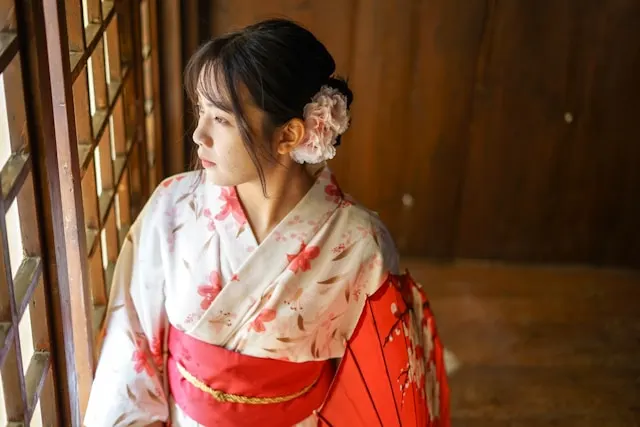
In everyday Japanese culture, traditional costumes in Japan still make their appearance at weddings, coming-of-age ceremonies (seijin-shiki), graduation ceremonies, summer festivals, and New Year shrine visits. The garments have changed in frequency of use, but not in cultural weight. A furisode worn by a young woman at her coming-of-age ceremony still communicates the same things it communicated in the Edo period — unmarried status, family pride, ceremonial gravity.
For the global fashion world, Japanese royal clothing has been a recurring source of inspiration. The layering philosophy of the jūnihitoe, the structural restraint of samurai dress, the hidden luxury of the chōnin aesthetic — all of these have entered the vocabulary of international haute couture in ways that designers from Issey Miyake to Alexander McQueen have acknowledged directly.
Frequently Asked Questions
What is traditional Japanese royal clothing called?
What did samurai traditional Japanese clothing male look like?
What is ancient traditional Japanese clothing made of?
What are the traditional costumes in Japan worn at ceremonies today?
What is the typical Japanese dress for men?
Why did Japanese royal clothing use so many layers?
Is traditional Japanese royal clothing still worn today?
Conclusion
Traditional Japanese royal clothing is one of the most sophisticated dress systems ever created. For over a thousand years, the imperial court, the warrior aristocracy, and the merchant class each developed their own visual language within a shared framework of garment types, colour codes, and layering rules — a framework so deeply embedded in Japanese culture that it still shapes how the country dresses for its most important moments today.
From the breathtaking weight of a Heian noblewoman’s jūnihitoe to the austere dignity of a samurai’s kamishimo, from the hidden silk luxury of an Edo merchant’s cotton outer robe to the chrysanthemum gold reserved for the Emperor alone — every garment was a statement, every colour a sentence, every layer a word in a conversation about power, beauty, and belonging that Japan has been having with itself for centuries.
To explore specific garment types in detail, visit our comprehensive guides: 8 types of kimono explained, traditional Japanese clothing for women, and how to wear traditional Japanese outfits today.

Leave feedback about this