

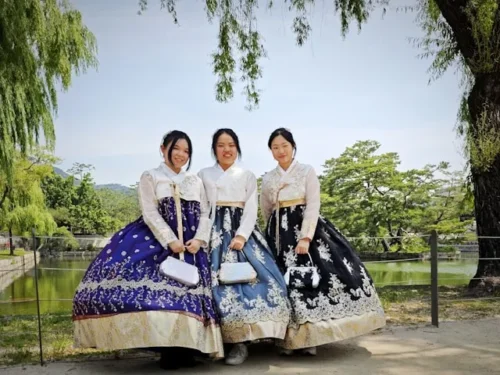
Korean Traditional Winter Clothes: Fabrics, Layers & Style
According to the National Folk Museum of Korea, the hanbok has been worn continuously for over two thousand years — and the winter version of this garment represents one of the most sophisticated cold-weather clothing systems ever developed without synthetic materials. Korean traditional winter clothes were not simply thicker versions of summer hanbok. They were engineered differently, layered deliberately, and made from materials chosen specifically for their ability to trap warmth while maintaining the silhouette the garment is known for.
This article covers the specific garments, fabrics, and layering methods that defined Korean traditional winter clothes across different dynasties, how men’s and women’s cold-weather hanbok differed in construction, what accessories completed a winter ensemble, and how these traditions are being worn and adapted today by people outside Korea. If you are trying to wear hanbok in winter conditions — whether for a cultural event, a trip to Korea, or a special occasion at home — you will find practical detail here that most general hanbok guides skip entirely.
Most articles about hanbok focus on its visual beauty and leave the functional story largely untold. This piece goes further: it covers the specific interior padding techniques used during the Joseon dynasty, the role of social rank in determining what winter layers were permitted, and the honest trade-offs you face when wearing traditional winter hanbok in a modern cold-weather climate. You will also find concrete buying guidance for readers in the US and UK.
What Made Korean Traditional Winter Clothes Different From Other Seasons
The hanbok is built on a two-piece structure — a jeogori (jacket) paired with either a chima (skirt) for women or baji (trousers) for men — but winter transformed almost every element of that structure. The most important change was the addition of som, a cotton or silk padding that was hand-quilted between the outer fabric and a lining. This padded construction is called nu-bi (누비), and it functions in a way that is remarkably similar to modern quilted insulation: air pockets trapped between layers of stitching slow heat loss from the body.
Nu-bi stitching was not just functional — it was considered a craft in its own right. The density and pattern of the stitching signaled both the quality of the garment and the skill of the maker. Finely stitched nu-bi with rows just a few millimeters apart was harder to produce and associated with higher-quality court garments. Wider-spaced stitching was more common in everyday winter wear. If you look at surviving museum pieces from the Joseon period, you can see this variation clearly in collections held by institutions like the Seoul Museum of History.
The outer fabric also changed with the season. Lightweight ramie and fine silk gauze used in summer were replaced by heavier woven silk, wool-blend fabrics (particularly after trade contact with Central Asia), and closely woven cotton. The key point is that winter hanbok was not simply a heavier version of its summer counterpart — it was a structurally distinct garment with different construction methods, different fabrics, and different layering logic. If you are looking for context on how the broader hanbok tradition developed, the history and cultural background of traditional Korean clothing explains the foundations that winter adaptations were built on.
The Core Garments in a Winter Hanbok Ensemble
A complete winter outfit for a Korean woman during the Joseon dynasty typically consisted of multiple layers worn in a specific order. Understanding this sequence matters because the layering system is what makes the garment function in cold weather.
- Sokjeogori — An inner jeogori worn directly against the skin, often in white or pale colors, made from softer fabric than the outer layer.
- Nu-bi jeogori — The padded outer jacket, quilted with som filling, worn over the sokjeogori. This was the primary insulating garment for the upper body.
- Chima (padded) — The full skirt, also constructed with interior padding and a heavier outer fabric for winter. Women wore multiple chima in very cold weather.
- Baerae or daenggi — Decorative elements and hair accessories that completed formal winter dress.
- Durumagi — A long outer coat worn over everything else. This is the single most important winter garment, equivalent in function to a modern overcoat.
The durumagi deserves special attention. It is a full-length outer robe with long sleeves, worn by both men and women, and it was the layer that faced the elements directly. In winter, durumagi were padded with som like the inner layers, and high-status versions were lined with fur — most commonly rabbit, dog, or in royal court contexts, sable. According to the Joseon Dynasty Royal Court records held at the National Archives of Korea, court-grade durumagi used for winter ceremonies were among the most expensive single garments produced during that period.
For men, the equivalent layering followed a similar principle: an inner jeogori, padded outer jeogori, padded baji (trousers), and a durumagi over everything. Men’s winter outfits also included beoseon (padded socks made from white cotton) worn inside leather or straw shoes, and a gat (horsehair hat) that provided some wind protection for the head. You can read more about the specific construction choices that went into traditional Korean clothing for men and how those choices shifted across the seasons.
How Rank and Status Shaped Winter Hanbok
Social class determined not just the quality of winter hanbok but what you were legally permitted to wear. The Joseon dynasty operated under a strict sumptuary code — a set of laws governing dress — that restricted certain fabrics, colors, and accessories to specific social ranks. In winter, this became especially visible because the most effective insulating materials were also the most expensive.
Fur lining was restricted to the upper nobility and the royal court. Common people used cotton batting (som) for padding, while middle-rank officials might use silk padding. The outer fabrics followed similar restrictions: high-grade silk was limited by law to yangban (aristocratic class) households. Commoners wore winter hanbok made from cotton and hemp, which provided warmth but lacked the refined drape of silk. The color of the durumagi also signaled rank — white was common for everyday wear, while deeper colors including certain shades of red, blue, and black were associated with court dress and ceremonial occasions.
This social dimension of winter hanbok is something most general guides overlook. It means that when you see images of elaborate winter hanbok with fur trim and richly dyed fabrics, you are looking at garments that represented the very top of the social hierarchy. The winter clothing of ordinary Korean households was far more modest — functional padding in natural or undyed fabric, layered for warmth rather than display. The ways traditional Korean clothing for women communicated social status explores this signaling system in much more detail.
Quick Note: If you are sourcing a winter hanbok for a cultural event or Seollal (Korean Lunar New Year) celebration, the color you choose carries meaning. White signals everyday wear and mourning in some contexts; jewel tones like burgundy, navy, and forest green are appropriate for festive occasions and are historically associated with celebratory winter dress.
Winter Accessories That Completed the Traditional Korean Outfit
Accessories in winter hanbok were not decorative afterthoughts — they were functional components of the cold-weather system. Several of them are rarely mentioned in Western-facing articles about hanbok.
The jobawi is a padded winter cap that covers the ears and the back of the neck, made from silk on the outside and lined with fur or padded cotton. It was worn primarily by women and children and tied under the chin. In paintings from the late Joseon period, the jobawi appears frequently as the standard head covering for cold weather. A related cap, the aengmusae, had a similar construction but was more heavily decorated and associated with formal occasions.
Foot warmth was addressed through beoseon — padded socks — and shoes made from leather or straw depending on social class. Wealthier households wore leather shoes called hye, while common people often wore straw shoes (jipsin) that provided minimal insulation but were affordable and widely available. An intermediate option, mituri, was a hemp sandal reinforced with additional layers at the sole for durability in cold and wet conditions.
Hands were covered with long sleeves extended beyond the wrist — a deliberate feature of winter jeogori construction — or with separate silk or padded mittens. The elongated sleeve cuff doubled as a hand covering when the arms were folded, a practical design that also explains why formal hanbok is often depicted with sleeves substantially longer than the arm itself. This detail connects to the broader cultural and symbolic dimensions covered in the article on what hanbok reveals about Korean culture and values.
Wearing Korean Traditional Winter Clothes Today
There are two main contexts in which people in the US and UK currently wear traditional Korean winter clothes: cultural celebrations (Seollal, Chuseok, Korean New Year events) and tourism experiences when visiting Korea, particularly the palace districts in Seoul during winter months. The practical challenges in both cases are worth naming directly.
Traditional padded hanbok is genuinely warm in mild winter conditions — the nu-bi construction works. But in temperatures below about 25°F (-4°C), the durumagi alone is insufficient by modern standards, and most people layer a thermal underlayer beneath their hanbok rather than attempt to replicate the full historical layering system. This is a reasonable trade-off and one that most hanbok rental services in Seoul already accommodate by offering thicker underlayers during winter months.
Our take: If you are buying rather than renting, the most practical choice for cold-weather wear in the US or UK is a padded durumagi from a Korean specialist retailer rather than a full multi-layer ensemble. In the US, retailers like Bidan (which ships internationally and stocks both traditional and contemporary hanbok) and in the UK, specialist importers such as Hanbok Boutique carry padded outer coats that work as standalone cold-weather garments over modern clothing. A well-made durumagi priced around $150–$300 will perform better in actual winter conditions than a complete but lightly made hanbok set at a similar price point.
The trade-off worth acknowledging: fully authentic padded hanbok requires dry cleaning and careful storage to maintain the som padding and the fabric’s integrity over time. If you are buying for a single event and do not want to deal with specialist care, a contemporary fusion hanbok made from modern fabrics is a more practical choice. It will not replicate the historical construction, but it will photograph beautifully and survive a domestic washing machine.
Frequently Asked Questions
What is the traditional Korean winter coat called?
The traditional Korean outer coat worn in winter is called the durumagi. It is a long, wide-sleeved overcoat worn over the rest of the hanbok ensemble. In winter versions, the durumagi was padded with cotton or silk batting using a quilting technique called nu-bi, and higher-status versions were lined with fur. The durumagi was worn by both men and women and remains the most recognizable element of a traditional Korean winter outfit. It is still worn for formal occasions and holidays like Seollal today.
How did Koreans keep warm in traditional clothing before modern fabrics?
The primary insulation method was a padded quilting technique called nu-bi, in which cotton batting (called som) was hand-stitched between an outer fabric and a lining in rows of close, even stitches. This created air pockets that slowed heat loss — the same principle that underlies modern quilted insulation. Multiple layers were worn in sequence, with the durumagi as a final outer layer. Wealthier households added fur lining to the durumagi. Heated floors (ondol) inside homes also meant that Koreans spent cold months in warm indoor environments and relied on heavy outer layers mainly for outdoor travel.
What colors are traditional for Korean winter hanbok?
White and undyed natural fabrics were the most common colors for everyday winter hanbok, particularly among commoners. For festive occasions like Seollal and weddings, jewel-toned colors — deep red, navy blue, forest green, and gold — were preferred. These richer colors were historically associated with higher social rank and were made possible by expensive dyeing processes. Today, any of these colors are appropriate for festive winter wear, though white is generally avoided for celebrations as it carries associations with mourning in Korean culture.
Can you wear traditional Korean hanbok in actual cold weather?
A properly padded winter hanbok — particularly one with a nu-bi quilted durumagi — is genuinely functional in mild cold, roughly down to about 30°F (-1°C). Below that, most people find it insufficient by modern standards without additional layering underneath. The historical solution was multiple inner layers plus heavy outer padding plus fur, which does work but is cumbersome and expensive to replicate authentically. For practical cold-weather wear today, most people combine a padded durumagi over thermal underlayers, which is both warmer and more manageable than the full historical system.
Is there a difference between winter hanbok for men and women?
The core insulation methods — nu-bi padding, som filling, layering sequence — were the same for both. The main structural differences were in the garments themselves. Women wore padded jeogori with a padded chima (skirt), while men wore padded jeogori with padded baji (trousers). Men’s baji were typically more voluminous and tied at the ankle, providing insulation around the lower leg. Women often wore additional chima layers for warmth in very cold conditions. Both men and women wore the durumagi as their outermost coat, though men’s durumagi tended to be slightly more fitted at the shoulder.
Where can I buy authentic Korean traditional winter clothes in the US or UK?
In the US, Bidan is one of the better-known retailers offering both traditional and contemporary hanbok with international shipping, including padded winter styles. In the UK, a smaller number of specialist importers carry hanbok, with Hanbok Boutique being a frequently cited option. Korean cultural centers in major cities like New York, Los Angeles, and London sometimes maintain lists of trusted local suppliers. Renting rather than buying is worth considering for one-time use — Seoul-based rental services that ship internationally have grown significantly in recent years and often provide better quality for a specific occasion than budget retail options.
Final Thoughts
Korean traditional winter clothes represent a cold-weather clothing system that solved the insulation problem with materials and techniques that remained effective for over a millennium. The nu-bi quilting method, the layered construction from inner jeogori to outer durumagi, and the accessory system that covered the head, hands, and feet were not arbitrary — they were the result of accumulated practical knowledge refined across generations. Understanding that history makes wearing hanbok in winter a more meaningful experience than simply putting on a beautiful garment.
If you are planning to wear a traditional Korean outfit this winter, start with the durumagi. It is the garment that does the most functional work, it is the most visually striking piece in a winter ensemble, and a good one will serve you across multiple occasions. Look for nu-bi quilted construction rather than a single-layer version, and choose a color appropriate to your occasion before worrying about anything else.



Leave feedback about this