

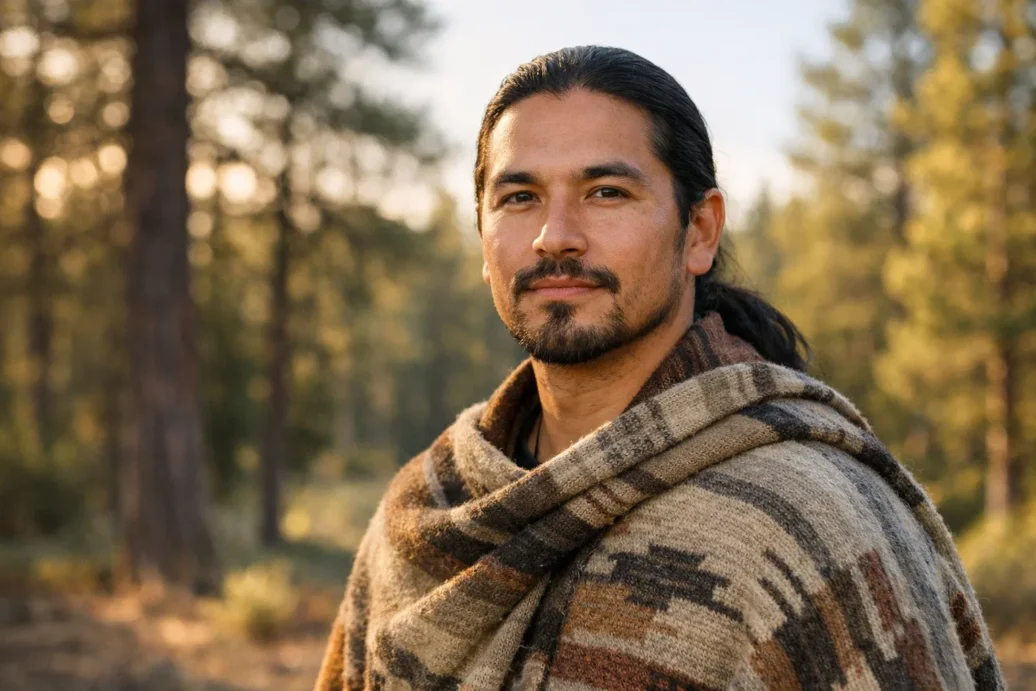
Do American Natives Have Facial Hair or Is It a Myth? Science & Culture Revealed
Do American Natives Have Facial Hair?
One of the most persistent questions—and stereotypes—surrounding Indigenous people of the Americas concerns their facial hair. The question “Do American Natives have facial hair?” is searched thousands of times a month, often driven by old Western movies or historical paintings that depict Native American men as exclusively clean-shaven.
The direct answer is yes. Native Americans grow facial hair. However, the density, texture, and growth patterns can differ significantly from European or Middle Eastern populations due to genetics.
While biological factors play a huge role, history and culture are equally important. For centuries, many tribes practiced rigorous hair removal as part of their grooming standards, leading observers to believe they couldn’t grow beards at all.
This article explores the biological reality behind facial hair in Indigenous communities, the role of ancestry and the EDAR gene, and the cultural traditions that have shaped this lasting misconception. You will learn why generalizations fail to capture the diversity of over 500 recognized tribes and why modern Native American identity includes a wide spectrum of appearances.
Do American Natives Have Facial Hair? The Simple Answer
Yes, Native Americans can and do grow facial hair. The idea that they are biologically incapable of growing beards is a myth.
However, it is true that, generally speaking, Native American men often have less dense facial hair than men of European or African descent. The hair they do grow is often finer or grows more slowly. This sparse growth pattern is common but not universal.
It is crucial to distinguish between individual traits and population-level trends. Just as not every European man can grow a thick, lumberjack-style beard, not every Native American man has sparse facial hair. Furthermore, “Native American” encompasses two continents and thousands of distinct ethnic groups. A man from a Pacific Northwest tribe may have different genetic traits regarding hair growth than a man from a tribe in the Great Plains or the Amazon.
We also see real-life examples every day. From historical photographs of elders with wispy mustaches to modern actors and activists sporting goatees and full beards, the evidence is visible if we look past the stereotypes.
Genetics Behind Facial Hair Growth in Native Americans
To understand why facial hair patterns differ, we have to look at biology.
Role of Hair Follicles and Testosterone
Facial hair growth is driven by androgens, specifically testosterone and dihydrotestosterone (DHT). However, having high testosterone doesn’t automatically mean you will have a thick beard. The key factor is the sensitivity of your hair follicles to these hormones.
Genetically, some populations have hair follicles that are less sensitive to DHT. This means that even with healthy, normal testosterone levels, the facial hair might remain thin or grow slowly. This is often the case for many Native American men; their hormone levels are normal, but their follicle response creates a different growth pattern.
The EDAR Gene and Ancestral Genetics
One of the most significant genetic discoveries related to this topic is the EDAR gene variant (specifically V370A). This gene mutation arose in East Asian populations roughly 30,000 years ago and is strongly linked to thicker, straighter scalp hair and a higher density of sweat glands, but also to sparser facial and body hair.
Because Indigenous peoples of the Americas share ancient ancestral roots with East Asian populations (migrating across the Bering Land Bridge thousands of years ago), they carry this same genetic marker. This explains why Native American hair patterns—thick, straight hair on the head but less hair on the face and body—often mirror those seen in Chinese, Japanese, or Korean populations.
Why Many Native Americans Appear to Have Less Facial Hair
The appearance of “hairlessness” is often an optical illusion created by texture and density.
Native American facial hair is often softer and finer than the coarse stubble seen in other ethnicities. Fine hair is less visible from a distance, especially if it is not dark black. Additionally, the hair density—the number of follicles per square inch of skin—is typically lower on the face.
When you compare this to European facial hair, which tends to be dense and coarse, or African facial hair, which is often coiled and thick, the difference is stark. But “less” does not mean “none.” It simply means the coverage is different.
Tribal Diversity – Not All Native Americans Are the Same
Treating all Native Americans as a monolith is the source of many misunderstandings. Genetic traits vary widely across the Americas.
Facial Hair Differences Among Tribes
Historically, observers noted differences in hairiness between tribes. For example, some tribes in the Pacific Northwest and along the California coast were observed to have more facial hair than tribes in the Great Plains or the Southwest.
Climate and adaptation may have played minor roles, but genetic drift—where small, isolated populations develop unique traits—likely caused these variations. What holds true for a Navajo man might not be true for a Tlingit man.
Mixed Ancestry and Modern Genetic Variation
Today, the genetic pool is even more diverse. After 500 years of contact and intermarriage with Europeans, Africans, and other groups, many modern Native Americans have mixed ancestry.
This admixture significantly affects phenotypes (physical appearance). A person who identifies as Native American and is a tribal member may have a grandfather of Scottish or French descent, introducing genes for heavy beard growth. This is why modern Native communities display a massive variety of looks, from completely smooth-skinned to full, thick beards.
Cultural Grooming Traditions in Native American History
For centuries, biology was reinforced by culture. The “clean-shaven” look wasn’t just genetic luck; it was often a deliberate grooming choice.
Traditional Hair Removal Practices
Long before steel razors arrived from Europe, Native American men in many tribes practiced plucking. Using clam shells, tweezers made of copper or silver, or simply their fingers, men would painstakingly pluck out facial hair as it appeared.
Early European explorers often wrote in their journals that the “Indians have no beards,” failing to realize that the men they were meeting had spent hours removing them. This was a standard part of their daily or weekly grooming routine.
Spiritual and Cultural Meanings
Why go through the pain of plucking? For many tribes, a smooth face was considered aesthetically pleasing and culturally appropriate. In some traditions, facial hair was associated with being unkempt or even animal-like. Maintaining a clean face was a sign of self-respect and discipline.
Just as long hair on the head holds deep spiritual significance for many tribes (representing strength, memory, and connection to the earth), the absence of facial hair was also a meaningful cultural marker of identity.
Myth vs Fact – Common Misconceptions About Native Facial Hair
Let’s debunk the most persistent myths.
Myth: Native Americans cannot grow beards.
Fact: They can. While it may be patchy or sparse for some, biological inability is a falsehood.
Myth: All tribes look the same.
Fact: There is immense diversity in physical traits across the Americas, influenced by regional genetics and admixture.
Myth: If a Native man has a beard, he isn’t “full blood.”
Fact: This is a harmful stereotype. While admixture increases the likelihood of a thick beard, there are individuals with high Native ancestry who naturally grow mustaches and chin hair. Genetics are complex and unpredictable.
Native American Men With Beards – Historical and Modern Examples
History gives us proof if we look closely. Historical portraits of chiefs and elders occasionally show light mustaches or chin hairs (often called a “wisp”). In some Northern tribes, elders would sometimes let their facial hair grow in their later years.
In modern times, representation is shifting. Actors like Wes Studi (Cherokee) and Zahn McClarnon (Hunkpapa Lakota/Irish) have appeared on screen with varying degrees of facial hair. Social media has also become a platform for Indigenous men to showcase their diverse looks, breaking the Hollywood stereotype of the “smooth-skinned warrior.”
Comparison With Other Ethnic Groups
To understand the spectrum of human hair growth, comparisons are helpful—provided they don’t reinforce hierarchy.
- Native Americans vs. Europeans: Europeans generally have the highest density of facial hair and the highest rate of “full beard” capability. By this metric, Native growth appears sparse.
- Native Americans vs. East Asians: These groups are the most similar. Both often feature sparse cheeks, concentration of hair around the mouth and chin, and straight hair texture.
- Native Americans vs. Africans: While African populations can grow full beards, the texture is distinct (coiled/curly) compared to the straight, fine hair of Native populations.
These comparisons highlight that “normal” is relative. The European standard of a heavy beard is an outlier globally, not the default.
Can Native American Men Grow Full Beards Today?
Yes, many can and do. The ability depends on a blend of age, health, and specific genetic heritage.
Just like in any other group, facial hair coverage often improves with age. A man in his 20s might struggle to connect a mustache to a chin strap, while the same man in his 40s might sport a fuller look. Health and nutrition also play a role; poor diet or hormonal imbalances can inhibit hair growth regardless of genetics.
However, for those with strong indigenous genetics and little admixture, a “full, bushy beard” covering the cheeks remains rare. The growth is typically concentrated on the upper lip and chin (the goatee area).
Grooming and Beard Care Tips (If Facial Hair Is Sparse)
For Native men looking to manage their facial hair, the approach might differ from standard beard advice.
- Embrace the Style: If cheek growth is patchy, goatees and mustaches are excellent, classic choices that work with your natural growth pattern rather than against it.
- Skin Care Matters: Because the hair is often finer, ingrown hairs can still be an issue. Exfoliating the skin regularly helps hair break through the surface.
- Manage Expectations with Products: Beard oils and balms are great for conditioning the skin and making existing hair look healthy and shiny. However, be wary of “growth serums.” No oil can change your DNA or generate hair follicles where none exist.
- Confidence is Key: Whether you choose to rock a light stubble, a long mustache, or stay clean-shaven, the most attractive trait is confidence in your heritage and appearance.
People Also Ask – FAQs
Can Native American men grow full beards?
Yes, some can, especially those with mixed ancestry or specific genetic traits. However, many grow hair primarily on the chin and upper lip rather than full coverage on the cheeks.
Why do Native Americans have little facial hair?
It is primarily due to genetics, specifically the EDAR gene variant shared with East Asian populations, which leads to lower follicle density on the face and body.
Is it a myth that Native Americans don’t grow beards?
Yes, it is a myth. They do grow facial hair; it is simply often finer, lighter, or removed due to cultural grooming practices.
Does culture affect facial hair growth?
Culture doesn’t affect the growth itself, but it affects the presence of hair. Historically, cultural plucking made Native men appear naturally hairless to outsiders.
Do all Native American tribes have the same traits?
No. There is significant variation between tribes based on geographic location and distinct genetic lineages.
Conclusion – Understanding Facial Hair Beyond Stereotypes
The question “Do American Natives have facial hair?” opens the door to a much richer conversation about genetics, history, and survival. While the biological reality is that Indigenous peoples generally have less dense facial hair than Europeans, they are certainly capable of growing it.
The image of the perpetually smooth-faced Native American is a mix of genetic tendencies and rigorous historical grooming, frozen in time by stereotypes. Today, Native American men display a vast array of appearances, reflecting both their diverse ancestral roots and their individual choices.
By understanding the science and history, we move away from generalizations and toward a respectful appreciation of Indigenous diversity. Whether clean-shaven by tradition or bearded by choice, Native identity is defined by much more than what grows on one’s face.




Leave feedback about this