

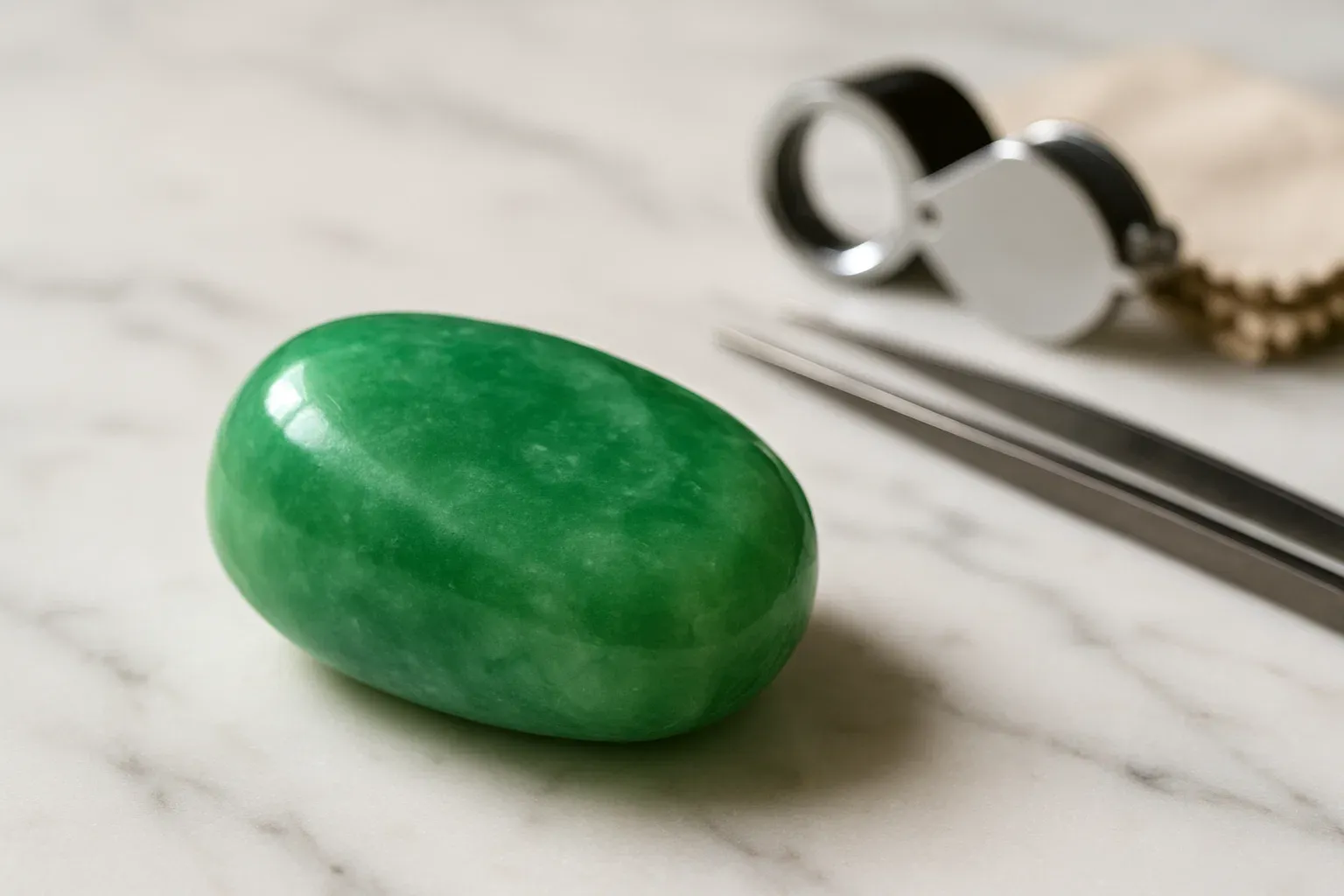
Jadeitový kameň Explained – How to Spot Real Jadeite & Make Smart UK/US Purchases
What is Jadeitový kameň (jadeite)?
Jadeitový kameň is the Slovak term for jadeite, one of the two true types of jade — the other being nephrite. Jadeite is a rare pyroxene mineral made primarily of sodium and aluminum silicate. It forms under intense pressure in metamorphic rocks, resulting in its famous toughness and brilliant translucency.
Jade vs Jadeite vs Nephrite
“Jade” is often used as a broad name for two distinct minerals:
- Jadeite – rarer, denser, and more valuable; found mainly in Myanmar.
- Nephrite – a calcium-magnesium silicate; softer but more common.
- Other lookalikes – serpentine and quartz are sometimes mislabeled as jade.
Key Physical Properties
- Hardness: 6.5–7 on the Mohs scale.
- Density: Around 3.3–3.5 g/cm³ (heavier than most fakes).
- Color Range: From white to deep “imperial” green, lavender, red, and yellow.
- Luster: Waxy to vitreous.
- Translucency: Semi-transparent in high-grade stones.
These qualities make jadeitový kameň ideal for jewelry, carvings, and beauty tools — prized both for appearance and cultural symbolism.
A Short History: Cultural Importance Across Regions
Throughout history, jade has symbolized purity, power, and immortality across civilizations.
China and “Fei Cui” (Imperial Jade)
In China, jadeite — known as fei cui — became an imperial treasure during the Qing dynasty. Emperors valued it more than gold, using it in royal ornaments, seals, and burial items. The most coveted shade, imperial green jadeite, remains one of the world’s most valuable gemstones.
Mesoamerica and New Zealand
In ancient Mesoamerica, the Maya and Aztecs viewed jade as sacred, representing life and fertility. Across the Pacific, Māori tribes in New Zealand crafted greenstone (pounamu) into tools and pendants symbolizing ancestry and strength.
Today, jade continues to bridge heritage and modern fashion — admired for its beauty and spiritual meaning.
Colors, Grades, and Market Terms (Type A/B/C)
Jadeitový kameň exists in multiple shades — each with its own charm and value.
Color Varieties and “Imperial Green”
The most sought-after jadeite color is imperial green — a vivid emerald tone with strong translucency. Other shades include lavender, icy white, red, yellow, and black. The more even and saturated the color, the higher the price.
Understanding Type A/B/C Jade
Gemologists classify jadeite into three types based on treatment:
- Type A: 100% natural, untreated. Cleaned only with mild wax — highest value.
- Type B: Chemically bleached to remove impurities and filled with resin — lower durability.
- Type C: Dyed for color enhancement — cheapest and least stable.
Always request certification from reputable labs (GIA, NGTC, or IGI) when purchasing jadeite jewelry.
How to Identify Real Jadeite
Recognizing genuine jadeitový kameň takes practice — but several tests can help.
Visual Clues
Real jadeite has a smooth, waxy surface with a “fibrous” or “sugary” grain under magnification. Natural color transitions are soft and uneven — never painted-looking. The stone feels cool and heavy in the hand.
Simple At-Home Checks
- Temperature test: Jadeite stays cold longer than fakes.
- Scratch test: Real jadeite can scratch glass (use caution).
- Sound test: Tap gently — real jadeite gives a clear, bell-like sound.
Always perform tests carefully to avoid damaging your stone.
Professional Lab Tests
For valuable pieces, only a gemological lab can confirm authenticity using:
- Spectroscopy (to detect dyes/resins)
- Refractive index measurement (1.66–1.68)
- X-ray diffraction (to separate jadeite from nephrite)
A professional report is the only guaranteed proof of authenticity.
Common Imitations & How to Spot Fakes
Fake jade floods online marketplaces, often mislabeled as “jadeitový kameň.”
Typical Fake Materials
- Dyed quartz or serpentine: Cheap stones dyed green.
- Glass and resin: Too light, overly shiny, and warm to touch.
- Plastic: Easily scratched; lacks the weight of real jade.
Red Flags in Listings
- Unrealistic prices for “imperial green.”
- Overly bright, uniform coloring.
- Sellers without gemological certificates.
Ask for lab verification, and beware of vague terms like “new jade” or “Korean jade,” which often hide substitutes.
Buying Guide for US & UK Buyers
Trusted Sellers
For authentic jadeite, buy only from:
- Certified gemstone dealers (GIA, IGI, CIBJO members)
- Auction houses (Sotheby’s, Bonhams)
- Reputable online stores with lab reports
Documents to Request
- Certificate of authenticity
- Treatment disclosure (Type A/B/C)
- Origin details (Myanmar jadeite is most prized)
Typical Price Ranges
- Small cabochons or pendants: $100–$500
- Fine jewelry-grade jadeite: $1,000–$10,000+ per piece
- Imperial jade: $50,000+ per carat
In the UK/US, import restrictions are minimal, but always confirm customs declarations when ordering from Asia.
Value & Investment: What Affects Jadeite Price?
Core Value Factors
Color: Deep, even green commands premium pricing.
Transparency: Semi-translucent stones are more valuable.
Texture: Finer “sugar” grain and smooth polish increase worth.
Craftsmanship: Intricate carving or design adds artistic value.
Provenance & Treatments
Stones from Myanmar fetch the highest market rates. Conversely, treated (Type B/C) jade loses long-term resale potential due to color fading and resin instability.
Investment Tip
Collectors should always store lab certificates and insurance appraisals — jadeite’s value can appreciate significantly with market demand and limited supply.
Uses: Jewelry, Carvings & Wellness Tools
Jewelry & Carved Art
Jadeitový kameň is carved into bangles, rings, pendants, and intricate statues. Its durability makes it ideal for heirloom pieces that last generations.
Gua Sha & Skin-Care Tools
In recent years, jadeite gained popularity in wellness — especially Gua Sha tools for facial massage. Real jadeite retains coolness, helping reduce puffiness and stimulate circulation.
However, many “jade” beauty tools online are dyed serpentine or glass — always check for authentic labeling and certification.
Care & Cleaning Tips
Safe Cleaning
- Wipe with a soft cloth and lukewarm soapy water.
- Avoid harsh chemicals, ultrasonic cleaners, or bleach.
- Never expose jadeite to extreme heat or sunlight — it may alter color or cause cracks.
Storage & Insurance
- Store jade separately in a soft pouch.
- For high-value pieces, keep insurance records and professional appraisals.
- Regularly inspect for any loosened settings in jewelry.
Proper care preserves jadeite’s luster and long-term value.
Pros & Cons of Owning a Jadeitový kameň
| Pros | Cons |
|---|---|
| Beautiful, timeless gemstone | High-quality jadeite is expensive |
| Strong cultural & historical significance | Many fakes in the market |
| Durable and long-lasting | Needs professional verification |
| Potential investment value | Requires gentle cleaning and storage |
Comparison Table: Jadeite vs Nephrite vs Serpentine vs Glass
| Property | Jadeite | Nephrite | Serpentine | Glass/Resin |
|---|---|---|---|---|
| Hardness | 6.5–7 | 6–6.5 | 3–4 | < 5 |
| Density | 3.3–3.5 | 2.9–3.1 | 2.5–2.7 | 2.4 |
| Value | High | Moderate | Low | Very low |
| Origin | Myanmar, Guatemala | China, NZ | Global | Synthetic |
| Real Feel | Cold, heavy | Cold | Warm | Warm, smooth |
| Typical Use | Jewelry, art | Tools, ornaments | Fakes | Fakes |
FAQs
Is jadeitový kameň the same as jade?
Not exactly. “Jade” refers to both jadeite and nephrite. Jadeitový kameň specifically means jadeite — the rarer, more valuable form.
How can I tell if my Gua Sha is real jadeite?
Genuine jadeite Gua Sha tools are cool to touch, slightly translucent, and heavy. If the color looks too perfect or it feels plastic-like, it’s likely fake.
Does jade increase in value?
Yes — fine, untreated (Type A) jadeite can appreciate over time, especially imperial green varieties from Myanmar.
How should I clean my jade jewelry?
Use only mild soapy water and a soft cloth. Avoid chemical cleaners and heat exposure to preserve natural wax and polish.
Can jadeite change color over time?
Natural jadeite is stable, but treated or dyed jade may fade with sunlight and heat.
Is jadeite a good investment for collectors?
Absolutely. With global demand and limited natural sources, certified jadeite remains a strong long-term asset.
Conclusion
Jadeitový kameň — or jadeite — represents more than beauty; it embodies centuries of artistry, spirituality, and craftsmanship. Whether you’re drawn to its rich green hues, cultural symbolism, or investment potential, understanding its authenticity and care is key.
By following the identification, buying, and maintenance tips above, you can enjoy the lasting elegance and energy of real jadeite — a gemstone cherished around the world.
Wollmatten for UK Homes: Why Wool Mats Are the Smart Eco Upgrade



Leave feedback about this