

What Makes a Traditional Russian Outfit? Sarafan, Kokoshnik & Cultural Roots Explained
Traditional Russian Outfit: History, Key Pieces & Modern Relevance
When we think of Russia, certain images often come to mind: vast snowy landscapes, onion-domed architecture, and perhaps, the vibrant reds and golds of folk costumes. The traditional Russian outfit is far more than just a historical relic or a costume for stage performances. It is a deeply layered tapestry of history, social status, regional identity, and artistic expression. For centuries, what a person wore in Russia told a story about where they were from, their age, their marital status, and their profession.
Today, there is a burgeoning interest in these garments, not just as museum pieces but as a source of inspiration for modern fashion. From the high runways of Paris to the streets of Moscow, elements of the traditional Russian outfit are finding new life. This revival speaks to a global desire to reconnect with heritage and craftsmanship in an age of fast fashion.
In this article, we will explore the fascinating world of Russian traditional clothing. You will learn about the key components that make up these iconic looks, from the famous sarafan to the regal kokoshnik. We will dive into the symbolism hidden in embroidery, the regional differences that make this fashion so diverse, and offer practical tips on how to identify, buy, or style these pieces today. Whether you are a history buff, a fashion enthusiast, or someone looking to reconnect with their roots, this guide covers everything you need to know about the traditional Russian outfit.
What Is a Traditional Russian Outfit? Key Components Explained
Understanding the traditional Russian outfit requires looking past the stereotype of just a red dress. The ensemble is a complex system of layers, each serving a specific function and carrying distinct meaning. While styles varied immensely across the vast Russian empire, the fundamental silhouette remained consistent for centuries.
Core garments overview (sarafan, rubakha, kosovorotka)
At the heart of the wardrobe for both men and women was the rubakha (shirt). This was the foundational garment, made from linen or hemp. For men, the rubakha was often worn long, reaching mid-thigh or knees, and belted at the waist. For women, it was a floor-length shift dress that served as an undergarment or a simple house dress.
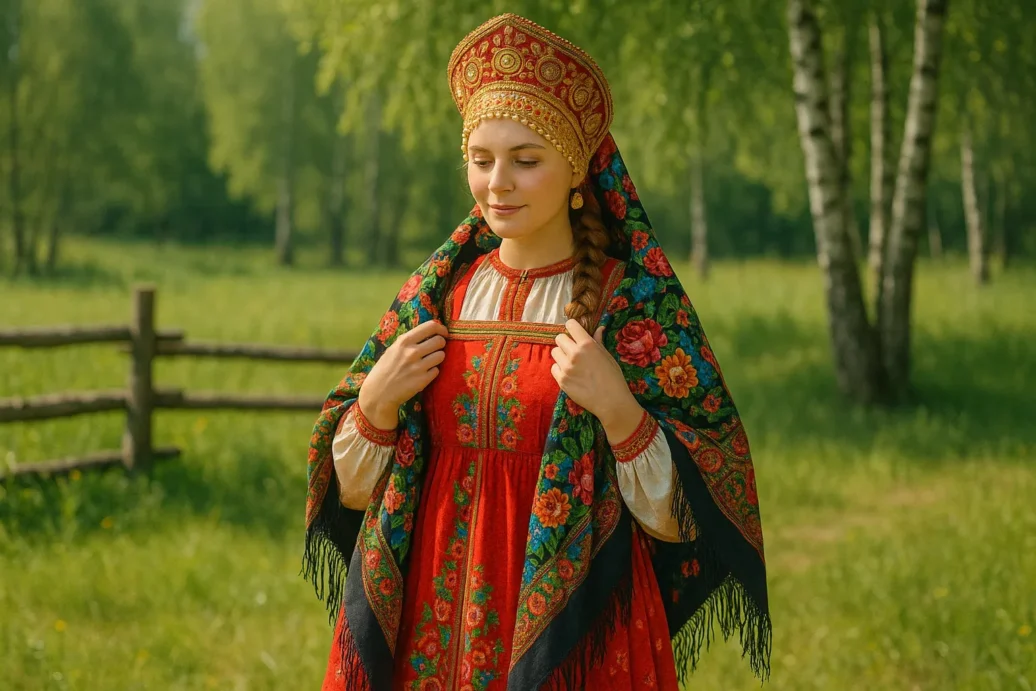
The most recognizable element of the female traditional Russian outfit is undoubtedly the sarafan. This sleeveless, jumper-like dress was worn over the rubakha. Depending on the region and the wearer’s wealth, a sarafan could be a simple, practical garment for daily chores or a luxurious, brocade masterpiece for weddings and festivals.
For men, the distinct variation of the shirt was the kosovorotka. Unlike standard Western shirts, the kosovorotka featured a collar fastening that was offset to the left side rather than the center. This design was practical, preventing the cross pendant worn around the neck from falling out during physical labor.
Importance of accessories like belts, shawls, and boots
No traditional Russian outfit was considered complete without a belt. Going out without a belt was considered a sin and a sign of disorder—giving rise to the Russian idiom “to let oneself go” (literally “to unbelt oneself”). Belts were believed to protect the wearer from evil spirits and were often intricately woven with symbolic patterns.
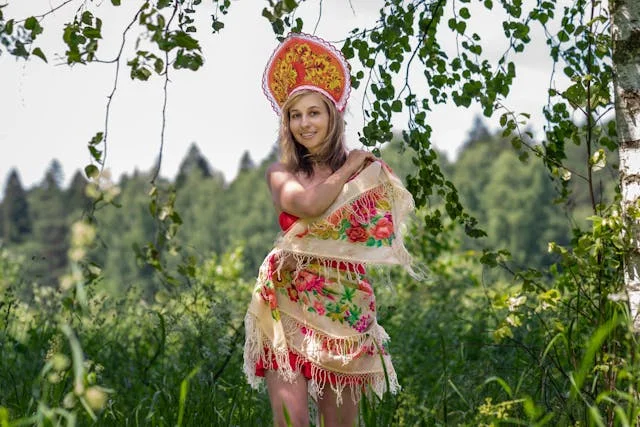
Outerwear and accessories added warmth and status. Shawls (platok) were essential for women, ranging from simple cotton kerchiefs to the elaborate, colorful wool shawls of Pavlovsky Posad. Footwear varied by season and class: woven birch bark shoes (lapti) were common for the peasantry in summer, while leather boots (sapogi) were a sign of wealth. In winter, felt boots (valenki) were indispensable for surviving the harsh climate.
The Sarafan – The Most Iconic Piece of Russian Women’s Clothing
If one item defines the traditional Russian outfit in the global imagination, it is the sarafan. Though it eventually became synonymous with peasant dress, its origins were actually quite noble, and its evolution reflects the changing tides of Russian history.
Historic origins & evolution
Interestingly, the word “sarafan” has Persian roots, originally referring to a long male garment. It was adopted into Russian culture around the 14th century. Initially worn by the upper classes and nobility, the reforms of Peter the Great in the early 18th century forced the aristocracy to adopt Western European fashion. Consequently, the sarafan became the domain of the merchant class and peasantry, preserved as a symbol of “true” Russian identity.
By the 19th century, the sarafan had evolved into the folk costume we recognize today. It became the centerpiece of the rural wardrobe, passed down from mothers to daughters, often lasting for generations due to the durability of the fabrics and the forgiving nature of the cut.
Designs, cuts & regional variations
There isn’t just one type of sarafan. The most ancient style was the closed, tunic-like sarafan with gussets. Later, the button-down sarafan became popular, featuring a seam down the front adorned with decorative buttons or metallic lace.
In the North of Russia, sarafans were often made of expensive silk, velvet, or brocade, reflecting the region’s trade wealth. These were typically darker in color—deep blues or rich burgundies—and heavily decorated with gold braid. In the South, sarafans were often made of home-woven wool in checkered patterns (plaid), featuring brighter, earthier colors like red and black, often worn with a distinct apron called a poneva instead of a full sarafan in some districts.
When and how it is worn today
Today, the sarafan is rarely worn as daily clothing but remains a staple of cultural identity. It is the primary costume for folk dance troupes and choirs. However, modern fashion has seen a resurgence of the silhouette. Summer dresses inspired by the sarafan’s loose, breathable cut are popular in Russia and beyond. Contemporary designers often strip back the heavy ornamentation, focusing on the flattering square neckline and high waist that defines the classic shape.
Kokoshnik & Other Traditional Headdresses
In traditional Russian society, a woman’s hair was seen as possessing a powerful magic that needed to be covered after marriage. This cultural norm gave rise to one of the most spectacular elements of the traditional Russian outfit: the headdress.
Symbolism and social meaning
The headdress was the primary indicator of a woman’s social status. Unmarried girls were allowed to show their hair, often wearing a single braid decorated with ribbons, or a simple open crown (a venets) that left the top of the head exposed.
Once a woman married, she was required to cover her hair completely in public. This is where the kokoshnik and other closed headdresses came into play. “Goofing off” in Russian (oprostovolositsya) literally translates to “hairing oneself” or exposing one’s hair—a shameful act for a married woman in the past. The headdress symbolized dignity, fertility, and the honor of the family.
Types of kokoshniks and regional shapes
The kokoshnik is the most famous type, known for its high, crest-like shape resembling a rooster’s comb (the word comes from kokosh, meaning rooster). However, shapes varied wildly.
- The Cylindrical Kika: Common in southern regions, shaped like a horn or a shovel.
- The Pearl-Encrusted Kokoshnik: Famous in the North, these were rigid, crescent-shaped, and densely packed with river pearls and mother-of-pearl.
- The Soroka: A complex, multi-piece headdress often resembling a bird, worn in southern provinces.
How they’re made and decorated
Creating a festive kokoshnik was an art form. The base was usually made of thick paper or birch bark to hold the shape, then covered in expensive fabric like velvet or damask.
The decoration was lavish. River pearls, gold and silver threads, glass beads, and even precious stones were used. Gold embroidery (zolotnoye shityo) was a highly prized skill, particularly in regions like Torzhok. A single headdress could cost as much as a horse or a cow, representing a family’s entire fortune, and was carefully stored and passed down as an heirloom.
Men’s Traditional Clothing: Kosovorotka, Kaftan & Warrior Influences
While women’s clothing often steals the spotlight with its decoration, men’s traditional Russian outfits were equally distinct and functional, blending agricultural practicality with military influence.
Features and function of kosovorotka
The kosovorotka was the universal male garment. The defining feature—the side slit at the neck—was both symbolic and practical. By ensuring the pectoral cross didn’t fall out, it maintained a spiritual boundary. These shirts were worn loose for work to allow air circulation but were always belted.
Festive kosovorotkas were made of red silk or bleached white linen and featured embroidery on the collar, cuffs, and hem. The embroidery wasn’t just decorative; it was placed at “openings” of the clothes (neck, sleeves, hem) to protect the wearer from spirits entering the body.
Kaftan and Cossack influences
Over the shirt, men wore pants (porty) tucked into boots. For outerwear, the kaftan was standard. A kaftan is a long coat, usually double-breasted, reaching the knees or ankles. Wealthy merchants wore kaftans of brocade or fine wool, while peasants wore rougher cloth.
Cossack influence heavily impacted Southern Russian male fashion. The cherkeska (a collarless coat with cartridge holders across the chest) and the papakha (a tall fur hat) became iconic symbols of masculinity and martial prowess. These items emphasized a warrior aesthetic—broad shoulders and a slim waist.
Modern adaptations in fashion
Men’s traditional fashion has seen a subtle revival. The “Russian collar” or stand-up collar found on the kosovorotka is a detail often used in modern high-fashion menswear. The concept of the belted tunic shirt appears periodically in boho-chic collections. Furthermore, the robust, practical aesthetic of the kaftan has influenced modern overcoat designs, prized for their clean lines and warmth.
Regional Differences in Traditional Russian Outfits
Russia is massive, spanning two continents. Naturally, the “traditional Russian outfit” is not a monolith; it is a collection of distinct regional styles.
Northern styles (rich embroidery, layered outfits)
The North (Archangelsk, Vologda, Novgorod) was never conquered by the Mongols and maintained strong trade links. Consequently, Northern dress is characterized by luxury. The primary outfit here was the sarafan, often made of expensive imported silks and brocades. The distinctive feature of the North is the use of river pearls—tons of them. Headdresses were tall, rigid, and pearl-encrusted. The silhouette was majestic and columnar, designed to make the woman look stately and “swan-like.”
Central Russian styles (muted colors, practical fabrics)
Central Russia, including the Moscow region, featured a blend of styles. The clothing here was often more practical, utilizing linen and wool produced locally. The decoration was vibrant but perhaps less ostentatiously expensive than the North. Red was the dominant color, symbolizing beauty and life. The embroidery here was dense, often featuring geometric patterns and stylized vegetation.
Southern/Caucasus influences (bright colors, ornate designs)
The South (Ryazan, Tula, Voronezh) had a completely different aesthetic. Instead of the sarafan, the oldest garment—the poneva (a wrap-around skirt made of plaid wool)—prevailed. The Southern outfit is famous for its complex layering and incredibly bright, clashing colors. It was a “polychromatic” style. The embroidery was ancient, preserving pagan symbols of fertility and solar signs. The headdresses were often softer but more complex in construction, involving multiple scarves and distinct shapes like horns.
Fabrics, Embroidery & Symbolism in Russian Folk Dress
A traditional Russian outfit was never just about covering the body; it was a text to be read. Every stitch had meaning.
Common materials used historically
For the peasantry, the primary material was “homespun” (domotkan) cloth. This was usually linen or hemp. The process of growing flax, harvesting it, spinning it into thread, and weaving it into cloth was a massive part of a woman’s life cycle. Wool was used for warmth and for the poneva skirts. Richer garments used purchased fabrics like silk, velvet, brocade, and damask, often imported from the East or Europe.
Meaning behind traditional embroidery motifs
Embroidery was a talisman.
- The Rhombus: A symbol of the sown field and fertility.
- The World Tree: Representing the connection between earth, heaven, and the underworld.
- Solar Symbols: Circles and crosses representing the sun, warmth, and life.
- Birds: Often represented happiness, light, and the soul.
- The Makosh: A female figure with raised hands, representing the Mother Goddess and protector of women’s work.
Color symbolism across regions
- Red: The most important color. The Russian word for “red” (krasny) is historically synonymous with “beautiful” (krasivy). It protected against the evil eye and symbolized life, blood, and fire.
- White: The color of the spirit world, purity, and transition. White clothes were worn for mourning and for weddings (a transition to a new life).
- Blue: Often associated with water and the sky, but in some regions, it was considered a color of old age or mourning.
- Black: While associated with the earth, it wasn’t necessarily mournful in all regions; in the South, black backgrounds for embroidery represented the fertile black soil.
Layering, Footwear & Accessories: Completing the Look
The silhouette of a traditional Russian outfit relies heavily on how it is finished with layers and accessories.
Belts, aprons, shawls and scarves
- Belts (Poyas): Worn by everyone, from infants to elders. They could be thin cords or wide sashes. The patterns woven into them were protective spells.
- Aprons (Perednik): Not just for kitchen work. A festive apron was often the most decorated part of the outfit, worn high above the chest, covering the sarafan.
- Shawls: A woman without a shawl was unthinkable outdoors. They added layers of warmth and color.
Footwear like valenki, lapti, leather boots
- Lapti: Woven from birch bark or lime bast. Cheap and easy to make, but they wore out in a week. They were worn with onucha (footwraps).
- Valenki: Seamless felt boots made of sheep’s wool. An engineering marvel, they are incredibly warm and durable, perfect for dry, snowy winters.
- Boots (Sapogi): Leather boots, often red or black, with heels. These were prestige items for holidays.
Seasonal variations (winter vs summer outfits)
Winter required heavy layering. Under the sarafan and shirt, women wore extra skirts. Over the top came the shuba (fur coat). In Russia, fur was worn with the fur on the inside for warmth, covered by fabric on the outside. Only the wealthy wore fur facing out.
How Traditional Russian Outfits Are Used Today
The traditional Russian outfit is not extinct; it has simply changed functions.
Festivals, cultural events, stage performances
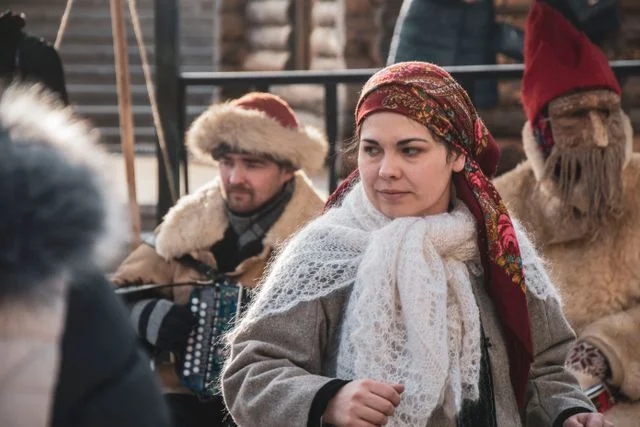
The most common place to see these outfits is at festivals like Maslenitsa (Pancake Week). Here, people don bright floral shawls and sarafans to celebrate the end of winter. Folk choirs and dance ensembles also keep the tradition alive, though stage costumes are often exaggerated versions of the originals—brighter and with larger patterns to be seen from a distance.
Weddings & ceremonial uses
There is a growing trend of “Russian style” weddings. Couples are swapping standard white gowns and tuxedos for stylized versions of traditional dress. Brides might wear a modern kokoshnik or a dress with embroidery inspired by historical patterns. It is a way to honor ancestry during a significant life transition.
Folklore groups and modern reinterpretations
Historical reenactment groups and folklore ethnographers are doing the hard work of preserving authentic techniques. They recreate outfits using traditional methods—hand-weaving linen and natural dyeing—keeping the true craft alive rather than just the visual aesthetic.
Modern Fashion Revival: Wearing Traditional Russian Outfits Today
You don’t have to look like a museum exhibit to appreciate this style. “A La Russe” is a recurring trend in global fashion.
How designers reinterpret sarafans & kokoshniks
High-end designers like Ulyana Sergeenko have popularized the Russian aesthetic globally. They take elements—the fitted bodice of a sarafan, the volume of the sleeves, the shape of a kokoshnik—and render them in modern fabrics like leather or sheer organza. The “modern kokoshnik” has become a trendy headband accessory, stripped of pearls but keeping the majestic shape.
Styling tips for Western wardrobes
- The Shawl: A Pavlovsky Posad floral shawl looks incredibly chic thrown over a leather jacket or a beige trench coat.
- The Boots: Valenki have been modernized with rubber soles and embroidery, making them a practical and stylish alternative to UGGs.
- Embroidery: A blouse with red cross-stitch embroidery (reminiscent of a rubakha) pairs perfectly with blue jeans for a boho look.
Popular modern trends inspired by folk dress
The “Cottagecore” trend overlaps significantly with Russian traditional aesthetics. The focus on natural fabrics, loose silhouettes, aprons, and hair ribbons aligns perfectly with the sarafan look.
Guide to Buying or Making a Traditional Russian Outfit
If you want to own a piece of this heritage, you need to know what you are looking for.
How to identify authentic vs costume replicas
- Fabric: Authentic (or authentic-style) pieces use natural fibers: linen, cotton, wool, silk. Cheap costumes use shiny synthetic satin or polyester.
- Embroidery: Authentic pieces use embroidery (thread on fabric). Cheap souvenirs often use printed patterns that look like embroidery but are just ink on cloth.
- Trim: Look for woven ribbons and lace. Cheap costumes use jagged, shiny plastic gold trim.
Reliable sellers and fabric recommendations
- Souvenir Shops: Good for inexpensive, mass-produced items if you just want a fun costume.
- Etsy/Artisan Markets: The best place to find handmade items by Russian seamstresses who understand the history. Look for sellers based in Russia or Eastern Europe.
- Pavlovo Posad Shawl Manufactory: For shawls, buy directly from the official factory to ensure you get 100% wool and authentic heritage patterns, not a polyester knock-off.
DIY tips, patterns, and cost breakdown
Making a sarafan is a great beginner sewing project because the traditional cut is based on rectangles and straight lines (to waste no fabric).
- Pattern: Search for “Kosoklinny sarafan pattern” (diagonal wedge sarafan) or “Round sarafan pattern.”
- Cost: 3-4 yards of medium-weight linen ($40-$80), decorative jacquard ribbon for trim ($20-$50). A handmade outfit is an investment of time but relatively affordable in materials.
Pros and Cons of Wearing Traditional Russian Clothing Today
Pros: cultural value, uniqueness, craftsmanship
Wearing these items connects you to a rich history. It supports artisans keeping dying crafts alive. Visually, the geometric cuts of traditional Russian clothing are often incredibly flattering and comfortable, designed for real bodies and movement.
Cons: cost, limited availability, cultural sensitivity
Authentic items are expensive due to the labor involved. There is also the issue of cultural appropriation vs. appreciation. Wearing a sacred headdress as a party hat might be seen as disrespectful. It is important to understand the context of what you are wearing.
FAQ
What is the traditional Russian outfit called?
There isn’t one single name, but the most common ensemble for women is referred to as a sarafan (dress) worn over a rubakha (shirt). For men, it is the kosovorotka (shirt).
What is a sarafan and why is it famous?
A sarafan is a long, sleeveless jumper dress. It is famous because it became the national symbol of Russian identity, representing the folk values of the peasantry.
What does the kokoshnik symbolize?
The kokoshnik symbolized that a woman was married. Its shape and decoration indicated her family’s wealth and her region. It was believed to protect the woman and her fertility.
Were Russian outfits different by region?
Yes, vastly. The North preferred sarafans and pearls; the South preferred poneva skirts and bright, multi-colored layers. Every village had unique embroidery patterns.
Can you wear a traditional Russian outfit today?
Yes! While full historical costumes are mostly for holidays, elements like floral shawls, embroidered shirts, and modern-style sarafans are popular in everyday fashion.
What fabrics were used historically?
Peasants used homespun linen, hemp, and wool. The wealthy used imported silk, velvet, brocade, and damask.
How do I choose an authentic Russian folk costume?
Look for natural fabrics (linen, wool), woven or stitched embroidery rather than prints, and accurate cuts. Avoid neon colors and shiny synthetic fabrics.
Conclusion
The traditional Russian outfit is a vibrant testament to the resilience and creativity of the Russian people. From the humble linen rubakha worn in the fields to the pearl-laden kokoshnik worn at weddings, these garments served as a second skin, offering protection, status, and beauty.
While the world has modernized, the relevance of these outfits hasn’t faded—it has transformed. Whether you are admiring the intricate red embroidery of a museum piece, wrapping yourself in a Pavlovsky Posad shawl against the autumn chill, or sewing your own linen sarafan, you are participating in a cultural story that spans centuries. We encourage you to explore this fashion heritage respectfully, appreciating the craftsmanship and meaning woven into every thread.



Leave feedback about this