

Why Traditional Puerto Rican Outfits Still Captivate: History, Styles & How to Wear Them
Introduction
Puerto Rico’s culture is a vibrant mosaic, woven from centuries of indigenous, European, and African influences. One of the most visible expressions of this heritage is found in traditional Puerto Rican outfits, garments that capture the island’s history, identity, and artistic spirit. These outfits are more than just clothing—they tell stories of resilience, celebration, and community. From the flowing skirts of bomba dancers to the ornate vejigante masks of Ponce’s carnival, each element carries symbolism and significance, reflecting the island’s rich cultural tapestry.
For travelers, dancers, students of fashion, or anyone fascinated by Caribbean heritage, understanding these traditional outfits offers a window into Puerto Rico’s soul. This guide explores the history, design, regional variations, modern adaptations, and practical guidance for wearing or acquiring these garments. By the end, readers will have a full appreciation of how these costumes celebrate culture, identity, and artistry.
Quick Snapshot: What Counts as Traditional Puerto Rican Outfits
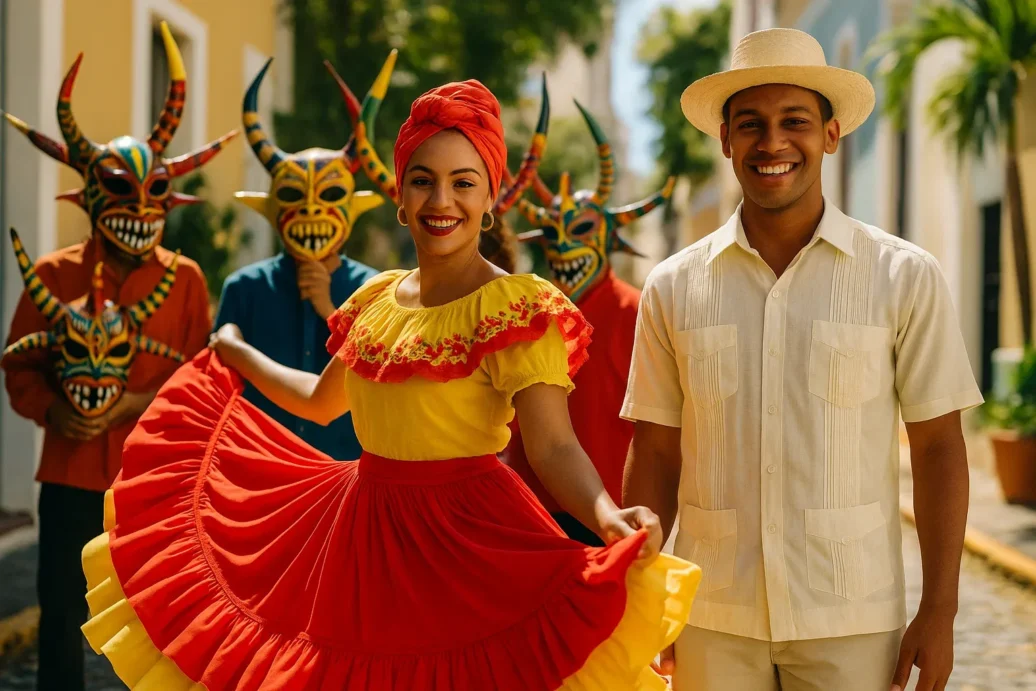
When discussing traditional Puerto Rican outfits, it’s essential to define the components that make them unique. Central to the tradition is the traje típico, a folkloric ensemble representing Puerto Rican identity. Women’s traje típico often features full, layered skirts with ruffles, embroidered blouses, aprons, and headscarves. Men’s attire is typically composed of practical shirts and trousers, often culminating in the iconic guayabera, a lightweight shirt characterized by vertical pleats and pockets, sometimes paired with the pava straw hat.
Performance costumes such as bomba and plena skirts and tops are designed specifically for dance. They are carefully constructed to allow freedom of movement, while still preserving the aesthetic and cultural integrity of the outfit. Accessories such as headwraps, floral adornments, and jewelry often have symbolic meanings, tying the wearer to specific regions, traditions, or historical narratives.
Vejigante costumes, another hallmark, are elaborate carnival ensembles featuring colorful masks with horns and expressive features, paired with flowing garments. While some traditional outfits originated as everyday attire among rural communities, most of today’s versions are worn for ceremonial, festival, or performance purposes. Modern designers have also begun integrating these traditional elements into fashion, bridging historical authenticity with contemporary style.
Historical Roots: Taíno, Spanish, African Influences
The story of traditional Puerto Rican outfits begins long before European colonization. The Taíno, the island’s indigenous people, wore simple cotton garments, often decorated with natural dyes and ornaments indicating social status. Clothing was functional yet symbolic, representing identity and communal belonging.
With Spanish colonization came European textiles, embroidery techniques, and clothing styles. Ruffles, aprons, mantillas, and layered garments were introduced, blending with Taíno practicality. African influence, brought by enslaved people, introduced dynamic elements crucial for movement-based traditions such as bomba and plena. African-inspired skirt construction, headwraps, and vibrant patterns were designed to withstand the physical demands of dance while enhancing visual spectacle.
The convergence of Taíno, Spanish, and African influences created a unique Puerto Rican sartorial identity. These early layers continue to inform how outfits are designed today, both in performance and ceremonial contexts. Understanding this layered heritage is crucial for anyone seeking to appreciate the meaning behind each garment.
Traje Típico and the Jíbaro Tradition
The traje típico represents the heart of Puerto Rican folklore. Rooted in the Jíbaro tradition, it embodies rural life, resilience, and pride. Jíbaro women historically wore practical skirts, blouses, aprons, and headscarves suitable for farm work. Over time, these garments evolved into more ornate festival attire, preserving the essence of rural identity while adding aesthetic embellishments such as embroidery, lace, and floral details.
Men’s traditional attire mirrored practicality and utility. Loose-fitting shirts and trousers allowed ease of movement, and the guayabera eventually became a refined symbol of Puerto Rican masculinity. Today, the traje típico serves as a visual representation of national identity, often seen in parades, festivals, and folkloric dance performances. Recognizing the subtle differences in fabric, embroidery, and design can reveal regional origins, historical context, and cultural significance.
Bomba & Plena Dresses — Function, Design, and Dance Connection
Bomba and plena dresses are integral to Puerto Rican dance culture. Bomba, an Afro-Puerto Rican rhythm, requires skirts that are wide and tiered to accommodate dramatic movements. Off-shoulder blouses with ruffles complement these skirts, creating a visually stunning effect as dancers move in sync with percussion rhythms. Headwraps not only add decorative flair but also serve a functional purpose, keeping hair secure during vigorous performance.
Plena, often called “the sung newspaper”, relies on expressive storytelling. Costumes in plena performances are slightly more structured but still prioritize movement. These outfits are designed to engage the audience, conveying narrative, emotion, and rhythm. Modern adaptations allow bomba and plena-inspired skirts to be worn for cultural events, photo shoots, or even casual occasions, demonstrating the adaptability of traditional designs without compromising their heritage.
Vejigante Masks & Carnival Costumes
One of the most visually striking elements of Puerto Rican tradition is the vejigante costume. Vejigantes are demon-like figures appearing during carnival celebrations, especially in Ponce and Loíza. Masks are made from papier-mâché, coconut shells, or leather, painted in vibrant colors, and often feature horns or exaggerated facial features.
The costumes are not merely decorative; they carry deep cultural and symbolic meaning. They represent the intersection of Spanish Carnival traditions with African and Taíno influences. Wearing or displaying these costumes without understanding their significance can be disrespectful. Cultural education and contextual awareness are essential when interacting with vejigante attire, whether attending festivals, taking photographs, or purchasing replicas.
Guayabera & Pava: Men’s Traditional Wear and Modern Revivals
Men’s traditional wear centers on the guayabera and pava hat. The guayabera, lightweight and pleated, is both practical for tropical climates and symbolic of Puerto Rican heritage. Originally associated with rural labor, it has evolved into a staple for formal events, cultural celebrations, and fashion statements. The pava, a simple straw hat, complements the guayabera and represents rural pride and traditional craftsmanship.
In contemporary fashion, designers and celebrities have incorporated these garments into modern wardrobes. The guayabera appears on runways and red carpets, sometimes in bold colors or with subtle modifications, showing how traditional attire can inspire modern design while honoring its roots. Pairing these pieces with the proper accessories allows men to pay homage to tradition while maintaining contemporary style.
Regional Differences: Loíza, Ponce, Mountain (Jíbaro) Styles
Puerto Rican outfits vary regionally, reflecting local traditions, climate, and historical influences. Loíza, known for its strong Afro-Puerto Rican heritage, emphasizes bold headwraps, vibrant skirts, and expressive jewelry. In contrast, Ponce focuses on carnival traditions, particularly vejigante masks and elaborate costumes. Mountain or jíbaro regions favor simpler, practical garments that reflect the demands of rural life and agricultural work.
These regional differences inform design, fabric choice, color palette, and accessory use. Understanding these distinctions helps visitors and performers alike appreciate the nuances of Puerto Rican culture, ensuring accurate representation and respect for local traditions.
How Outfits Are Used Today
Traditional Puerto Rican outfits are alive and evolving. They are central to festivals, folkloric performances, pageants, and cultural celebrations across Puerto Rico and in diaspora communities such as New York’s Puerto Rican Day Parade. Folkloric troupes continue to use authentic attire to preserve history and educate audiences about the island’s diverse cultural roots.
Modern designers reinterpret elements of these outfits for fashion shows, casual wear, and photography, blending traditional aesthetics with contemporary tastes. By maintaining these connections, traditional attire continues to tell stories and inspire new generations, bridging the gap between history and modern expression.
How to Wear and Style Traditional Pieces Respectfully
Respect and understanding are essential when engaging with traditional Puerto Rican outfits. Visitors and enthusiasts should:
- Learn the meaning behind each piece
- Avoid mixing ceremonial costumes with casual attire
- Support local artisans and authentic makers
- Wear outfits in contexts that honor their cultural significance
For example, a bomba skirt should be worn with the proper blouse and headwrap during performances, while vejigante masks should be reserved for carnival events to avoid disrespecting tradition. Thoughtful attention to context ensures cultural appreciation rather than appropriation.
Where to Buy, Commission, or DIY
Authentic traje típico can be purchased through boutiques, online platforms, or directly from Puerto Rican artisans. Commissioned pieces allow for tailored fit, traditional materials, and accurate craftsmanship.
DIY enthusiasts can find patterns for skirts, headwraps, and other accessories, allowing them to engage creatively while respecting tradition. When purchasing, planning ahead for timing and cost is important, as high-quality traditional outfits often require significant effort and skilled labor to produce. Supporting local makers preserves cultural heritage and ensures authenticity.
Pros & Cons: Wearing Traditional Outfits
Pros:
- Deep cultural connection
- Preservation of traditional craftsmanship
- Strong visual impact in festivals and performances
- Educational value for communities and tourists
Cons:
Risk of cultural misappropriation if worn without understanding
Cost and accessibility may limit availability
Potential exposure to low-quality or inauthentic reproductions
Understanding these factors helps individuals engage with Puerto Rican culture respectfully and meaningfully.
FAQ
What is the traditional dress of Puerto Rico?
Puerto Rico’s traditional dress includes traje típico, bomba and plena skirts, vejigante masks, guayabera shirts, pava hats, and associated accessories, reflecting the island’s Taíno, Spanish, and African heritage.
What is a Bomba dress and how is it used?
A bomba dress consists of wide, tiered skirts and ruffled blouses, designed to allow freedom of movement in Afro-Puerto Rican dance performances.
What is a vejigante costume and where does it come from?
Vejigante costumes feature vibrant masks and garments, originating from Spanish Carnival traditions and African and Taíno influences, especially in Ponce and Loíza.
What is a guayabera and why is it important?
The guayabera is a pleated shirt with pockets, worn by men for comfort, cultural identity, and ceremonial occasions.
How do Puerto Rican traditional outfits differ by region?
- Loíza emphasizes Afro-Puerto Rican heritage with headwraps and vibrant skirts.
- Ponce highlights carnival costumes and vejigante masks.
- Mountain/jíbaro regions favor simpler, practical garments.
Where can I buy an authentic traje típico in the U.S.?
Reputable boutiques, Etsy sellers, and cultural festivals often offer authentic options, with local artisans ensuring quality and cultural accuracy.
How do you wear a bomba/plena skirt properly for dancing?
Skirts should be full to allow movement, paired with traditional blouses and headwraps, following performance conventions to respect cultural heritage.
Conclusion
Traditional Puerto Rican outfits are not just clothing—they are living cultural narratives, carrying centuries of history, artistry, and identity. From the flowing skirts of bomba dancers to the intricate vejigante masks of Ponce and Loíza, each outfit embodies a story of Puerto Rico’s heritage.
Today, these garments continue to thrive in festivals, pageants, and fashion reinterpretations, bridging history with modern expression. By understanding their origins, respecting their symbolism, and supporting authentic craftsmanship, anyone can engage meaningfully with Puerto Rican culture. Whether performing, attending festivals, or simply exploring heritage, these outfits offer an immersive, visually stunning, and culturally rich experience that connects wearers to the island’s vibrant identity.





Leave feedback about this