

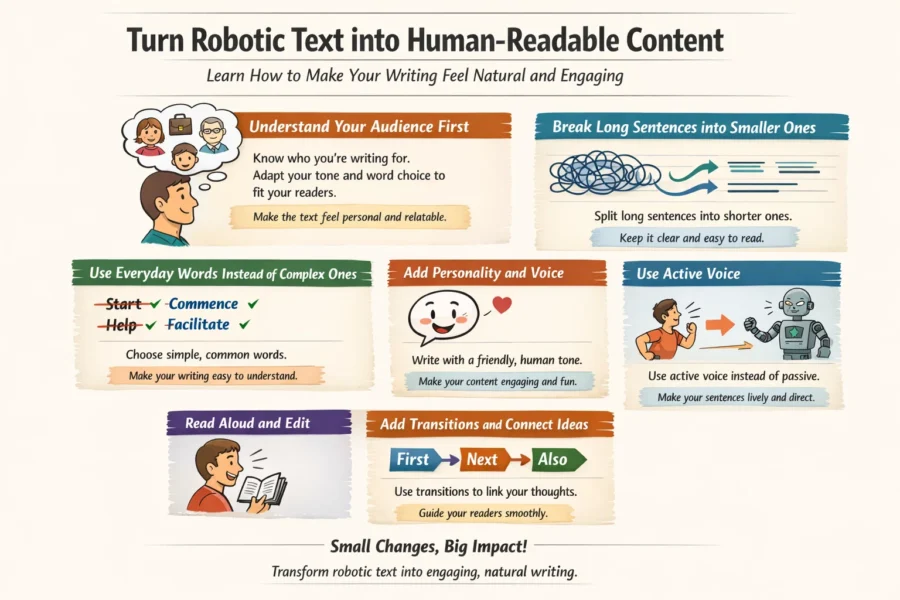
Turn Robotic Text into Smooth, Human-Readable Content
Do you ever read a piece of writing and feel like it was written by a robot? Many times, automated tools produce text that is technically correct but feels stiff, unnatural, or hard to follow. This can make readers lose interest quickly.
The good news is that robotic text can be transformed into smooth, human-readable content that engages your audience. In this article, we will explore practical strategies to make your writing more natural and enjoyable. Are you ready to learn how to make text flow as a real person wrote it?
Understand Your Audience First
Before you try to make robotic text more human, you need to know who will read it. Different audiences expect different tones and word choices. For example, writing for children requires simple words and short sentences. Writing for professionals may allow more technical terms, but it still needs clarity.
Knowing your audience helps you pick the right words and phrases. When you understand your readers, it’s easier to replace stiff phrases with natural expressions. You can also decide how formal or casual your writing should be. This step makes the text feel more personal and less like a machine produced it.
By keeping the reader in mind, you create a connection with them. A text that speaks directly to the audience is naturally smoother. It also encourages engagement, making your content more readable and enjoyable.
Break Long Sentences into Smaller Ones
One of the main signs of robotic text is long, complicated sentences. Machines often combine ideas in one sentence, making it hard to follow. Breaking these sentences into shorter ones makes your text easier to read.
Short sentences help highlight important ideas clearly. They also create a rhythm that feels more natural to the reader. You can mix short and medium-length sentences to keep the flow interesting. Avoid cramming too many details into a single line, as this can overwhelm readers.
This simple step alone improves readability significantly. Readers can absorb ideas quickly without feeling lost. By dividing long sentences, your text starts to feel like a conversation rather than a report. It’s a small change that has a big impact on engagement.
Use Everyday Words Instead of Complex Ones
Robotic text often contains complicated words or technical terms that make reading harder. Replacing these with simple, everyday words can make your content more human. For instance, use “start” instead of “commence” or “help” instead of “facilitate.”
Simple words keep your sentences clear and direct. They also make your content accessible to a wider audience. Avoiding jargon unless necessary ensures readers don’t get confused or bored. A natural tone feels more personal and approachable.
Using everyday words doesn’t mean your content loses meaning. Instead, it becomes more relatable and engaging. Readers are more likely to finish an article and remember its points when the language is smooth and simple.
Add Personality and Voice
One way to turn robotic text into human-readable content is to add personality. You can do this by using a friendly tone, asking questions, or including small expressions like “you might notice” or “it’s easy to see.”
A human voice makes the content feel alive. It shows readers that a person, not a machine, is guiding them through the ideas. You can also use subtle humor or relatable examples to make complex points easier to understand. This helps the audience connect with the text emotionally.
By giving your writing a voice, you create a natural flow. Readers feel like someone is talking to them, not just giving instructions. It is one of the effective solutions on how to humanize AI writing and making it enjoyable to read.
Use Active Voice Instead of Passive
Robotic text often uses passive voice, which can sound dull and distant. Switching to the active voice makes sentences direct and lively. For example, say “The team completed the project” instead of “The project was completed by the team.”
Active voice creates clarity and energy in your writing. It tells readers who is doing the action, which makes the message easier to understand. This style also helps maintain a natural rhythm and prevents text from feeling stiff.
Even small changes from passive to active voice can transform the tone. Your writing becomes more engaging and readable. Active sentences guide readers smoothly from one idea to the next, improving overall comprehension.
Read Aloud and Edit
One of the simplest ways to spot robotic text is to read it aloud. Listening to your words helps identify awkward phrases, long sentences, or unnatural transitions. You can then revise the text for smoother flow.
While reading aloud, pay attention to how sentences sound. If a sentence feels hard to say, it likely needs rephrasing. Break ideas into smaller chunks, replace stiff words, or adjust sentence structure. Repeating this process ensures your content becomes fluid and easy to follow.
Editing after reading aloud transforms mechanical text into natural writing. It allows you to refine tone, rhythm, and clarity. This step makes your writing more human and reader-friendly, creating a seamless experience.
Add Transitions and Connect Ideas
Robotic text often jumps from one point to another without clear connections. Adding transition words like “however,” “also,” “for example,” or “in addition” helps ideas flow naturally. This improves readability and keeps readers engaged.
Transitions act as bridges between sentences and paragraphs. They guide the reader smoothly through your content. Without them, writing can feel choppy or robotic, breaking the reading experience. Well-placed transitions make text feel like a conversation rather than a list of statements.
Connecting ideas also helps emphasize relationships between concepts. This step gives your writing a logical order and rhythm. Smooth transitions are essential for turning robotic text into polished, human-readable content that holds attention from start to finish.
Choose the Right Solution to Turn Robotic Text into Human-Readable Content Now
Turning robotic text into smooth, human-readable content is easier than it seems. By understanding your audience, simplifying words, breaking long sentences, adding personality, using active voice, reading aloud, and connecting ideas, you can make your writing more engaging. Small adjustments create a big difference in clarity and flow.
Whether you write blog posts, reports, or AI-generated content, these steps help your readers enjoy and understand your message. Transforming mechanical text into natural writing improves communication and keeps your audience coming back.
Explore other articles on our blog for more tips.
Read More
How to Choose the Right Grass Collection System for Your Lawn Care





Leave feedback about this