

Chemical Peels in 2026: The Complete Guide to Skin Resurfacing That Actually Works
Chemical peels are one of the most effective skin resurfacing treatments available today. They have been used by dermatologists and estheticians for decades. And in 2026, they are more popular than ever.
If you are dealing with dull skin, dark spots, acne scars, or uneven texture, a chemical peel may be exactly what your skin needs. This guide covers everything you need to know before booking your first session.
What Is a Chemical Peel?
A chemical peel uses a carefully formulated acid solution to remove the outermost layers of skin. This controlled exfoliation triggers the skin’s natural renewal process. Fresh, healthier skin emerges from underneath.
The depth of the peel determines the results. Light peels polish the surface. Medium peels penetrate deeper to address texture and pigmentation. Deep peels deliver dramatic results for more severe concerns.
Each type has specific uses, downtime, and candidacy requirements. A trained skincare professional helps you choose the right depth for your skin goals.
Types of Chemical Peels Explained
Not all peels work the same way. Understanding the differences helps you have a more informed conversation with your esthetician.
Superficial peels use mild acids like alpha-hydroxy acids (AHAs). They gently exfoliate the very outer layer of skin. These peels are ideal for brightening dull skin, improving hydration, and smoothing light texture irregularities. Downtime is minimal to none.
Glycolic acid peels are among the most widely used superficial to medium-depth peels. Glycolic acid is an AHA derived from sugar cane. It has the smallest molecular size of all AHAs, which allows it to penetrate the skin more effectively than other acids. This makes glycolic acid peels particularly effective for fine lines, hyperpigmentation, and congested pores.
Salicylic acid peels are BHA-based and oil-soluble. They penetrate deep into pores, making them the preferred choice for acne-prone and oily skin types. Salicylic peels reduce breakouts, shrink enlarged pores, and calm inflammation.
TCA (trichloroacetic acid) peels are medium-depth peels. They address more significant pigmentation, sun damage, acne scars, and early signs of aging. TCA peels require some downtime but deliver noticeably stronger results than superficial options.
Jessner peels combine lactic acid, salicylic acid, and resorcinol. This combination treats a wide range of concerns simultaneously, making Jessner peels a versatile option for many skin types.
What Can Chemical Peels Treat?
Chemical peels address a broad range of skin concerns. That is a big part of why they remain a staple in professional skincare menus across New York.
Here is what chemical peels NY clients most commonly use them for:
- Uneven skin tone and dullness
- Hyperpigmentation and dark spots
- Melasma and post-inflammatory pigmentation
- Fine lines and early wrinkles
- Acne and recurring breakouts
- Acne scars and post-acne marks
- Rough or uneven skin texture
- Sun damage and age spots
- Enlarged pores
Few treatments address this many concerns in a single session. That versatility makes chemical peels one of the highest-value treatments in professional skincare.
Skin Resurfacing: What Actually Happens to Your Skin
When the acid solution is applied, it breaks the bonds between dead and damaged skin cells. These cells are shed over the following days, revealing the newer, undamaged skin beneath.
This process also sends a signal to the deeper layers of the skin. The body interprets the controlled exfoliation as mild damage and responds by accelerating collagen and elastin production. Over the weeks following a peel, skin becomes firmer, more even, and noticeably smoother.
Skin resurfacing Forest Hills clients often describe the transformation as looking like their skin has been “reset.” This is especially noticeable after a series of peels spaced four to six weeks apart.
The cumulative effect of regular peeling sessions is significant. Each session builds on the last. Pigmentation fades progressively. Texture becomes more refined. The skin barrier strengthens over time with proper post-peel care.
What to Expect Before, During, and After a Peel
Before your peel, your esthetician will conduct a skin assessment. They evaluate your skin type, tone, sensitivity level, and current concerns. This determines which peel formula and concentration is appropriate for you.
You may be advised to prep your skin in the two weeks before treatment. This often includes using a gentle retinol or AHA product at home to prime the skin for deeper penetration. Avoid sun exposure and discontinue certain active ingredients before your appointment.
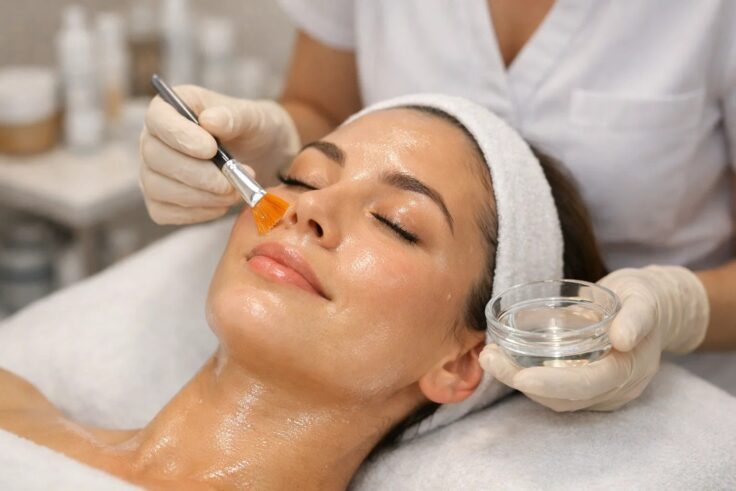
During the treatment, you will feel a mild tingling or warming sensation as the acid is applied. This is completely normal. A neutralizing solution is applied to stop the acid’s action at the right depth. The entire process takes between 30 and 60 minutes depending on the peel type.
After the peel, light surface peels may cause minimal redness that fades within hours. Medium peels typically involve visible peeling and flaking over three to seven days. This is part of the process. Do not pick or peel the skin manually, as this can cause scarring.
Post-peel care is critical. Use a gentle cleanser, a fragrance-free moisturizer, and a broad-spectrum SPF 50 every day. Avoid active ingredients like retinol and vitamin C until the skin has fully recovered. Your esthetician will provide a specific aftercare protocol for the peel you received.
How Often Should You Get a Chemical Peel?
For superficial peels, monthly sessions are generally safe and effective. This aligns with the skin’s natural renewal cycle and allows for progressive improvement without overstressing the skin barrier.
Medium-depth peels are typically performed every three to six months depending on your skin’s response and goals.
Your esthetician will recommend the right frequency based on your skin type and the specific results you are working toward. Consistency is more important than intensity. Regular light peels maintained over time outperform occasional aggressive treatments.
Forest Hills, Queens: Where to Get Expert Chemical Peels
If you are searching for professional chemical peels in Forest Hills, the quality of the provider matters enormously. Peels require precise application, accurate timing, and expert skin assessment. In untrained hands, they carry a real risk of irritation, uneven results, or post-inflammatory hyperpigmentation.
Skincare Sommelier Beauty Lab & Med Spa in Forest Hills, NY, is a trusted destination for professional chemical peel treatments across Queens. The team combines deep skincare expertise with a genuinely personalized approach. Every peel session begins with a thorough consultation and is tailored to your skin type, tone, and goals.
Whether you are new to chemical peels or looking to advance your existing skin resurfacing routine, Skincare Sommelier Beauty Lab & Med Spa offers the expert guidance and clinical precision to get real, lasting results.
Is a Chemical Peel Right for You?
Chemical peels work for most skin types. However, certain conditions require extra caution. Active breakouts, open wounds, very sensitive skin, or recent sun exposure may require postponing treatment.
Darker skin tones can safely receive peels, but the formula and concentration must be carefully selected to avoid post-inflammatory hyperpigmentation. An experienced esthetician with knowledge of diverse skin tones is essential in these cases.
The best way to know if a peel is right for you is to book a professional consultation. A trained expert will assess your skin, explain your options, and design a treatment plan that delivers results safely and effectively.
Your skin deserves more than guesswork. A chemical peel, done right, is one of the most powerful tools in modern skincare.
Disclaimer
The information provided in this article is for educational and informational purposes only and is not intended as medical advice. Chemical peels are professional skincare treatments that should be performed by a licensed and trained esthetician or dermatologist. Individual results may vary depending on skin type, condition, and adherence to pre- and post-treatment care.
Before undergoing any chemical peel or skincare procedure, it is strongly recommended to consult with a qualified skincare professional to determine the most appropriate treatment for your specific needs. This article does not replace a professional consultation, diagnosis, or treatment plan.
The author and publisher are not responsible for any adverse effects or consequences resulting from the use or misuse of the information presented in this content. Always follow the guidance of your skincare provider and use products as directed.
If you have underlying skin conditions, allergies, or medical concerns, seek advice from a licensed healthcare provider before proceeding with any treatment.





Leave feedback about this