

Easy Mindfulness Exercises for Beginners to Try Daily
The constant buzz of notifications, an ever-growing to-do list, and the pressure to always be “on” can leave your mind feeling scattered and overwhelmed. You might feel like you’re running on a treadmill, unable to catch your breath or find a moment of peace. If this sounds familiar, the concept of mindfulness has likely crossed your path. But it can seem abstract or even intimidating, reserved for experts who can sit still for hours. The truth is much simpler. Beginner mindfulness exercises are practical, accessible tools designed to help you anchor yourself in the present moment, even for just a few minutes a day.
Mindfulness isn’t about emptying your mind or stopping your thoughts; it’s about learning to observe them without judgment. It’s a skill that helps you step back from the chaos of your inner world and find a sense of calm and clarity. The benefits, supported by a growing body of scientific research, range from reduced stress and anxiety to improved focus and emotional regulation.
This guide will demystify mindfulness for you. We’ll break down simple, effective exercises that require no special equipment or prior experience. You’ll learn how to integrate these practices into your daily life to manage stress at work, improve your sleep, and navigate difficult emotions with greater ease.
Table of Contents
- What Are Beginner Mindfulness Exercises?
- Why Mindfulness Is Important for Beginners in Daily Life
- How Mindfulness Exercises for Beginners Actually Work
- Easy Mindfulness Exercises You Can Start Today
- Beginner Mindfulness Meditation Techniques Explained
- Simple Mindfulness Techniques for Stress and Anxiety
- Daily Mindfulness Exercises for Beginners (5–10 Minute Routine)
- Real-Life Examples of Mindfulness for Beginners
- Common Mistakes Beginners Make with Mindfulness
- Pros and Cons of Beginner Mindfulness Exercises
- Mindfulness vs Meditation – What Beginners Should Know
- Conclusion – How to Stay Consistent with Mindfulness as a Beginner
- FAQs – Beginner Mindfulness Exercises
What Are Beginner Mindfulness Exercises?
At its core, mindfulness is the simple practice of paying attention to the present moment on purpose, without judgment. It’s about noticing your thoughts, feelings, bodily sensations, and the world around you, right here and now. Beginner mindfulness exercises are the training wheels for this skill. They are short, guided activities designed to gently pull your focus away from worries about the past or future and anchor it in the present.
This is different from simple relaxation. While mindfulness can be relaxing, its primary goal isn’t to escape but to become more aware. Relaxation might involve zoning out to music, while mindfulness involves actively listening to that music—noticing the notes, the silence between them, and how it makes you feel. Beginners should start with easy exercises because they build the fundamental “muscle” of attention in a manageable way.
- Mindfulness in plain English: It’s the act of knowing what you are doing, while you are doing it.
- Why it’s beginner-friendly: The exercises are short, simple, and can be done anywhere.
- No equipment needed: Your breath and your attention are the only tools required.
Scientific studies continue to validate the power of these practices, linking them to reduced stress, enhanced mental clarity, and a greater sense of well-being.
Why Mindfulness Is Important for Beginners in Daily Life
We live in a state of chronic distraction, and our minds often race with thoughts about work deadlines, family obligations, and personal anxieties. Mindfulness offers a practical antidote to this modern dilemma. For beginners, incorporating these exercises into daily life provides an accessible way to manage the mental noise and cultivate a sense of inner peace.
The benefits extend far beyond just feeling calm during the exercise itself. Practicing mindfulness regularly can fundamentally change how you relate to your thoughts and emotions. Instead of being swept away by a wave of anxiety, you learn to watch it rise and fall without getting pulled under. This has profound implications for your work life, helping you stay focused in meetings, and for your personal life, allowing for better sleep and more meaningful interactions.
- Improves focus & emotional balance: By training your attention, you become less reactive to emotional triggers.
- Helps reduce anxiety naturally: Grounding yourself in the present moment interrupts the cycle of “what if” thinking that fuels anxiety.
- Builds awareness without pressure: It’s a gentle practice of noticing, not a forceful attempt to control your mind.
The mental health benefits are well-documented, showing that consistent mindfulness practice can reshape neural pathways in the brain, leading to more resilient and regulated emotional responses.
How Mindfulness Exercises for Beginners Actually Work
The magic of mindfulness isn’t magic at all—it’s neuroscience. When you practice even simple beginner mindfulness exercises, you are actively training your brain. Think of it like taking your brain to the gym. The process works by strengthening the connection between your mind and body and refining how you direct your attention.
At the center of this process is the breath. Your breath is always with you in the present moment, making it a perfect anchor for your attention. When your mind wanders off into a spiral of thoughts (which it will!), the exercise is to gently notice that it has wandered and guide it back to the sensation of your breathing. This simple act of noticing and returning, done over and over, is the core of the practice. It teaches you that you are not your thoughts; you are the one who is aware of them.
- Role of breathing: The breath acts as a physical anchor to the present moment.
- Attention training basics: Each time you bring your wandering mind back, you strengthen your prefrontal cortex, the part of the brain responsible for focus and decision-making.
- What beginners should expect: Your mind will wander constantly at first. That’s normal! The goal isn’t to have a blank mind, but to practice returning to the present moment with kindness.
Consistency is far more important than duration. Five minutes of focused practice every day is more effective than one long session per week.
Easy Mindfulness Exercises You Can Start Today
You don’t need to sit on a cushion for an hour to begin. Mindfulness can be woven into your day in just a few minutes. These exercises are designed for complete beginners and require no special background.
- 3-Minute Breathing Awareness:
- Sit or stand in a comfortable position. Close your eyes if you feel comfortable.
- Bring your attention to your breath. Don’t try to change it; just notice it.
- Feel the sensation of the air entering your nostrils, filling your lungs, and then leaving your body.
- When your mind wanders, gently acknowledge the thought and guide your focus back to your breath.
- Continue for three minutes.
- Mindful Listening Exercise:
- Sit quietly and close your eyes.
- First, notice the most obvious sounds around you.
- Then, try to listen for more subtle sounds you might usually filter out—the hum of a refrigerator, a distant bird, the sound of your own breathing.
- Just listen without labeling the sounds as “good” or “bad.” Acknowledge each sound as it comes and goes.
- Mindful Observation:
- Pick a random, everyday object near you—a pen, a coffee mug, a leaf.
- Observe it as if you’ve never seen it before.
- Notice its color, texture, shape, and weight. How does the light hit it? Are there any imperfections?
- Engage your senses fully for a minute or two, exploring this simple object with your full attention.
Beginner Mindfulness Meditation Techniques Explained
While mindfulness can be practiced informally (like in the exercises above), mindfulness meditation is a formal practice where you set aside a specific time to sit and cultivate awareness. For a beginner, this can be as short as five minutes.
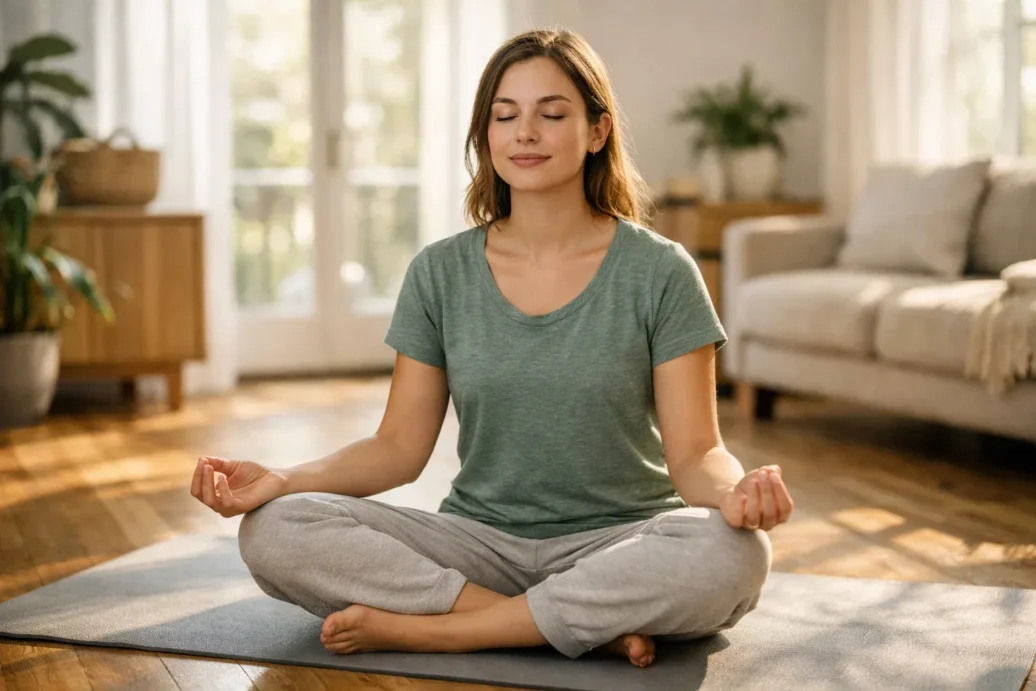
The first step is finding a comfortable posture. You can sit on a chair with your feet flat on the floor and your back straight but not stiff. You can also sit on a cushion on the floor or lie down (though lying down can sometimes lead to sleep). Rest your hands in a comfortable position on your lap or knees.
You can choose between a guided or self-guided meditation.
- Guided Meditation: An audio recording where a teacher’s voice guides you through the practice. This is highly recommended for beginners as it provides structure and helps you stay on track. There are countless free options on apps like Calm, Headspace, or YouTube.
- Self-Guided Meditation: You guide yourself through the practice, typically by focusing on your breath or bodily sensations.
The most important instruction is what to do when your mind wanders. It’s not a failure; it’s an opportunity. Gently notice where your mind went, without criticism, and then softly guide your attention back to your chosen anchor (like your breath).
Simple Mindfulness Techniques for Stress and Anxiety
When you feel a wave of anxiety or stress, your mind is usually caught in a future-oriented panic. Mindfulness techniques can pull you out of that spiral and ground you in the safety of the present moment. These exercises are specifically designed to calm your nervous system.
- The 5-4-3-2-1 Grounding Method: This technique uses your five senses to bring you back to the present. Wherever you are, pause and notice:
- 5 things you can see.
- 4 things you can feel (the chair beneath you, the texture of your clothes).
- 3 things you can hear.
- 2 things you can smell.
- 1 thing you can taste.
- Box Breathing: A simple and powerful technique to regulate your breath and calm your body.
- Inhale slowly for a count of four.
- Hold your breath for a count of four.
- Exhale slowly for a count of four.
- Hold the exhale for a count of four.
- Repeat for a few rounds.
- Body Awareness Scan:
- Lie down or sit comfortably.
- Bring your attention to your feet. Notice any sensations—warmth, coolness, tingling, pressure—without judging them.
- Slowly move your attention up your body: to your ankles, calves, knees, and so on, all the way to the top of your head.
- Spend a few moments on each body part, just noticing. This helps release tension you may not have been aware of.
Daily Mindfulness Exercises for Beginners (5–10 Minute Routine)
Consistency is the key to building a sustainable mindfulness habit. Integrating short practices throughout your day is more effective than trying to find one large block of time. Here is a simple routine you can adapt.
- Morning Breathing Routine (3 minutes):
- Before you check your phone, sit on the edge of your bed.
- Close your eyes and take 10 slow, deep breaths.
- With each exhale, imagine letting go of any lingering grogginess or anxiety about the day ahead.
- Set an intention for the day, such as “Today, I will be present.”
- Midday Mindful Pause (2 minutes):
- Set an alarm for lunchtime.
- Step away from your desk.
- Practice the 5-4-3-2-1 grounding exercise or simply focus on the sensations of eating or drinking for two minutes without multitasking.
- Evening Body Scan (5 minutes):
- When you get into bed, lie on your back.
- Perform a brief body scan, starting from your toes and moving up to your head.
- Notice any tension and consciously allow those muscles to soften and release. This helps prepare your body for restful sleep.
Real-Life Examples of Mindfulness for Beginners
Mindfulness isn’t just for quiet rooms; its real power is revealed when you apply it to the messy moments of everyday life.
- Mindfulness at Work: You receive a stressful email that makes your heart race. Instead of immediately firing back a reactive response, you pause. You take three deep breaths (box breathing). You notice the feeling of panic in your chest without judgment. This small gap allows your prefrontal cortex to come back online, and you can then draft a calm, more thoughtful reply.
- Mindfulness for Sleep: You’re lying in bed, but your mind is racing with worries. Instead of fighting the thoughts, you shift your attention to the physical sensation of your head on the pillow or the weight of the blanket on your body. When a worry pops up, you label it “thinking” and gently return your focus to the physical sensations. This breaks the cycle of anxiety that keeps you awake.
- Mindfulness During Emotional Moments: Someone says something that makes you angry. Your immediate impulse is to lash out. Instead, you bring awareness to the feeling of anger in your body—the heat in your face, the tension in your shoulders. By simply noticing the physical sensation without acting on it, you create a space to choose a more constructive response.
Common Mistakes Beginners Make with Mindfulness
Everyone stumbles when they first start practicing mindfulness. Being aware of these common pitfalls can help you approach your practice with more kindness and patience.
- Expecting Instant Results: Mindfulness is a skill, not a quick fix. You wouldn’t expect to have perfect form at the gym on day one. Some days you will feel calm; other days your mind will feel like a zoo. That’s part of the process.
- Trying Too Hard: A common mistake is trying to force your mind to be quiet. This creates tension and frustration. The goal is gentle awareness, not forceful control. Allow thoughts to come and go like clouds in the sky.
- Judging Your Thoughts: You will have weird, angry, or distracting thoughts. The practice is to notice them without judging yourself for having them. Labeling them as “bad” only gives them more power.
Consistency is more important than perfection. Missing a day isn’t a failure. Just come back to the practice the next day.
Pros and Cons of Beginner Mindfulness Exercises
Like any practice, mindfulness has its benefits and challenges. A balanced view can help you set realistic expectations.
Pros:
- Easy to Start: The barrier to entry is extremely low. You can start right now with just your breath.
- No Cost Involved: You don’t need to buy any special equipment or memberships.
- Improves Mental Clarity: Regular practice helps you cut through mental fog and improve focus.
- Accessible Anywhere: You can practice mindfulness while waiting in line, commuting, or at your desk.
Cons:
- Requires Patience: The benefits are cumulative and may not be obvious immediately.
- Can Be Uncomfortable: Sitting with difficult thoughts or emotions can be challenging at first.
- Needs Consistency: To see real change, you need to make it a regular habit, which can be hard to maintain.
Mindfulness vs Meditation – What Beginners Should Know
The terms “mindfulness” and “meditation” are often used interchangeably, but they have distinct meanings. Understanding the difference can help you choose the right practice for your goals.
Meditation is the formal practice of training your attention, usually done for a set period of time in a specific posture. There are many types of meditation (transcendental, loving-kindness, etc.). Mindfulness is a specific quality of awareness—paying attention to the present moment without judgment.
- Key Difference: Meditation is the activity you do; mindfulness is the state of being you cultivate during that activity and throughout your day.
- Which is better for beginners? You can’t have one without the other. Mindfulness meditation is an excellent starting point because it provides a structured way to learn the skill of mindfulness.
- How they work together: You practice mindfulness meditation for 10 minutes in the morning (the formal practice) to make it easier to be mindful while you’re stuck in traffic later that day (the informal practice).
You can be mindful without formally meditating, but meditation is the most effective way to strengthen your mindfulness muscle.
Conclusion – How to Stay Consistent with Mindfulness as a Beginner
Starting with beginner mindfulness exercises is a powerful first step toward a calmer, more present life. We’ve covered what mindfulness is, why it’s important, and how you can integrate simple, practical exercises into your daily routine. The journey isn’t about achieving a perfect, silent mind, but about building a more compassionate relationship with your thoughts and emotions.
The key to unlocking the long-term benefits is consistency. It’s better to practice for five minutes every day than for an hour once a month. Treat it not as another task on your to-do list, but as a small act of kindness for yourself. Over time, you’ll notice a shift. The gaps between your thoughts will widen, your emotional reactions will soften, and you’ll find a quiet space of awareness that is always accessible to you.
- Start small and stay consistent. Don’t overwhelm yourself.
- Be kind to yourself. Your mind will wander. The practice is in gently returning.
- Focus on the process, not the outcome.
Embrace the journey. Each breath is a new beginning and a fresh opportunity to come back to yourself. You have everything you need to start right now.
FAQs – Beginner Mindfulness Exercises
What are the best mindfulness exercises for beginners?
The best exercises are the simplest ones. Start with a 3-minute breathing awareness exercise, the 5-4-3-2-1 grounding technique, or a mindful listening practice. These require no prior experience and can be done anywhere.
How long should beginners practice mindfulness daily?
Start with just 5 to 10 minutes a day. Consistency is far more important than duration. As you get more comfortable, you can gradually increase the time if you wish, but even a short daily practice can have significant benefits.
Can mindfulness help with anxiety and stress?
Yes, this is one of the most well-documented benefits of mindfulness. By anchoring you in the present moment, mindfulness exercises interrupt the anxious thought patterns about the future that fuel stress. Techniques like box breathing can also directly calm your body’s physiological stress response.
Is mindfulness meditation hard for beginners?
It can be challenging, but not because it’s complex. It’s hard because our minds are not used to being still. The biggest hurdle for beginners is overcoming the expectation that they should be “good” at it immediately. Using guided meditations can make it much easier to start.
Can I practice mindfulness without meditation?
Absolutely. You can practice mindfulness informally by bringing your full attention to any daily activity—washing the dishes, drinking a cup of tea, or walking outside. This is a great way to weave mindfulness into a busy life.
How soon do beginners see results from mindfulness?
Some people feel a sense of calm immediately after an exercise. However, the more profound benefits, like reduced overall stress and better emotional regulation, are cumulative. Most people report noticing a tangible difference in their daily lives after a few weeks of consistent practice.
Is mindfulness suitable for kids or seniors?
Yes, mindfulness is adaptable for all ages. For kids, it’s often taught through simple, playful exercises. For seniors, it can be a wonderful tool for managing life changes, chronic pain, and improving focus. There are guided practices specifically designed for different age groups.
You May Like This





Leave feedback about this