

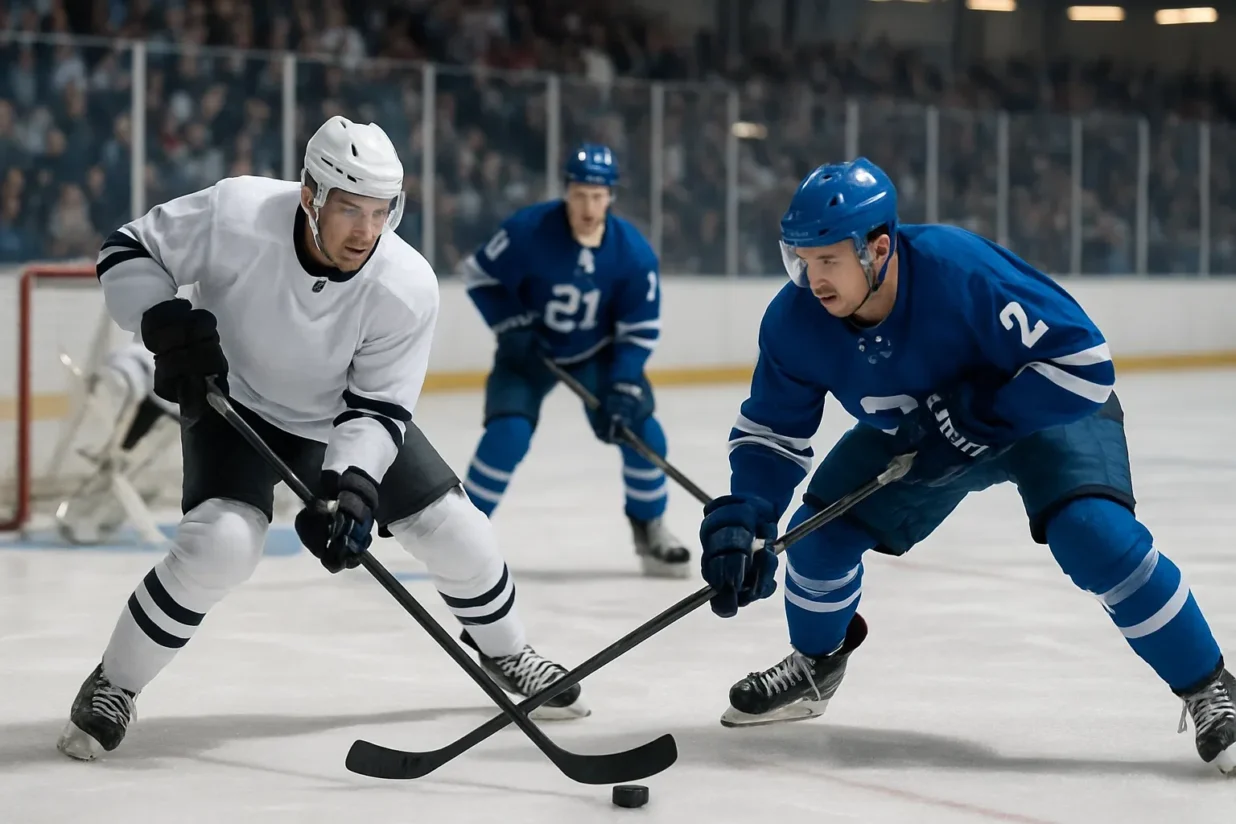
How Long Are Hockey Games? Regulation Time, Overtime & Real‑World Duration
How Long Are Hockey Games?
If you’ve ever watched a hockey game, you know the clock on the screen says 20 minutes. So, a game should last about an hour, right? Not quite. One of the first questions new fans, curious onlookers, and even parents of youth players ask is: how long are hockey games, really? The short answer is that a standard game has 60 minutes of regulation play, but the real-world time commitment is closer to 2.5 to 3 hours.
Why the huge difference? From the moment the puck drops to the final horn, a hockey game is filled with starts, stops, and events that extend its duration far beyond the 60 minutes on the clock. Whether you’re planning a night out at the arena, figuring out if you can catch the game on TV, or just curious about the sport, understanding the true length of a hockey game is key.
This guide will break it all down for you. We’ll explore regulation time, what happens during intermissions, how overtime can create marathon matchups, and how game lengths vary from the NHL to your local youth league.
How Long Are Hockey Games in Regulation Time?
On paper, every professional hockey game is designed to last for a specific duration. This is known as regulation time.
A regulation hockey game is made up of three 20-minute periods, for a total of 60 minutes of active playtime.
The game clock is a crucial element. It only runs when the puck is in play. As soon as a referee blows their whistle to signal a stop—whether for a goal, a penalty, an icing call, or the puck going out of bounds—the clock stops, too. It only restarts at the next faceoff when the puck is legally dropped.
This stop-start nature is why the 60 minutes of regulation time is a fixed, consistent measure of the actual athletic contest, but it doesn’t reflect the total time you’ll spend watching.
How Long Are Hockey Games in Real Time?
While the official playing time is 60 minutes, the actual time it takes to complete a hockey game from start to finish is much longer. You should plan for an average hockey game to last between 2.5 and 3 hours.
So, why does a 60-minute game take nearly three hours to complete? The extra time comes from several key components of a professional game broadcast and live experience:
- Intermissions: The breaks between periods.
- TV Timeouts: Scheduled commercial breaks.
- Stoppages in Play: Pauses for penalties, goals, icing, injuries, and video reviews.
The experience differs slightly whether you’re at the arena or watching on TV. At a live game, intermissions might feel a bit longer as you navigate crowds for concessions or restrooms. On TV, these breaks are filled with commercials, studio analysis, and highlights. Either way, these planned and unplanned pauses are what turn a one-hour game into a full evening’s event.
Period Breaks and Intermissions in Hockey
Intermissions are the scheduled breaks that separate the three periods of play. They are a fundamental part of the hockey game length and serve several important functions.
Length of Intermissions
In most professional leagues, including the NHL, there are two intermissions, each lasting between 15 and 18 minutes.
- First Intermission: Occurs after the first period.
- Second Intermission: Occurs after the second period.
An 18-minute intermission in the NHL, for example, is a strict rule. A timer is placed on the scoreboard, and teams are penalized if they are not back on the ice and ready to play when the time expires.
What Happens During Intermissions?
These breaks are far from dead time. A lot happens to prepare for the next period of play:
- Ice Resurfacing: The most visible activity is the ice resurfacing machine (often called a Zamboni) cleaning and smoothing the ice. After 20 minutes of skating, the ice surface gets chewed up with skate marks and snow. A fresh sheet of ice is crucial for puck movement and player safety.
- Player Rest and Strategy: Players head back to their locker rooms to rest, rehydrate, and discuss strategy with their coaches. Coaches use this time to make adjustments, review plays, and motivate their team for the period ahead.
- Commercials and Broadcast Analysis: For television viewers, intermissions are prime time for commercials and studio segments. Analysts break down key plays, interview players, and provide updates from around the league.
- In-Arena Entertainment: Fans at the game are treated to entertainment, such as youth hockey scrimmages, fan contests, or musical performances.
Overtime Rules and How They Affect Game Length
If the score is tied at the end of 60 minutes of regulation, the game isn’t over. It proceeds to overtime (OT), and the rules for overtime drastically change depending on whether it’s a regular-season game or a playoff game.
Regular Season Overtime
During the NHL regular season, a tie game moves to a brief, high-stakes overtime period.
- Format: A 5-minute, sudden-death period is played.
- Player Count: It’s played 3-on-3 (plus goalies), creating wide-open ice and lots of scoring chances.
- Sudden Death: The first team to score a goal instantly wins the game.
If no one scores during the 5-minute overtime, the game proceeds to a shootout. In a shootout, three skaters from each team take turns attempting a one-on-one shot against the opposing goalie. The team with the most goals after three rounds wins. If it’s still tied, the shootout continues with single rounds until a winner is decided.
Regular season overtime and the shootout add approximately 10 to 15 minutes to the total hockey game length.
Playoff Overtime
Playoff overtime is where hockey legends are made and game lengths can become unpredictable. The rules are entirely different.
- Format: The game continues with full 20-minute, sudden-death periods.
- Player Count: It’s played at full strength, 5-on-5.
- Sudden Death: The first team to score wins the game, no matter how many overtime periods it takes.
- No Shootouts: The game continues with 20-minute periods, separated by full intermissions, until a goal is scored.
This format is why playoff games can become marathon events, sometimes lasting for five, six, or even more periods. The hockey game length in the playoffs is truly undefined, creating some of the most dramatic moments in all of sports.
How Long Are NHL Hockey Games?
For fans of the National Hockey League, the average NHL game duration is typically around 2 hours and 30 minutes.
Here is a quick breakdown of the timing for a standard NHL game:
- Pre-Game: National anthems and pre-game ceremonies (approx. 5-10 minutes).
- Period 1: 20 minutes of play.
- Intermission 1: 17-18 minutes.
- Period 2: 20 minutes of play.
- Intermission 2: 17-18 minutes.
- Period 3: 20 minutes of play.
- Stoppages: Throughout the game, there are three TV timeouts per period, each lasting about two minutes. Add in time for penalties, video reviews, and other whistles, and you can see how the clock adds up.
If the game goes to overtime and a shootout, you can add another 15 minutes to the total time. If it’s a playoff game that goes into multiple overtimes, all bets are off.
How Long Are College and Youth Hockey Games?
Hockey isn’t just played in the NHL. Game lengths vary across different levels of competition, from college arenas to local rinks.
College Hockey Game Length
NCAA college hockey games are very similar in structure to NHL games. They also feature:
- Three 20-minute periods.
- 15-minute intermissions.
College games often have fewer TV timeouts, which can sometimes make them slightly shorter than an NHL broadcast—averaging closer to 2 hours and 15 minutes. However, their overtime rules can also lead to long games, especially during championship tournaments.
Youth & High School Hockey
For younger players, both the periods and the overall game length are shorter to account for their age and endurance. The structure is often adjusted:
- Periods: Instead of 20 minutes, periods may be 12, 15, or 17 minutes long, depending on the age group.
- Intermissions: Breaks are often shorter, sometimes just a few minutes to allow teams to switch ends.
- Clock Type: Some youth leagues use a “running clock,” where the clock doesn’t stop during whistles to ensure games stay on schedule. This significantly shortens the real-time duration.
A typical youth hockey game might last between 1 hour and 1.5 hours.
Level | Regulation Time | Periods | Average Real Time |
|---|---|---|---|
NHL | 60 minutes | 3 x 20 min | 2.5 – 3 hours |
College (NCAA) | 60 minutes | 3 x 20 min | 2.25 – 2.5 hours |
Youth/High School | 36 – 51 minutes | 3 x 12-17 min | 1 – 1.5 hours |
Why Hockey Games Often Take Longer Than Expected
Even with a set structure, a number of unpredictable events can extend the hockey game length.
- Stoppages in Play: Every whistle stops the clock. Common stoppages include offside, icing (shooting the puck down the ice from your own half), and goalies freezing the puck. A game with a choppy flow and lots of whistles will last longer than one with long stretches of continuous play.
- Penalties and Power Plays: When a player commits an infraction, they are sent to the penalty box for two or more minutes. This stops play and creates a “power play” for the other team. Frequent penalties lead to more faceoffs and a longer game.
- Video Reviews: Officials may review plays to confirm if a goal was scored legally. These reviews can sometimes take several minutes as officials in the arena consult with the league’s situation room.
- Injuries: Unfortunately, injuries happen. Play stops immediately and may not resume for several minutes while medical staff attend to the injured player.
Longest Hockey Games Ever Played
Playoff overtime has produced some of the most legendary “marathon” games in hockey history. These contests test the limits of player endurance and fan dedication.
One of the most famous examples is the March 24, 1936, Stanley Cup Playoff game between the Detroit Red Wings and the Montreal Maroons. The game went into the sixth overtime period before Mud Bruneteau of Detroit finally scored the winning goal. The game ended at 2:25 AM after 176 minutes and 30 seconds of total ice time—nearly the length of three full games combined.
More recently, the 2020 NHL playoffs saw the Tampa Bay Lightning defeat the Columbus Blue Jackets in a game that went to five overtimes. Brayden Point scored the winner after 150 minutes and 27 seconds of play. These games go on for so long because two teams, especially the goalies, are playing at such a high level that neither can find a way to score.
Hockey Game Length Compared to Other Sports
How does a hockey game’s duration stack up against other popular sports?
- Hockey vs. Soccer: A soccer match has two 45-minute halves (90 minutes total) with a running clock. With halftime and stoppage time, a soccer match typically lasts just under 2 hours, making it shorter than the average hockey game.
- Hockey vs. Basketball: An NBA game consists of four 12-minute quarters (48 minutes of play). With timeouts, fouls, and halftime, it averages about 2.5 hours, very similar to a hockey game.
- Hockey vs. American Football: An NFL game has four 15-minute quarters (60 minutes of play), but it is famous for its frequent stops. The average NFL game lasts over 3 hours, making it generally longer than a regulation hockey game.
Pros and Cons of Hockey Game Length
Advantages
- Packed with Action: The stop-start nature ensures that when the puck is in play, the action is high-intensity.
- Dramatic Tension: The possibility of overtime, especially in the playoffs, creates unparalleled drama where any shot could end the game.
Disadvantages
- Long Time Commitment: A 3-hour runtime can be a significant commitment, especially for families or on a weeknight.
- Late Finishes: Playoff games that go into multiple overtimes can end very late at night, which can be challenging for viewers in different time zones.
Tips for Watching or Attending a Hockey Game
Planning to watch your first game? Here are a few tips to make the most of it.
- When to Arrive at the Arena: Plan to get to your seat at least 30 minutes before the scheduled start time. This gives you time to navigate parking and crowds, find your seat, and watch the pre-game warmups.
- Plan Your Time: Block out at least 3 hours in your schedule for the game. Don’t make firm plans for immediately after the scheduled end time, just in case of overtime.
- Best Time for New Viewers: The first and third periods are often the most exciting. Teams come out with high energy in the first, and the third period is when the game is on the line.
Frequently Asked Questions (FAQs)
Why do hockey games take so long?
Hockey games take longer than their 60-minute regulation time because of stoppages. These include two long intermissions (15-18 minutes each), TV timeouts, penalties, goal reviews, injuries, and other whistles that stop the clock.
How long is overtime in hockey games?
In the NHL regular season, overtime is a 5-minute, 3-on-3, sudden-death period. In the playoffs, overtime consists of unlimited 20-minute, 5-on-5, sudden-death periods until a team scores.
Do all hockey games go to overtime?
No. A game only goes to overtime if the score is tied at the end of the three regulation periods.
How long is the average NHL hockey game?
The average NHL game lasts approximately 2 hours and 30 minutes. This can extend to 3 hours or more if the game is particularly high-stoppage or goes into overtime.
Are youth hockey games shorter?
Yes, youth hockey games are significantly shorter. They typically have shorter periods (e.g., 12-15 minutes) and may use a running clock, resulting in a total game time of about 1 to 1.5 hours.
Conclusion
So, how long are hockey games? While the clock shows 60 minutes of play, the reality is a much longer experience. The combination of three periods, two lengthy intermissions, and countless in-game stoppages means you should plan for about 2.5 to 3 hours to watch a full professional game.
The length of a hockey game varies depending on the league and the unpredictable nature of the sport itself. From the fast-paced flow of a youth game to the potential for a marathon playoff showdown, the time commitment is part of what makes hockey so unique. Now that you know what to expect, you can sit back, relax, and enjoy the fast-paced action on the ice.


Leave feedback about this