

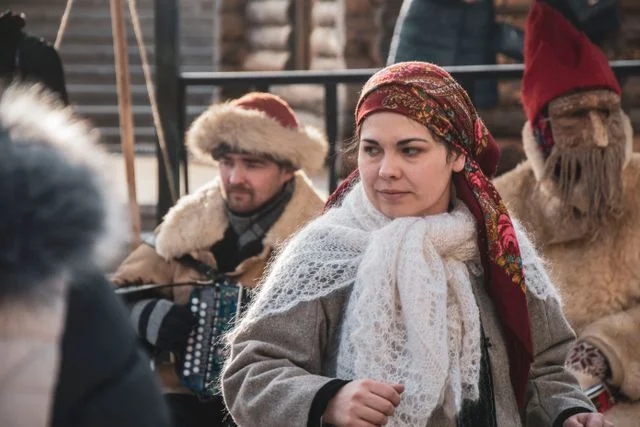
How to Understand Royalty Traditional Russian Clothing by Era
The Russian Imperial court produced some of the most extraordinary garments in human history. According to the Victoria and Albert Museum’s documented collection of Romanov-era dress, royalty traditional Russian clothing featured gold-embroidered brocades, sable-trimmed kokoshniks, and pearl-encrusted sarafans that could take a team of craftswomen months to complete. These were not simply clothes — they were political statements, religious symbols, and displays of dynastic wealth worn simultaneously.
This article covers the full picture of traditional royal Russian clothing: what tsars and tsarinas actually wore, how ceremonial dress differed from court dress, what materials and colors carried specific meanings, and how the tradition shifted from medieval Muscovy through the Romanov dynasty. You’ll also find guidance on where these traditions surface in Russian weddings, Orthodox ceremonies, and cultural events today.
Most guides on Russian traditional dress focus entirely on peasant folk costumes — the sarafan, the kokoshnik, the embroidered blouse. This one goes the other direction. The aristocratic and royal end of Russian dress history is underexplored in English-language fashion writing, even though it rivals any European royal court for sheer material ambition. That’s the gap this article fills.
What Defined Royalty Traditional Russian Clothing in the Tsarist Era
Russian royal dress operated on a layering system that communicated status at a glance. The most important garment for a male ruler was the kaftan — a long, structured robe with front fastenings — worn over a lighter inner robe called a zipun. For ceremonial occasions, the tsar wore the most elaborate version: a heavily embroidered kaftan in silk brocade, often imported from Persia or produced in the royal workshops in Moscow, trimmed with fur at the hem and cuffs.
The tsarina’s equivalent was the letnik, a wide-sleeved outer garment worn over a long shift and decorated with gold embroidery at the collar and sleeves. The gorget — a heavily jeweled collar piece — was placed over both male and female garments for formal appearances and was often the most expensive single item a royal would wear. According to the State Historical Museum in Moscow, surviving gorgets from the 17th century contain thousands of individual seed pearls alongside rubies and emeralds imported from South Asia.
Red was the dominant color for royal dress in pre-Petrine Russia, a tradition rooted in Byzantine ceremonial culture. The Russian word for beautiful — krasivy — shares the same root as the word for red, krasny, which tells you something about how the color was perceived. Gold embroidery on deep crimson or burgundy ground cloth was the standard formula for the highest-status garments, while lesser nobles wore similar cuts in blue, green, or white brocades.
The Romanov Dynasty and the Shift in Traditional Royal Russian Clothing
Peter the Great’s westernization reforms of the early 18th century created a hard break in Russian royal dress. He formally banned traditional Russian-style kaftans at court in 1701, mandating Western European fashions for the nobility. This is often treated as the end of traditional royal Russian dress, but the reality is more complicated. The tsarinas who followed Peter — especially Catherine the Great and the later Romanov empresses — deliberately revived and reinterpreted Russian traditional elements for specific ceremonial contexts.
Catherine the Great commissioned a style now called the Russian Court Dress, which blended the basic silhouette of a French robe à la française with distinctly Russian decorative elements: gold embroidery in traditional Russian folk motifs, the distinctive open front-panel showing an embroidered underskirt, and a formal headdress derived from the kokoshnik. This became the mandatory court dress for Russian noblewomen for official ceremonies right through to the fall of the Romanovs in 1917.
The designer firm Sarafan (Russia) and the heritage textile house Toile de Jouy (France) have both documented how these hybrid garments influenced later European fashion — particularly the vogue for “Russian style” that swept Paris after the Ballets Russes performances in the early 1900s, when designers like Paul Poiret (France) directly incorporated kokoshnik shapes, sarafan silhouettes, and Russian embroidery motifs into their collections.
Quick Note: The Romanov Court Dress is distinct from Russian folk dress. What you see in most “traditional Russian costume” images is peasant or merchant-class dress. Royal and aristocratic Russian dress was a separate tradition with its own rules, materials, and symbolism.
Ceremonial Dress: Coronations, Weddings, and Orthodox Occasions
Coronation dress was the apex of royalty traditional Russian clothing. The Romanov coronation regalia included a mantle (coronation robe) made from cloth of gold lined with ermine, worn over a formal court dress. The crowns themselves — particularly the famous Imperial Crown of Russia, now in the Kremlin Armory — were designed to be worn over a small fitted cap rather than directly on the head, which meant the surrounding headwear became part of the ceremonial dress ensemble.
Traditional Russian royal wedding clothing carried its own codes. The bride wore white only from the 19th century onward, under Western influence. Earlier royal brides wore the Russian Court Dress in gold, red, or silver brocade, with a full jeweled kokoshnik. The groom’s wedding dress followed similar lines to formal court dress — a decorated uniform or elaborately embroidered kaftan, depending on the era. If you’re researching traditional Russian wedding clothing for a cultural event or themed celebration today, the pre-19th-century palette of jewel tones and gold is far more historically accurate than white.
Russian Orthodox traditional clothing for clergy and ceremonial participants adds another layer to this picture. The Orthodox vestments worn during major services — the sakkos (imperial robe), the omophorion (shoulder piece), and the epitrachelion (stole) — share many design features with royal dress: gold brocade, Byzantine iconographic embroidery, jeweled closures. The tsar functioned simultaneously as head of state and protector of the Orthodox Church, so the visual overlap between royal dress and religious dress was intentional and meaningful. For more on how royal garment traditions work across cultures, the piece on traditional Japanese royal clothing and what emperors and nobles wore offers a useful parallel.
Colors, Embroidery, and the Materials That Mattered
The materials used in royalty traditional Russian clothing were themselves a hierarchy. At the top sat gold and silver thread, used for the core embroidery work on court and ceremonial garments. Below that came imported silk brocades from Persia and later from Lyon, France, which were considered more prestigious than domestic fabrics. Russian-woven velvet from the workshops at Kolomna was used for middle-tier formal wear. For fur, the ranking ran: sable (highest, reserved for royalty), ermine (also royal), beaver, marten, and fox for the lesser nobility.
Red, gold, and white formed the core royal palette with specific associations: red for power and celebration, gold for divine favor and wealth, white for purity and mourning (not celebration, as in Western tradition). Blue was associated with the Virgin Mary and used heavily in religious contexts. The famous double-headed eagle motif — Russia’s imperial symbol — appeared in embroidery on formal garments from at least the 15th century.
Embroidery technique mattered as much as design. Gold-work embroidery using real metal threads — a technique called zolotoshveynoye delo — was the highest-status form, practiced in dedicated royal workshops. Seed pearl work was applied to kokoshniks and gorgets. The distinctive geometric and botanical patterns seen in folk embroidery also appeared in royal garments, but executed in expensive materials that transformed the same visual language into something completely different in meaning and cost.
Our take: The materials question is where most people get tripped up when they think about traditional royal Russian clothing. The shapes and patterns were often shared across class lines — what separated a royal garment from a merchant’s garment wasn’t the design, it was the thread count, the fur quality, and whether the embroidery was done in silk or real gold. If you’re sourcing modern versions of these garments for a wedding or cultural event, pay attention to the metallic embroidery work first — it’s the detail that does the most visual work.
Russian Traditional Royal Clothing in Modern Context
The legacy of royal and aristocratic Russian dress surfaces in several contemporary contexts. Russian Orthodox Christmas celebrations (observed on January 7th under the Julian calendar) sometimes include ceremonial dress based on the traditional royal palette — deep jewel tones, gold embroidery, and formal kokoshniks for women. Traditional Russian wedding clothing for formal Orthodox ceremonies still draws heavily on Romanov-era aesthetics, particularly the kokoshnik headdress and embroidered overskirts.
The 2018 FIFA World Cup, hosted in Russia, prompted a global interest in Russian traditional clothing as performers and cultural presentations showcased folk and aristocratic dress across the host cities. International attention landed on the kokoshnik in particular, which had already been revived in Western fashion through Dolce & Gabbana’s (Italy) Russia-inspired collections and Alexander McQueen’s (UK) use of Russian embroidery motifs. The line between folk dress and royal dress was often blurred in these presentations — which is historically somewhat accurate, since the aristocracy deliberately incorporated folk embroidery patterns into their court garments as a nationalist gesture from the 19th century onward.
Jewish communities in pre-revolutionary Russia developed their own version of traditional Russian clothing that blended Russian folk elements with Ashkenazi textile traditions. Traditional Russian Jewish clothing for women typically featured headscarves (tichels) rather than kokoshniks, modest long-sleeve chemises, and aprons in earthier tones. The overlap with Russian general folk dress was significant, particularly in the use of embroidered blouses and layered skirts. This is a distinct tradition from royal Russian dress but worth acknowledging as part of the broader picture. The comparison with how other cultures layer ceremonial and everyday dress traditions is worth exploring in pieces like this guide to buying Chinese traditional clothing, where similar class distinctions apply.
One honest limitation here: much of what survives in museum collections comes from the upper end of the social scale. Everyday traditional Russian clothing for ordinary people — including medieval traditional Russian clothing and old Russian traditional clothes for peasants — was rarely preserved since it was worn out and recycled. What we know about lower-class dress is largely reconstructed from paintings, icons, and surviving fragments rather than complete garments. Any sweeping claims about what “ordinary Russians wore” should be treated with some skepticism.
For anyone researching traditional Russian peasant clothing specifically — the red-and-blue embroidered sarafan combinations are the most recognizable motif — the regional variation was enormous. Northern Russian dress was dominated by the sarafan (a sleeveless pinafore dress), while southern Russian dress featured the poneva (a wrapped skirt), and these two traditions had almost no overlap in their visual codes. The regional breakdown of Russian traditional clothing for women covers this in detail and is worth reading alongside this piece for the full picture.
Frequently Asked Questions
What did Russian royalty actually wear on a daily basis versus ceremonial occasions?
On ordinary days, even high-ranking Russian nobles wore relatively simple versions of the traditional forms — a kaftan in good quality wool or plain silk, without heavy embroidery. The full ceremonial treatment was reserved for court appearances, religious festivals, coronations, and major celebrations. The difference in labor and materials between a daily kaftan and a coronation robe could easily be a factor of a hundred. Think of it as the difference between a good wool suit and a bespoke hand-embroidered ceremonial uniform.
What is a kokoshnik and was it only worn by royalty?
The kokoshnik is a structured headpiece with a halo or crescent-shaped frame, worn over a headscarf. It was not exclusive to royalty — versions of it were worn across social classes in Russia from roughly the 10th century through the 19th. What distinguished a royal kokoshnik was material: common versions used embroidered linen or velvet, while aristocratic and royal examples were covered in pearls, gold thread, and precious stones. The formal Russian Court Dress introduced by Catherine the Great codified the kokoshnik as mandatory headwear for court appearances, which is where its association with royalty largely comes from.
How do traditional Russian wedding clothes differ from what Westerners typically expect?
The expectation of white bridal dress is largely a 19th-century Western (and specifically British) tradition, popularized by Queen Victoria’s 1840 wedding. Russian royal brides before that era wore gold, red, or silver brocade as the primary wedding color — these colors signified wealth, fertility, and divine blessing. A traditional Russian Orthodox wedding ceremony still incorporates specific textile rituals: the crowning of bride and groom with metal crowns, the binding of hands with an embroidered cloth called a rushnik, and in some regional traditions, specific embroidered garments passed down through families.
Is medieval traditional Russian clothing very different from later Tsarist-era dress?
Broadly yes, though there’s more continuity than most people expect. The core garment forms — the kaftan, the sarafan, the shift — remained consistent for centuries. What changed significantly was the level of outside influence: Byzantine from the 10th through 15th centuries, then Mongol influences on cut and decoration, then Central Asian trade goods, then Western European fashion pressure from the 17th century onward. Medieval Russian dress was simpler in silhouette but used many of the same luxury materials — sable, silk brocade, gold embroidery — when status required it.
Did Russian Orthodox clergy wear the same garments as royalty?
Not identical garments, but the visual overlap was deliberate. Both Orthodox vestments and royal dress drew from Byzantine court ceremonial dress, which is why they share materials (gold brocade, silk), design vocabulary (Byzantine cross motifs, geometric borders), and even some garment forms. The tsar’s ceremonial mantle and the metropolitan bishop’s ceremonial vestments were designed to look related — both institutions drew authority from the same source in Byzantine imperial tradition. This visual alignment was a statement of the relationship between church and state in Russian political theology.
Where can someone in the US or UK find authentic or high-quality reproduction Russian traditional royal garments?
For genuinely high-quality reproductions, your best options are specialist theatrical costumiers who work with opera companies (the Bolshoi repertoire requires accurate Romanov-era dress, and their costume houses are the best in the world at this). In the US, companies like Angels Costumes (which has US operations) and Malabar (Canada/UK) produce museum-quality historical Russian dress for hire. For purchasing wearable pieces in the Russian traditional style — embroidered blouses, decorated kokoshniks — Etsy’s community of Russian and Eastern European artisan sellers is the most practical starting point, with sellers in the US, UK, and Ukraine offering hand-embroidered pieces at reasonable prices.
Final Thoughts
Royalty traditional Russian clothing is a subject that rewards serious attention. The visual codes embedded in these garments — the color hierarchies, the embroidery techniques, the material rankings — tell you as much about Russian history as any political text. The Romanov Court Dress alone is a case study in how a culture can simultaneously modernize and double down on its own heritage, producing something that is genuinely neither Western nor purely traditional Russian.
If you want to take one practical step from this article, start with the material: look at surviving examples of Russian court embroidery in museum collections online — the Hermitage Museum in St. Petersburg has digitized portions of its textile holdings, and the Victoria and Albert Museum in London holds significant Romanov-era pieces. Once you’ve seen the actual zolotoshveynoye delo gold-work up close, the connection between these garments and the other major royal dress traditions — like Japanese imperial court dress — becomes immediately apparent. The ambition is the same; only the vocabulary differs.





Leave feedback about this