

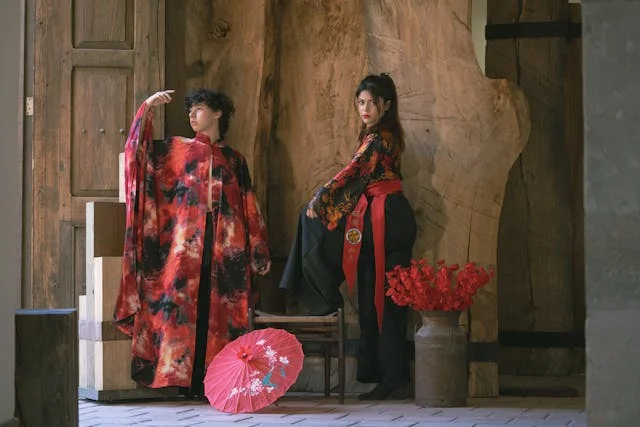
8 Types of Traditional Japanese Clothing Every Fashion Lover Should Recognize
Japan’s clothing tradition is one of the most visually rich and culturally layered in the world. Whether you’re drawn to the silk elegance of a Kimono, the warrior-like silhouette of a Hakama, or the delicate patterns of an ancient court robe — traditional Japanese clothing tells a story of beauty, identity, and history that spans over 2,000 years.
In this complete guide, we cover everything about traditional Japanese clothing — what it is called, what the main types are, how men’s and women’s garments differ, what ancient Japanese people wore, and how Japan’s fashion evolved from its earliest roots to the iconic looks we recognize today. Whether you’re a fashion enthusiast, a cultural researcher, or simply curious about what is traditional Japanese clothing — this guide has every answer.
What Is Traditional Japanese Clothing?
Traditional Japanese clothing, known collectively as Wafuku (和服 — “Japanese-style clothing”), refers to garments that originated in Japan and developed over centuries before the introduction of Western clothing in the mid-1800s. These clothes are characterized by their T-shaped silhouette, natural fabrics like silk and cotton, intricate hand-dyed patterns, and deep symbolic meaning tied to seasons, ceremony, and social status.
The term traditional Japanese clothes covers a wide range of garments — from the formal, multi-layered robes worn by Heian court nobles, to the simple cotton Yukata worn at summer festivals today. What unites them all is a philosophy of craftsmanship, restraint, and harmony with nature that is distinctly Japanese.
The question “what is traditional Japanese clothing?” has a layered answer. At its simplest, it is the Kimono. But in a broader, historical sense, it encompasses dozens of distinct garment types worn across different eras, genders, social classes, and seasons. Understanding the full picture means exploring Japan’s entire fashion history.
Names of Traditional Japanese Clothing
One of the most common questions people ask is: “What are traditional Japanese clothes called?” The short answer is that there are many names, because traditional Japanese clothing is not a single item — it is an entire system of garments, each with its own name, purpose, and history.
Here are the most important names of traditional Japanese clothing that every fashion enthusiast should know:
The most iconic Japanese garment. A T-shaped robe worn by men and women, tied with an Obi belt. Available in many styles for different occasions.
A casual, lightweight summer kimono made from cotton. Traditionally worn after bathing and at outdoor festivals. Less formal than a Kimono.
Wide, pleated skirt-trousers worn over a Kimono. Originally male attire for samurai, now also worn by women at graduation ceremonies.
A traditional hip-length jacket worn over a kimono. Adds formality and warmth. Originally a male garment that became fashionable for women too.
The wide belt worn around the waist to secure a kimono. Can be tied in dozens of decorative knot styles. Often as expensive as the kimono itself.
A formal kimono with long, flowing sleeves worn by unmarried young women. The most formal of all kimono types for women.
The ancestor of the modern kimono. A short-sleeved inner robe from Japan’s ancient period that evolved into the dominant garment for all classes.
A sleeveless vest-like surcoat worn over armor by samurai commanders. A symbol of military authority and power in feudal Japan.
Types of Traditional Japanese Clothing
When we talk about types of traditional Japanese clothing, we can categorize them by formality, gender, season, or historical period. Below is a clear comparison of the main types and what each is used for.
| Garment Name | Who Wears It | Occasion | Formality Level |
|---|---|---|---|
| Furisode Kimono | Unmarried women | Coming-of-age ceremonies, weddings | Most formal |
| Tomesode Kimono | Married women | Wedding receptions, formal events | Very formal |
| Houmongi Kimono | Women | Visiting friends, tea ceremony | Semi-formal |
| Yukata | Men and women | Summer festivals, hot spring resorts | Casual |
| Hakama | Men (traditionally), women (modern) | Martial arts, graduation, Shinto ceremonies | Formal to semi-formal |
| Montsuki Haori Hakama | Men | Weddings, formal events | Most formal for men |
| Jinbaori | Men (samurai) | Historical — worn over armor in battle | Military / ceremonial |
| Junihitoe | Court women | Imperial court ceremonies — ancient Japan | Imperial / most elaborate |
| Komon Kimono | Women | Shopping, casual outings, daily wear | Casual |
| Iromuji Kimono | Women | Tea ceremony | Semi-formal |
Understanding the types of Japanese traditional clothing reveals an important cultural truth: in Japan, what you wear communicates who you are, where you are going, and what role you play in society. Every detail — the number of crests on a garment, the length of the sleeve, the pattern and color — carries meaning.
The Kimono — Japan’s Most Iconic Traditional Garment
When people think of traditional Japanese clothing, the Kimono is almost always the first image that comes to mind. And for good reason — the Kimono has been central to Japanese dress for over a thousand years, and remains a deeply meaningful symbol of Japanese culture and identity.
The word Kimono (着物) literally means “thing to wear” in Japanese. A traditional Kimono is a full-length T-shaped robe with wide sleeves, always wrapped left-over-right, and secured with a wide belt called an Obi. Wrapping right-over-left is reserved for the deceased.
Key Features of the Kimono
A traditional Kimono is made from a single bolt of fabric called a tan — approximately 37 cm wide and 11 meters long. Every part of the fabric is used, with no waste. The garment is hand-sewn using a technique called hon-shitate, and the fabric is typically decorated with intricate patterns using dyeing techniques like yuzen (hand-painting), shibori (tie-dye), or nishiki-ori (brocade weaving).
Kimono vs. Yukata — What’s the Difference?
A Kimono is formal, made from silk, and worn with multiple layers including an underrobe (nagajuban) and thick Obi. A Yukata is casual, made from cotton, worn in a single layer, and primarily used in summer at festivals or after bathing at a onsen (hot spring).
Traditional Japanese Clothing for Women
Traditional Japanese clothing for women is perhaps the most elaborate and visually stunning in Japan’s fashion history. Women’s garments were designed to communicate age, marital status, social class, and season — all through color, pattern, and sleeve length.
The Five Main Types of Women’s Traditional Kimono
1. Furisode — For Unmarried Young Women
The Furisode (振袖), meaning “swinging sleeves,” is the most formal kimono for unmarried young women. It is instantly recognizable by its dramatically long sleeves and its bright, elaborate patterns. The Furisode is the garment most associated with Japan’s Coming-of-Age Day (Seijin no Hi) celebrations.
2. Tomesode — For Married Women
Once a woman marries, she transitions to the Tomesode — a more formal, restrained kimono with shorter sleeves and patterns only on the lower half of the garment. The Kurotomesode (black Tomesode) is the most formal garment a married woman can wear, reserved for weddings and the most formal ceremonies.
3. Houmongi — The Visiting Kimono
The Houmongi (訪問着) features patterns that flow continuously across seams. It is a semi-formal kimono worn when visiting friends, attending tea ceremonies, or going to the theater.
4. Komon — For Daily Wear
The Komon (小紋) is a casual kimono with small, repeating all-over patterns. This is the everyday kimono — perfect for shopping, casual outings, or simply enjoying the aesthetic of traditional Japanese female clothing in a relaxed setting.
5. Junihitoe — The Ancient Imperial Robe
The most extreme example of traditional Japanese clothes for women is the Junihitoe (十二単) — the “twelve-layer robe” worn by court ladies in the Heian period (794–1185 AD). This extraordinarily elaborate ensemble could weigh up to 20 kilograms.
Traditional Japanese Clothing for Men
While women’s kimono often gets the spotlight, traditional Japanese clothing for men has its own rich visual language — characterized by subdued colors, structured silhouettes, and garments designed to project dignity, authority, and restraint.
The Montsuki Haori Hakama — Men’s Formal Attire
The most formal ensemble in men’s traditional Japanese clothing is the Montsuki Haori Hakama. The Montsuki is a black silk kimono bearing the family crest (kamon). Over it goes the Haori (hip-length jacket), also bearing family crests. Beneath, the wearer wears Hakama — wide, pleated trousers that give the silhouette its distinctive flow.
The Samurai’s Wardrobe
The warrior class developed a highly specific wardrobe over centuries of feudal Japan. The Jinbaori was a sleeveless surcoat worn over armor — often featuring bold colors, dramatic patterns, and sometimes made from imported European wool. The Tattsuke-Hakama were close-fitting trousers worn by foot soldiers. Together, this wardrobe made the samurai visually imposing — a walking symbol of power.
Men’s Casual — The Yukata
For casual occasions, Japanese men have long worn the Yukata — a lightweight cotton robe. Men’s Yukata tend to feature darker, more geometric patterns — deep navy, charcoal gray, or dark green — in contrast to the brighter floral Yukata worn by women.
Ancient Japanese Clothing — A History Through the Ages
To truly understand traditional Japanese clothing, we must look at where it came from. Japan’s ancient clothing history spans over two millennia, shaped by indigenous traditions, Chinese influence, and a constant refinement toward beauty and symbolism.
Japan’s Earliest Clothing
The earliest known Japanese garments were simple woven fabrics made from hemp and bark fibers. Men and women wore loose, unsewn cloth wrapped around the body — similar to a toga. Archaeological evidence shows the use of basic geometric weave patterns.
Haniwa Figures Show Early Fashion
Clay Haniwa figurines from burial mounds reveal men wearing Kimono-like robes with trousers and women in Mo (a wrap-around skirt). Chinese and Korean influence begins entering Japanese fashion through diplomatic exchanges.
Chinese Influence Transforms Japanese Dress
Japan officially adopts a clothing code based on Tang Dynasty Chinese fashion. Court officials must wear specific colors based on rank — purple for the highest, followed by red, blue, yellow, and black. This structured color hierarchy would define Japanese court fashion for centuries.
The Golden Age of Aristocratic Fashion
Japan’s most elaborate court fashion emerges. Noble women wear the extraordinary Junihitoe — up to twelve layered robes whose color combinations at the edges were carefully selected to reflect the seasons. This era produced Japan’s first distinctly national aesthetic in clothing.
Warrior Aesthetics Shape Fashion
As samurai clans rise to power, clothing shifts toward practicality and martial strength. The Kosode becomes the dominant garment for all classes. Hakama, Haori, and armor-based garments define male dress. Shibori and Yuzen dyeing techniques are developed.
The Kimono Reaches Its Classic Form
The Edo period is considered the golden age of the Kimono. A booming merchant class drives fashion innovation — bold, theatrical patterns emerge in what becomes known as Iki (sophisticated elegance) style. The Obi belt transforms from a simple tie into an elaborate fashion element in its own right.
Western Influence and Revival
Japan opens to the West and Western clothing gradually replaces traditional dress for daily wear. The Kimono retreats to ceremonies and special occasions. In the 21st century, a global revival of interest brings Wafuku back into the global fashion conversation.
Japanese Culture and Clothing — The Deep Connection
Japanese culture and clothing are inseparable. In no other fashion tradition is every element of dress so deliberately connected to philosophy, nature, social order, and spiritual belief.
Wabi-Sabi and Clothing
The Japanese aesthetic concept of Wabi-Sabi — finding beauty in imperfection, impermanence, and incompleteness — is deeply embedded in traditional clothing. A Shibori pattern that celebrates the irregularity of hand-dyeing, or a Kimono repaired with gold stitching — all embody this philosophy.
Nature as Pattern
Clothing in Japanese culture has always followed the seasons with extraordinary precision. Cherry blossoms (sakura) appear on spring kimonos. Waves and bamboo decorate summer Yukata. Chrysanthemums and maple leaves signal autumn. Snow-scene patterns and pine trees indicate winter. Wearing a seasonal pattern outside its proper season was — and still is — considered a fashion error in traditional Japanese dress.
Clothing and Social Identity
In feudal Japan, what you wore told the world who you were. Strict sumptuary laws regulated what each class could wear — merchants were forbidden from wearing silk, reserved for the samurai and nobility. A samurai’s family crest on his Kimono identified his clan. A geisha’s Kimono style and color indicated her rank and specialty.
Frequently Asked Questions
These are the most common questions people ask about traditional Japanese clothing — with clear, complete answers.
Traditional Japanese Clothing — A Living Heritage
From the ancient wrapped hemp cloth of the Yayoi people to the twelve-layer silk magnificence of Heian court robes, from the warrior’s Jinbaori to the delicate Furisode of a young woman at her Coming-of-Age ceremony — traditional Japanese clothing is one of humanity’s greatest fashion traditions. It is art, philosophy, identity, and history woven into every thread.



Leave feedback about this