

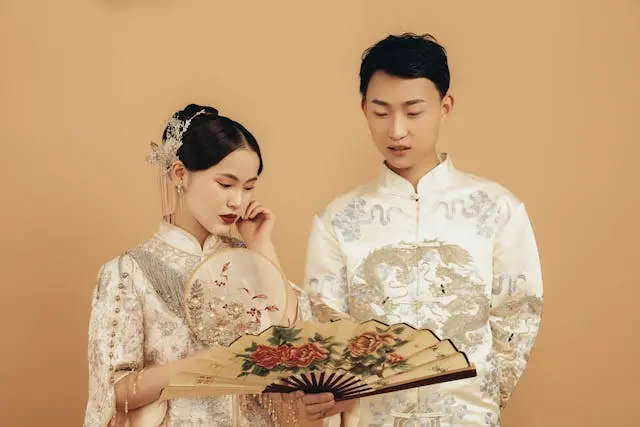
Chinese Traditional Clothing: Names, Types & History
According to the Confucius Institute at the University of Edinburgh, Chinese traditional dress spans more than 5,000 years of continuous recorded history, making it one of the oldest and most diverse clothing traditions in the world. That depth sets it apart from almost every other regional dress code you can study. And yet, for most people in the US and UK, Chinese traditional clothing gets reduced to a single image: the cheongsam, typically seen on a movie poster or at a themed restaurant. The full picture is far more interesting than that.
This article covers what Chinese traditional clothing is actually called, the different garment types across different dynasties and ethnic groups, how Hanfu differs from the qipao, and what it means when modern designers and everyday wearers bring these styles into contemporary fashion. Whether you are curious after seeing Hanfu content flood social media or you are researching for a cultural event, this guide gives you accurate, specific information rather than broad generalizations.
Most articles on this topic either focus exclusively on Hanfu or reduce everything to the qipao. This one covers the full naming history, distinguishes between garments that are frequently confused, and explains what the Hanfu revival movement actually looks like in practice — including where it has been commercially embraced in both China and Western markets. You will also find guidance on how to approach these garments respectfully if you are not of Chinese heritage.
What Is Chinese Traditional Clothing Called? The Names Explained
The most accurate umbrella term for Chinese traditional clothing is Hanfu, which translates roughly to “Han clothing” or “clothing of the Han people.” The Han ethnic group makes up roughly 92 percent of China’s population, so Hanfu has historically been used to describe the dominant style of dress across most of Chinese recorded history. However, China has 55 other officially recognized ethnic minorities, each with its own traditional dress, so Hanfu is not a catch-all for every form of Chinese traditional clothing.
Beyond Hanfu, you will encounter several other terms depending on the era and garment type. The qipao — also called the cheongsam in Cantonese — is the form-fitting, high-collared dress most associated with Chinese women in Western imagery. The zhongshan suit, known in the West as the Mao suit, is the collarless, button-up jacket associated with 20th-century political dress. Each of these comes from a distinct historical period and carries different cultural weight. Treating them as interchangeable is a common mistake.
If someone asks “what is traditional Chinese clothing called” and wants the single most historically grounded answer, Hanfu is it. The term covers garments worn from the Han Dynasty (206 BCE) through the end of the Ming Dynasty in 1644, when the ruling Qing Dynasty enforced a change in dress codes. This political disruption is actually central to understanding why Hanfu disappeared from everyday life and why its modern revival carries such emotional and cultural significance for many Chinese people.
The Difference Between Hanfu, Qipao, and Cheongsam
These three terms confuse a lot of people, and understandably so. They are all described as “Chinese traditional clothing,” but they come from completely different eras and represent different cultural moments. Getting them right matters, especially if you are wearing or discussing one of them.
Hanfu is the older and broader category. It encompasses robes, layered cross-collar jackets, wide-sleeved gowns, skirts tied at the chest, and wrapped coats — all defined by a right-over-left collar crossing, loose silhouettes, and fabric draped rather than tailored to the body. These garments were worn daily across class lines for roughly two millennia. Hanfu is not a single item; it is a system of dress, with dozens of sub-styles named after the dynasty or region that produced them.
The qipao is something different entirely. It emerged in the 1920s among Manchu and Han women in Shanghai, adapted from earlier Qing-era robes into a closer-fitting, more Westernized silhouette. By the 1930s and 40s, it had become synonymous with Chinese femininity and sophistication. The cheongsam is essentially the Cantonese pronunciation of qipao — the same garment, different dialect. Today, the qipao is probably the most globally recognized piece of Chinese traditional clothing, even though it is historically quite recent compared to Hanfu.
For a closer look at how traditional garments work as complete cultural ensembles — not just standalone pieces — the breakdown of traditional Japanese outfit components and layering rules offers a useful comparison point for understanding how Asian dress systems are constructed around specific accessories, undergarments, and draping methods.
A Brief History of Chinese Traditional Clothing Name by Dynasty
Understanding Hanfu properly means understanding that its appearance changed significantly across dynasties. Each ruling period left its mark on silhouette, collar shape, sleeve width, and acceptable color combinations. This is not just historical trivia — it is why Hanfu enthusiasts today often specify which dynastic style they are recreating.
The Han Dynasty (206 BCE – 220 CE) established many of the core conventions: the right-over-left collar, long robes for formal wear, and a strong preference for silk. The Tang Dynasty (618 – 907 CE) introduced some of the most vibrant and internationally influenced styles, with wider sleeves, bolder colors, and a relative openness to foreign influences from the Silk Road. According to the Palace Museum in Beijing, the Tang period produced some of the most elaborately documented court dress in Chinese history, with strict color codes that indicated the wearer’s official rank.
The Song Dynasty (960 – 1279 CE) shifted toward more restrained, scholarly aesthetics, while the Ming Dynasty (1368 – 1644 CE) is widely considered the high point of Hanfu design — layered robes with wide sleeves, intricate embroidery, and highly codified formal dress. When the Qing Dynasty banned Han dress in 1644, many of these styles disappeared from public life for centuries, which is exactly what makes their modern revival so culturally charged.
For anyone interested in how traditional dress functions across Asian cultures as both ceremony and identity, the broader guide on why traditional Chinese outfits carry cultural weight beyond aesthetics goes into more detail on this connection.
Is Hanfu Traditional Chinese Clothing? The Revival and What It Means
Yes — Hanfu is traditional Chinese clothing in the most historically accurate sense of the term. And since roughly 2003, it has also become a significant cultural movement. Younger generations of Chinese people began wearing Hanfu in public, filming themselves in it, and organizing events around it. What started as a niche interest has grown into an industry. According to a report by the China Hanfu Association, the Hanfu market exceeded 10 billion yuan in 2022, driven largely by consumers aged 16 to 30.
The revival is not purely nostalgic. For many participants, wearing Hanfu is a statement about cultural pride and a rejection of the idea that Chinese dress history began with the qipao. There is also a creative dimension: contemporary Hanfu designers like NE·TIGER (China) and brands such as SHANG XIA — a Chinese luxury label backed by Hermès — have incorporated Hanfu silhouettes and textile traditions into modern collections, bringing these aesthetics to an international audience without erasing their cultural origins.
Our take: The Hanfu revival deserves to be taken seriously as a cultural phenomenon, not dismissed as costume play. If you are outside China and want to wear Hanfu, the most respectful approach is to buy from Chinese-owned designers and brands, learn which dynasty style you are wearing and what it represents, and avoid pairing it with unrelated accessories from other cultural traditions. Wearing it thoughtfully is possible; wearing it carelessly does real reputational damage to a movement that matters deeply to millions of people.
Quick Note: Hanfu revival events are now held regularly in cities across the US and UK with significant Chinese diaspora communities, including events in London’s Chinatown and in San Francisco. These are generally open to respectful attendees of any background.
Key Garment Types Within Chinese Traditional Clothing
Rather than treating Hanfu as one item, it helps to understand the main garment categories that fall within it. These are distinct pieces that can be mixed, layered, and matched according to dynasty, occasion, and gender convention.
- Ruqun — A two-piece ensemble consisting of a top (ru) and a wrap skirt (qun). One of the most common forms of women’s Hanfu across multiple dynasties. The skirt can be worn at the waist or high at the chest, depending on the era.
- Pao — A long, one-piece robe worn by both men and women. The male version tends to be more formal; the cut and sleeve width varied considerably by dynasty.
- Zhiduo and Zhiju — Popular in Ming Dynasty fashion, these are long-sleeved robes with a distinct straight-collar design, often worn for scholarly or semi-formal occasions.
- Banbi — A short-sleeved outer jacket layered over longer undergarments, common in Tang Dynasty women’s fashion.
- Beizi — A straight-collared open-front robe without fastening, worn over inner layers, particularly in Song Dynasty dress.
This structural variety is one thing that separates genuine engagement with Chinese traditional clothing from the reductive version. When someone says “Hanfu,” they could be referring to any of these forms, which is why the dynasty of origin matters as much as the general label.
This level of garment-specific detail is worth applying to any traditional dress system. Compare it to how traditional Irish dress distinguishes between everyday rural garments and formal Celtic ceremonial pieces — the same principle applies: the name of the culture does not reduce to a single outfit type.
Chinese Traditional Clothing in Modern Fashion and Global Markets
The influence of Chinese traditional clothing on contemporary fashion has accelerated noticeably. International designers have referenced Hanfu and qipao aesthetics in everything from Alexander McQueen’s orientalist-influenced collections to more culturally informed collaborations with Chinese artists and textile houses. The difference between referencing and appropriating is largely a matter of how the source material is credited and who profits from the work.
On a more commercial level, platforms like Etsy and Amazon now list hundreds of Hanfu-inspired pieces aimed at US and UK buyers, mostly for costume use around Chinese New Year or themed events. The quality and accuracy of these pieces varies wildly. For buyers who want authentic Hanfu rather than costume approximations, Chinese-based retailers such as Jiangnan Boudoir and Twenty-One Styles produce historically researched garments and ship internationally.
One honest limitation worth acknowledging: authentic, well-made Hanfu can be expensive and difficult to style correctly without guidance. A high-quality Ming-style ruqun, for instance, involves multiple layered pieces, specific undergarments, and accessories that are not always sold together. If you are buying Hanfu for the first time, a simpler Tang or Song Dynasty style is a more practical starting point than a full court ensemble.
The growing awareness of how fashion intersects with cultural heritage has made this a topic worth approaching carefully. For a broader view on how the industry is handling cultural origins in apparel, the site’s coverage of ethical and sustainable fashion brands in 2026 includes discussion of how brands are navigating these conversations.
For anyone who wants to understand the full scope of traditional Asian dress as a styling system, the detailed guide to traditional Arabian outfit styling and cultural context offers a useful parallel structure for thinking about how a single cultural dress tradition contains multitudes.
Frequently Asked Questions
What is traditional Chinese clothing called?
The most accurate and widely used term is Hanfu, which refers to the traditional dress of the Han Chinese people across roughly 2,000 years of history. The qipao (also called cheongsam) is another well-known form, but it dates to the 20th century and is distinct from Hanfu. China also has 55 recognized ethnic minority groups, each with their own traditional dress not covered by the Hanfu label. So while Hanfu is the dominant term, it is not the only correct one depending on which community’s clothing you are discussing.
Is Hanfu the same as the qipao or cheongsam?
No — and this is one of the most common confusions about Chinese traditional clothing. Hanfu refers to pre-Qing Dynasty Han dress, characterized by loose, draped silhouettes and cross-collar construction. The qipao emerged in 1920s Shanghai as a modern, body-conscious adaptation of earlier Qing-era robes, heavily influenced by Western tailoring techniques. Cheongsam is simply the Cantonese pronunciation of the same garment. They are related in the sense that both are Chinese dress, but their origins, silhouettes, and cultural associations are completely different.
What are the main types of Hanfu garments?
Hanfu is not a single garment but a system of dress that includes several distinct categories. The ruqun — a top paired with a wrap skirt — is one of the most common. Long robes called pao were worn by both men and women across many dynasties. The beizi is an open-front robe common in Song Dynasty dress, while the banbi is a short-sleeved layered jacket associated with Tang Dynasty women’s fashion. Each style is linked to a specific historical era, which is why Hanfu enthusiasts often specify the dynasty when describing what they are wearing.
Can non-Chinese people wear Hanfu?
This is a question with genuine nuance. The majority view within the Hanfu revival community is that respectful wearing by non-Chinese people is acceptable, particularly when the person has made an effort to understand what they are wearing and has purchased from legitimate Chinese designers or makers. What tends to draw criticism is careless costume use — wearing Hanfu without any knowledge of its significance, combining it with stereotypical accessories, or buying cheaply made knockoffs that profit no one in the culture. When in doubt, buying directly from Chinese-owned Hanfu brands and wearing the garment in appropriate contexts is the right approach.
Why did Hanfu disappear from everyday Chinese life for centuries?
The Qing Dynasty, which came to power in 1644, issued an edict requiring Han Chinese men to adopt Manchu dress — including the queue hairstyle — or face severe punishment. This policy effectively removed Hanfu from daily public life for the roughly 268 years of Qing rule. Women were not subject to the same strict enforcement, so some elements of women’s Hanfu persisted longer. When the Qing Dynasty fell in 1912, there was no immediate Hanfu revival; instead, Western-influenced and Nationalist dress became dominant. This long gap is part of why the modern revival feels so significant to its participants — it represents reconnecting with a tradition that was actively interrupted by political force.
Where can people in the US and UK buy authentic Hanfu?
A growing number of Chinese-based retailers ship internationally, including Jiangnan Boudoir, Twenty-One Styles, and HANBROS. For buyers in the US, some stockists in cities with large Chinese communities — including Los Angeles, New York, and San Francisco — carry Hanfu pieces, particularly around Chinese New Year. UK buyers in London can find stockists in the Chinatown area, and several Chinese-owned Etsy shops offer made-to-measure options. Avoid mass-market costume versions from large marketplace sellers unless you are specifically after a costume rather than a culturally accurate garment.
Final Thoughts
Chinese traditional clothing is a category large enough to span multiple dynasties, dozens of garment types, and a living contemporary revival that is reshaping how younger generations relate to their own cultural heritage. When someone asks what traditional Chinese clothes are called, the most useful answer starts with Hanfu — and then keeps going. The qipao and cheongsam are part of the picture, but they are not the whole of it, and treating them as interchangeable flattens a history that deserves more precision.
If you want to engage with Chinese traditional clothing seriously — whether for a cultural event, personal interest, or creative work — the most productive next step is to identify which dynasty style you are drawn to and research that specific period. Start with Tang or Song Dynasty Hanfu if you want accessible entry points; both have strong communities online with resources in English, and the garments themselves are easier to find in accurate, well-made versions than the more complex Ming court styles.


Leave feedback about this