

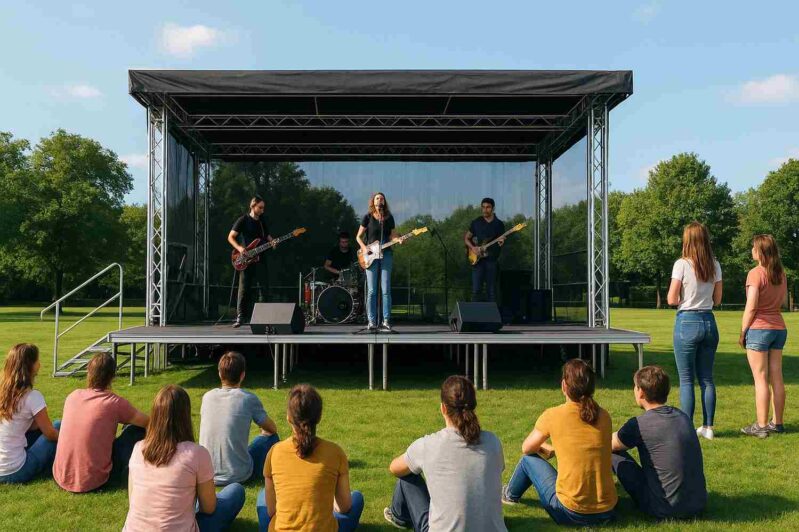
Maximize Audience Experience with the Right Outdoor Portable Stage Setup
Outdoor events have evolved significantly over the past decade. From small community concerts and cultural festivals to large-scale open-air performances, audiences now expect a level of professionalism and comfort that rivals indoor venues. At the heart of this expectation lies the stage itself. A well-planned concert stage setup does far more than elevate performers—it shapes visibility, sound quality, safety, and overall audience engagement. Selecting the right portable stage configuration is therefore not just a logistical decision, but a strategic one that directly affects how an event is experienced and remembered.
As outdoor performances grow more diverse in size, setting, and audience type, event planners and performers must navigate a complex balance of mobility, stability, aesthetics, and environmental considerations. Understanding how different staging approaches influence audience perception is essential for making informed decisions that support both performance quality and crowd satisfaction.
The Role of Staging in Audience Experience
The stage serves as the visual and functional anchor of any outdoor performance. Its height, layout, and placement determine how easily an audience can see performers, while its structural integrity influences safety and confidence. A thoughtfully designed performance stage ensures that audiences remain focused on the show rather than distracted by obstructed views, poor acoustics, or visible technical issues.
In outdoor environments, the absence of walls and ceilings introduces additional complexity. Sound disperses more freely, lighting competes with natural conditions, and terrain can be unpredictable. The event stage must therefore act as a unifying platform that compensates for these variables, helping performers project effectively and audiences remain immersed regardless of location.
Visibility and Sightlines: A Foundational Consideration
One of the most immediate ways a stage impacts audience experience is through visibility. In open spaces such as parks, beaches, or town squares, audiences are often spread across uneven ground. A stage that is too low may limit sightlines for attendees standing farther back, while excessive height can create distance between performers and the crowd.
Balancing elevation with intimacy is a key trade-off. Raising the stage improves visibility but may require additional safety measures, such as railings or stairs, which can increase setup complexity. Conversely, a lower modular stage may foster a closer connection between performers and audience members but risks obstructed views in larger crowds.
Planners must assess expected audience size, ground conditions, and viewing angles when determining optimal stage height. A flexible approach allows for adjustments that prioritize audience comfort without compromising performer safety.
Acoustics and Sound Distribution Outdoors
Sound quality is another critical factor tied closely to staging decisions. Unlike indoor venues, outdoor spaces lack natural sound containment, making it harder to control volume and clarity. The design and placement of a mobile stage can either support or hinder effective sound projection.
Stage orientation plays a significant role. Positioning the stage to face open areas rather than reflective surfaces helps reduce sound loss and distortion. Additionally, the structural materials of the stage can influence resonance and vibration, subtly affecting audio performance.
There is often a trade-off between portability and acoustic optimization. Lightweight stage systems are easier to transport and assemble, but may require additional sound reinforcement equipment to achieve the desired audio quality. Event organizers must weigh convenience against performance needs, particularly for music-focused events where sound clarity is paramount.
Stability, Safety, and Audience Trust
Safety is a non-negotiable aspect of outdoor staging, and it directly influences audience confidence. A visibly stable stage reassures attendees, while any signs of wobbling or unevenness can create discomfort or distraction.
Outdoor conditions introduce challenges such as wind, moisture, and uneven terrain. A modular stage system designed to adapt to these conditions can provide stability without extensive ground preparation. However, increased adaptability may come with higher costs or longer setup times.
From an audience perspective, safety considerations extend beyond the performers. Clear access points, secure stairs, and defined boundaries help manage crowd movement and prevent accidents. Investing in a well-engineered stage solution demonstrates professionalism and respect for audience well-being, enhancing overall event perception.
Weather and Environmental Factors
Outdoor events are inherently exposed to environmental variables. Sun, rain, and temperature fluctuations can all affect both performers and audiences. Stage design plays a crucial role in mitigating these factors.
Canopies or overhead structures can protect equipment and performers from direct sunlight or light rain, improving comfort and performance consistency. However, adding weather protection increases structural complexity and may reduce portability. Event planners must decide whether to prioritize quick setup or enhanced environmental control based on event duration and climate conditions.
Environmental impact is another increasingly important consideration. Sustainable staging solutions that minimize ground disruption and reduce material waste appeal to environmentally conscious audiences and communities. Choosing staging options that align with local regulations and ecological values can enhance public perception and long-term viability.
Audience Engagement and Emotional Connection
Beyond technical considerations, staging influences how audiences emotionally connect with a performance. The proximity of performers, the openness of the layout, and the visual framing all contribute to the atmosphere of an event.
A well-designed event stage encourages interaction, whether through eye contact, movement, or shared energy. Stages that feel integrated into their surroundings rather than imposed upon them can create a more natural and engaging experience. This is particularly important for community events and festivals, where inclusivity and accessibility are central to audience satisfaction.
The challenge lies in balancing professional presentation with approachability. Overly elaborate setups may feel distant or intimidating, while overly minimal stages risk appearing unprofessional. Thoughtful design choices help strike a balance that resonates with diverse audiences.
Logistics, Setup Time, and Operational Efficiency
Behind every successful outdoor event is a carefully managed logistical plan. The ease with which a stage can be transported, assembled, and dismantled affects not only organizers but also the audience experience. Delays in setup can push schedules back, while prolonged teardown may disrupt surrounding activities.
A mobile stage system designed for efficiency allows events to start on time and conclude smoothly. However, systems optimized for speed may offer fewer customization options, limiting visual or functional enhancements. Event planners must evaluate whether flexibility or efficiency better serves their specific goals.
Operational efficiency also affects staffing requirements. Stages that require minimal tools or specialized labor reduce costs and complexity, making them particularly appealing for smaller events or organizations with limited resources.
Cost Considerations and Long-Term Value
Budget constraints are a reality for most outdoor events, and staging often represents a significant investment. While lower-cost options may seem attractive initially, they can introduce hidden trade-offs in durability, safety, or adaptability.
Investing in a modular stage solution that can be reconfigured for different events may offer greater long-term value, even if the upfront cost is higher. Such systems support a wider range of event types, from concerts and speeches to theatrical performances, maximizing return on investment.
From an audience perspective, consistent quality across events builds trust and anticipation. Attendees are more likely to return to events that consistently deliver comfort, safety, and clear visibility, reinforcing the importance of strategic staging decisions.
Making Informed Decisions for Better Experiences
Maximizing audience experience with the right outdoor stage setup requires a holistic approach. Visibility, sound, safety, environmental impact, logistics, and cost are all interconnected factors that must be evaluated together rather than in isolation.
There is no single solution that fits every event. Instead, success lies in understanding the specific context—audience size, location, performance type, and environmental conditions—and selecting staging options that balance competing priorities. A thoughtful approach recognizes trade-offs and addresses challenges proactively, resulting in events that feel seamless and engaging from the audience’s perspective.
Ultimately, the stage is more than a platform; it is a bridge between performers and audiences. When designed and deployed with care, it enhances not only what is seen and heard, but how an event is felt. By prioritizing audience experience in staging decisions, organizers can create outdoor events that are memorable, inclusive, and impactful long after the final performance ends.





Leave feedback about this